




An engineer has utilized AI to break a previously unsolved cipher used by Napoleon Bonaparte to send secret messages to his generals — enabling us to read a 217-year-old letter for the first time. The announcement has historians excited about AI’s potential to become a modern-day “Rosetta Stone” for translating coded historical messages.
Carter Church, an AI engineer at cybersecurity firm Sentinel One, laid out the findings in a post on X on Wednesday (Sept. 30), explaining how he gave OpenAI’s new model GPT-6 Astra one prompt and one image to crack the centuries-old code. Six hours later, the task was complete.
“I didn’t believe it at first,” Church told Live Science in a message. “Everyone has the experience of seeing a model claim something outrageous, but the difference here though is that the solution is mechanically testable: there’s essentially zero chance an incorrect key could produce coherent and historically consistent output.”
Latest Videos FromLive Science
The letter was sent in 1809 on Napoleon’s request by his stepson Eugène, the viceroy of Italy, to Marshal Auguste de Marmont, who was stationed far from any other French troops on the eastern shore of the Adriatic Sea. The letter’s purpose was to tell Marmont the position of every other French and allied army across the continent. However, to avoid revealing military secrets to France’s enemies should the letter be intercepted, the message was written in code.
Church found the letter after searching for an appropriate code to break to demonstrate GPT-6 Astra’s capabilities. “The verifiability of solutions is actually the most difficult part, far more difficult than generating potential solutions,” Church said. “You simply cannot automate accountability.”
I used GPT-6 Astra to break an unsolved cipher to one of Napoleon’s generals that had gone unread for 217 years. What makes this impressive isn’t actually the codebreaking, but that Astra completed the entire multi-modal workflow in ~6 hours from a single image and goal.1/6🧵 pic.twitter.com/vyiGKOsrHqSeptember 30, 2026
According to Church, the only publicly available image of the letter was a low-resolution scan published in a French army journal in 1969. It contains 155 different signs — 1,300 signs in total — and the code is homophonic, meaning common letters have several interchangeable symbols.
But this low resolution scan and a single prompt was all GPT-6 Astra needed to transcribe the text and find a partial table by cryptology historian Daniel Tant — previously unlinked to this letter — that documented what 33 of the symbols meant, accounting for about a third of the letter.
Get the world’s most fascinating discoveries delivered straight to your inbox.
“Astra made this connection itself via web research as it was investigating,” Church said. “As I understand it: Tant catalogued the table as ‘Code entre Eugène de Beauharnais et le Général Grammont’ which may have been a naming mistake (Grammont vs Marmont?). Either way, Astra identified this example and just decided to try and apply it to this cipher…and it worked!”
Auguste Frederic Louis Viesse de Marmont was the intended recipient of the coded message while stationed on the eastern shore of the Adriatic Sea.
(Image credit: Photo by DeAgostini/Getty Images)
GPT-6 successfully used the partial table to determine what each of the other symbols stood for and translate the message.
“This is a really interesting use of Artificial Intelligence, and it’s refreshing to see AI being used productively to try and provide a credible solution to a historical mystery,” Zack White, a history research fellow at the University of Portsmouth and host of the Napoleonic Wars Podcast, told Live Science in an email.
Michael Rowe, a researcher in European history at King’s College London, added that the findings were “impressive” and that because we have access to Napoleon’s original correspondence to his stepson, where he detailed what the ciphered message should include, we can be fairly confident in the translation of Eugène’s letter.
“It’s a bit like a kind of Rosetta Stone,” Rowe told Live Science. “If you’ve tested out AI on this letter, where you pretty much know what the contents would have been because it’s referred to in another letter, the AI does its thing and essentially reproduces what you’re expecting to see. Then if you use the exact same kind of tool and methodology on something where you don’t know [the contents], you’re more likely to trust the outcome.”
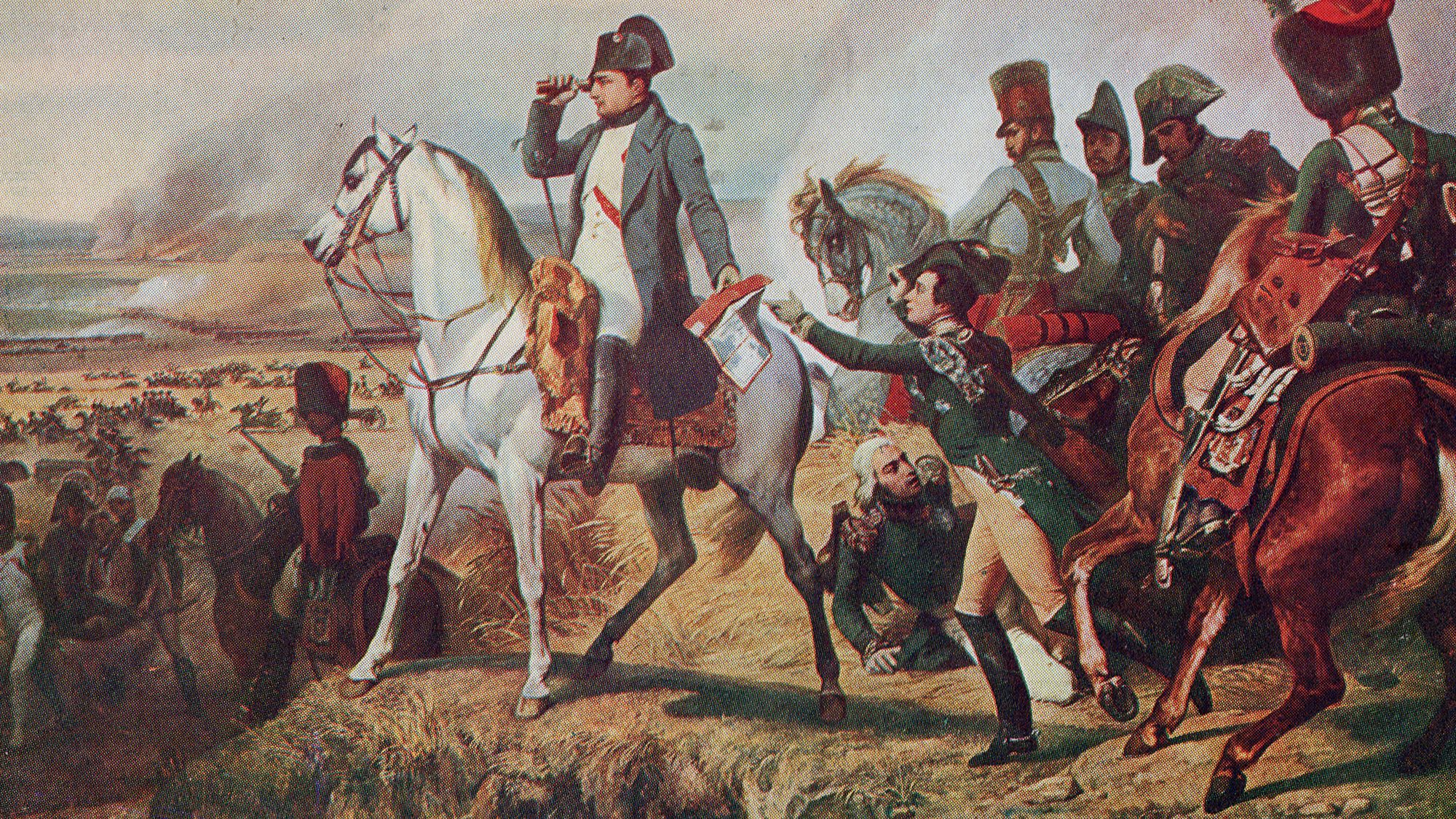
French Emperor Napoleon Bonaparte was forced to use ciphers as a way of communicating sensitive information securely across his vast empire.
Zack White, University of Portsmouth
This does also mean that the translation of Eugène’s secret message isn’t too surprising to historians. “The cipher version just repeated a large segment of what’s in that [original] letter, so in a sense it doesn’t tell us anything new — it’s not like it reveals some kind of great new information,” Rowe said.
In addition to the positions of troops and their commanders, Eugène’s message encourages Marmont not to fear opposition: “When you receive the order to march, you must not allow yourself to be intimidated by a few troops or a gathering of rabble,” the newly-translated letter reads.
According to White, the translation does raise “some curious questions about Napoleon’s mindset in the run up to the campaign in Austria in 1809.” For example, he said that Napoleon actually had 60,000 fewer troops available to fight at the time than is claimed in this letter, and he also seems fixated on the number of troops Austria might send to invade Italy.
“It’s important that historians now set the AI’s works in a bigger picture of the history of the period,” White said, adding “it will also be interesting to see if the key that has resulted from this AI’s work can now be used on other correspondence.”
Cracking codes in time
Ciphers were fairly common during this period, conveying sensitive military and diplomatic information.
“French Emperor Napoleon Bonaparte was forced to use ciphers as a way of communicating sensitive information securely across his vast empire,” White said. “It was always a very real possibility that these letters would be intercepted, potentially providing vital intelligence to France’s enemies about the Emperor’s plans.”
However, using AI to crack these codes could also offer insights into the private lives of historical figures. “[Ciphers] were often also used for private correspondence,” Rowe said, for example letters between elite individuals having extramarital affairs.
The technique could also be used by ancient historians, studying documents in languages and scripts that we don’t yet fully understand, or written in illegible handwriting.
“Across time frames, this [AI] is opening doors,” Rowe said.
For this particular cipher, Church said that the code itself isn’t especially difficult. “Cryptographers could have cracked this easily given the time/energy,” he said. However, it would require experts across different areas and take a considerable amount of time and effort, he added.
“Every field has an unsolved backlog of niche problems that specialists don’t have the bandwidth to tackle,” Church said. “The takeaway here is that the people shortening those lists will increasingly be outsiders who were simply curious.”
Church’s result was confirmed by Satoshi Tomokiyo, a patent engineer and cryptographer who runs a website documenting unsolved historical ciphers called Cryptiana, and the letter is now listed as “solved” on the website.
“This work is totally reliant on all of the research that goes into finding these ciphers, ensuring they’re actually unsolved, contextualizing them, etc and I’d love for those folks to get all of the recognition,” Church said, referring to Tomokiyo’s website. “That’s where the real hard work is.”