





Refresh
The mission timeline
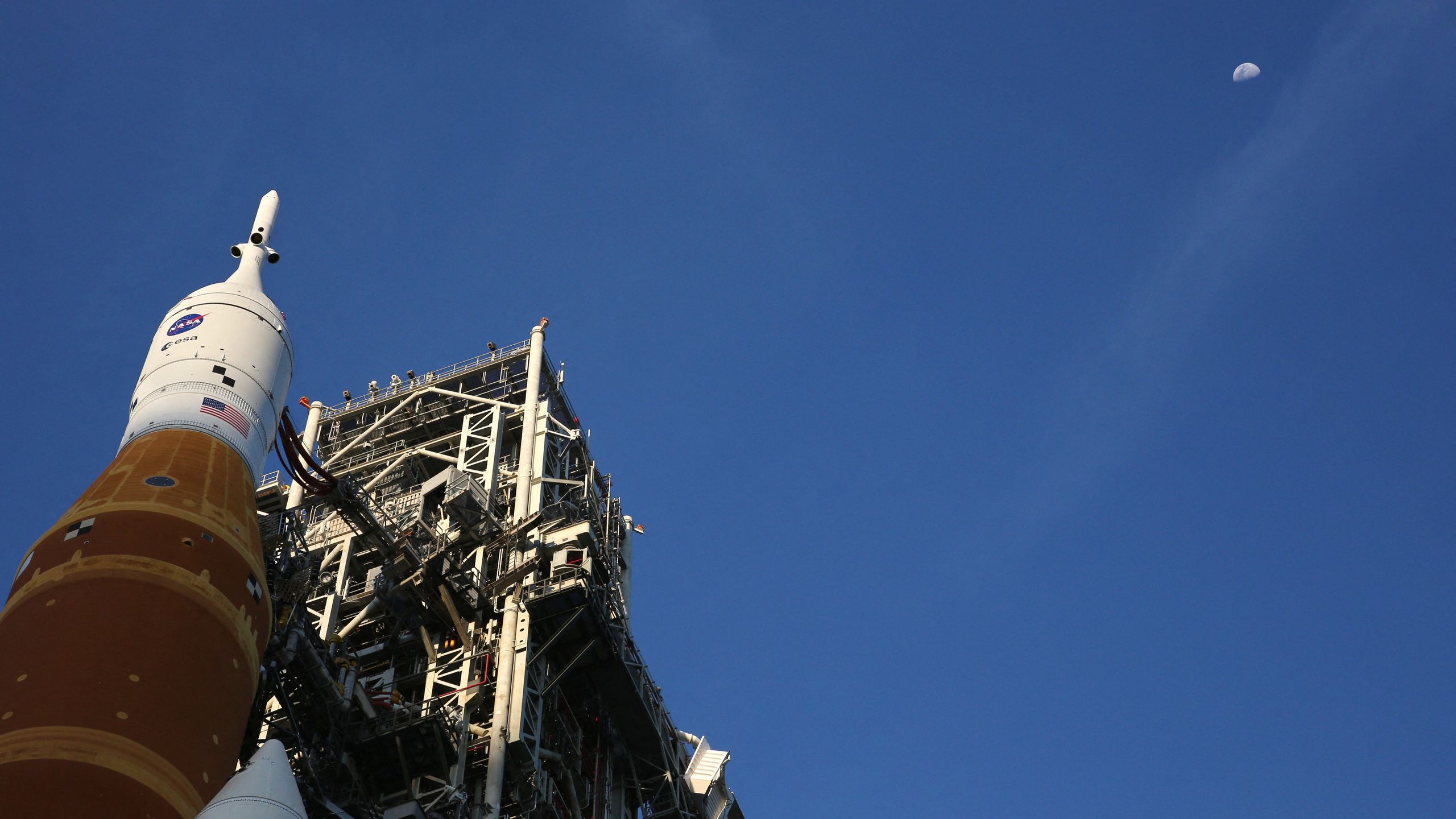
We’ve broken down the 10-day mission into 12 key steps, covering everything from liftoff and low Earth orbit maneuvers to the lunar slingshot, record-breaking reentry to Earth’s atmosphere and eventual splashdown in the Pacific Ocean.
My personal favorite stage is “prox opps.” This comes around 3.5 hours after launch and will see Artemis II’s pilot Victor Glover briefly take control of the Orion spacecraft to test out its manual thrusters and maneuverability, providing crucial data for the upcoming Artemis III and Artemis IV missions.
Be sure to bookmark this page so you can come back to it at any point over the next few weeks!
Harry Baker
A record-breaking return
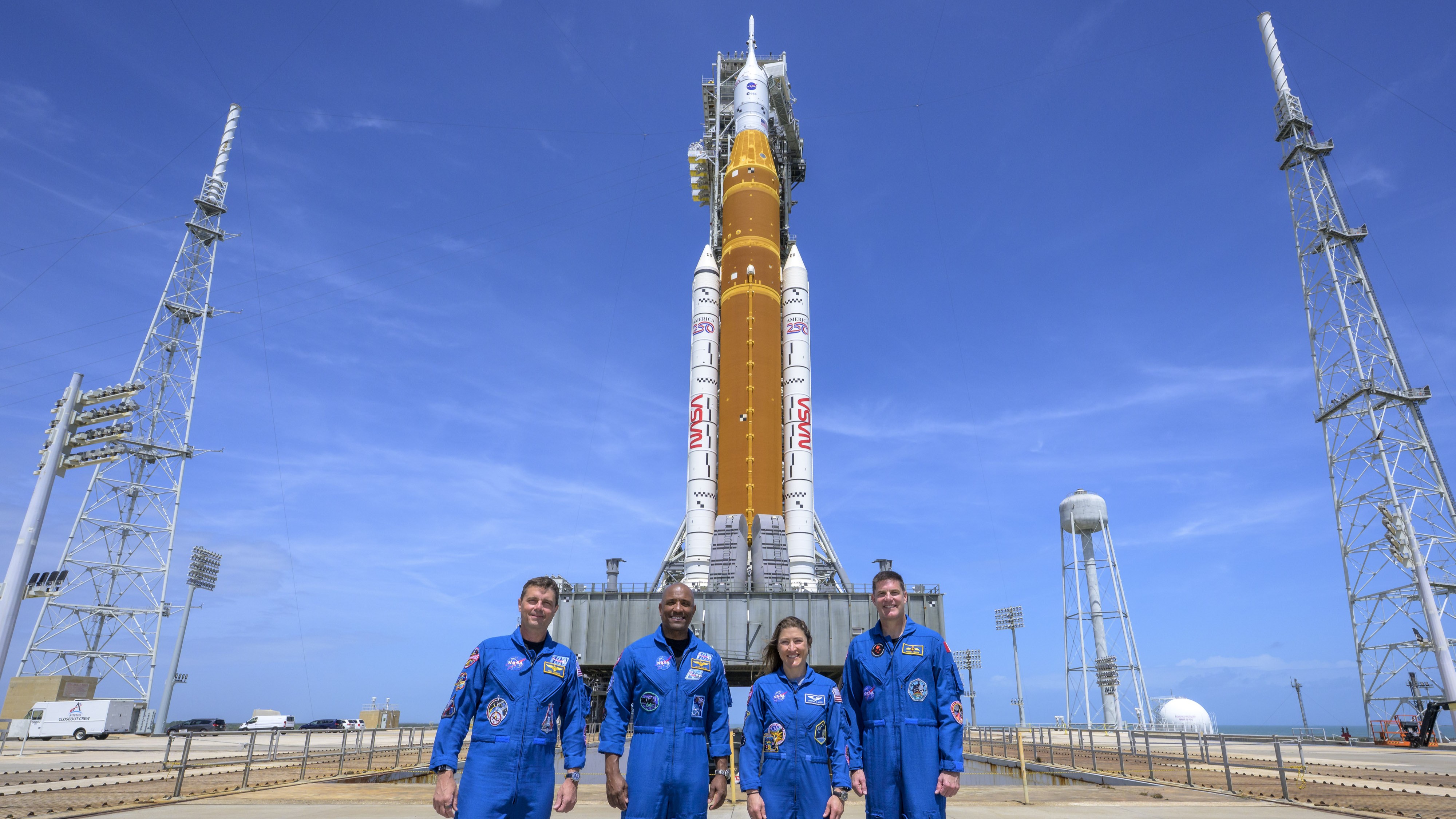

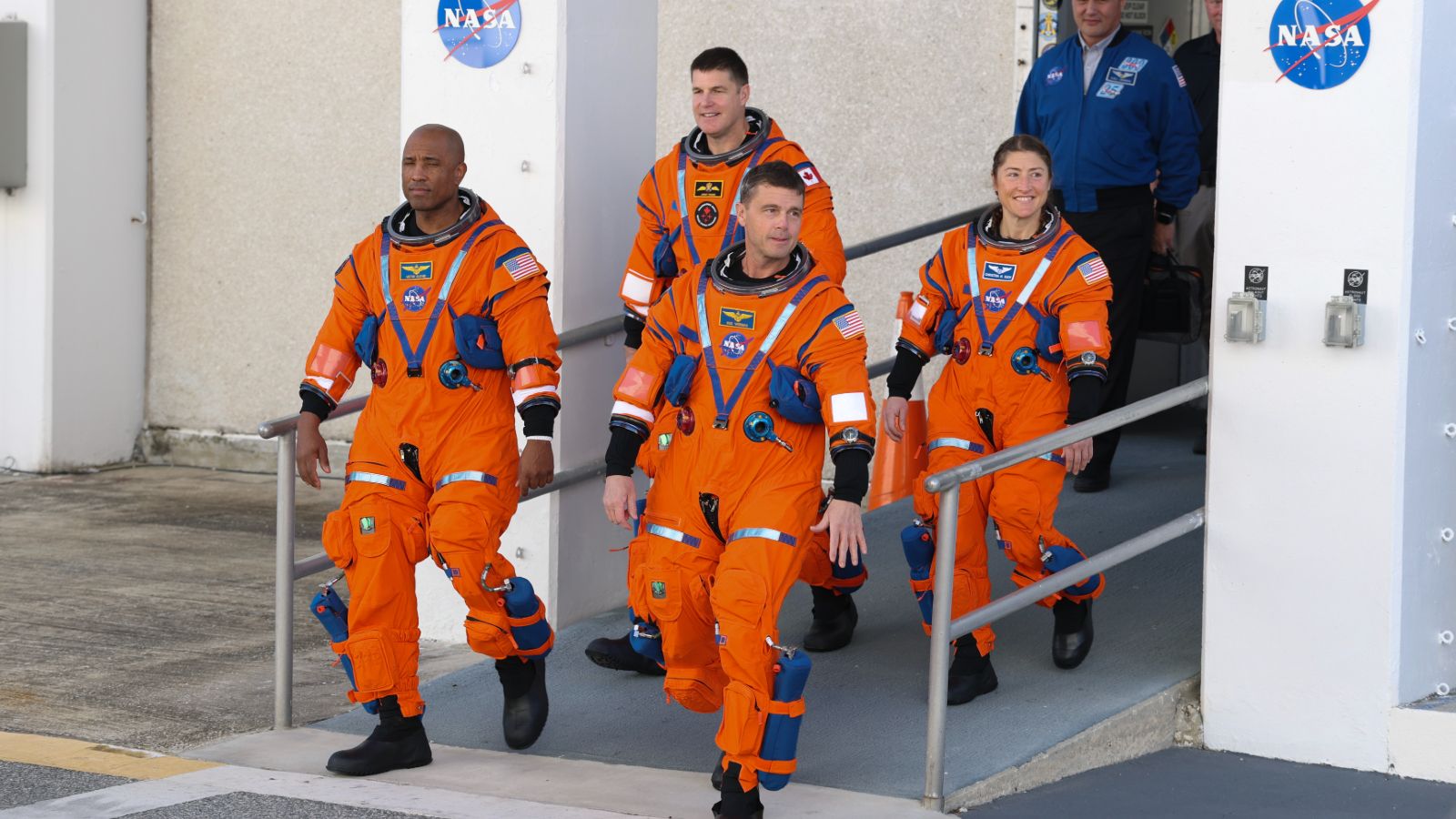
It took a while to get here, but after repeated delays, NASA says the Artemis II mission is finally ready to launch. Besides being NASA’s first step to a long-awaited return to the moon’s surface, the mission is set to achieve a number of firsts: Its crew contains the first Black astronaut, the first woman, and the first non-American to visit the moon.
The crew will smash several longstanding records too. For example, they will return to Earth as the fastest humans in history, splashing down in the Pacific Ocean after reentering our planet’s atmosphere at slightly over 25,000 mph (40,200 km/h), which would beat the 1969 reentry record currently held by the Apollo 10 astronauts.
And that’s not all that’s new or record-breaking about this flight. For more details, senior staff writer Harry Baker has the full story here.
To the moon and back
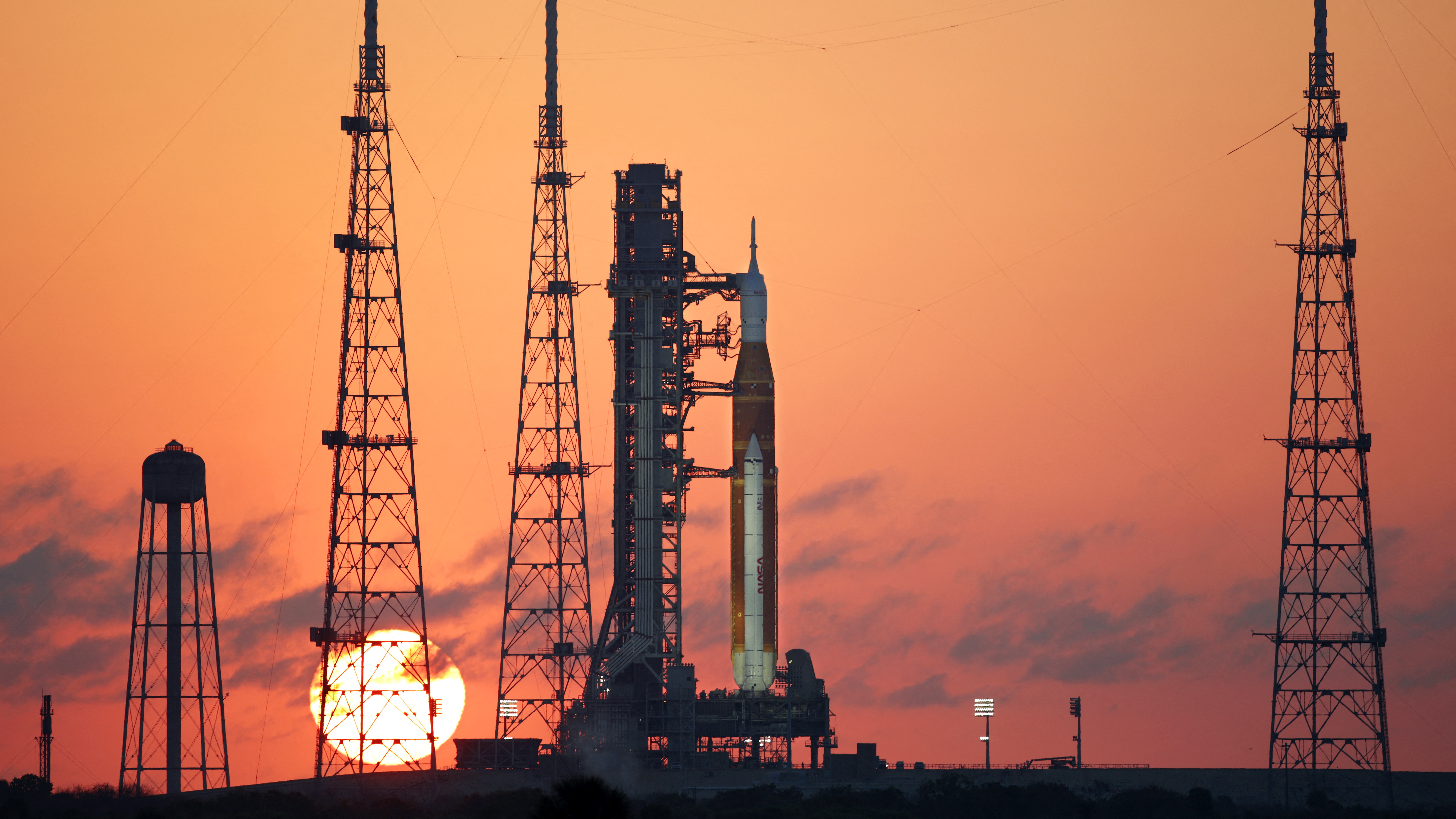

Good morning, science fans. For the first time since 1972, the countdown clock at NASA’s Kennedy Space Center in Florida is now running down the hours, minutes and seconds until the liftoff of a crewed mission beyond Earth’s orbit.
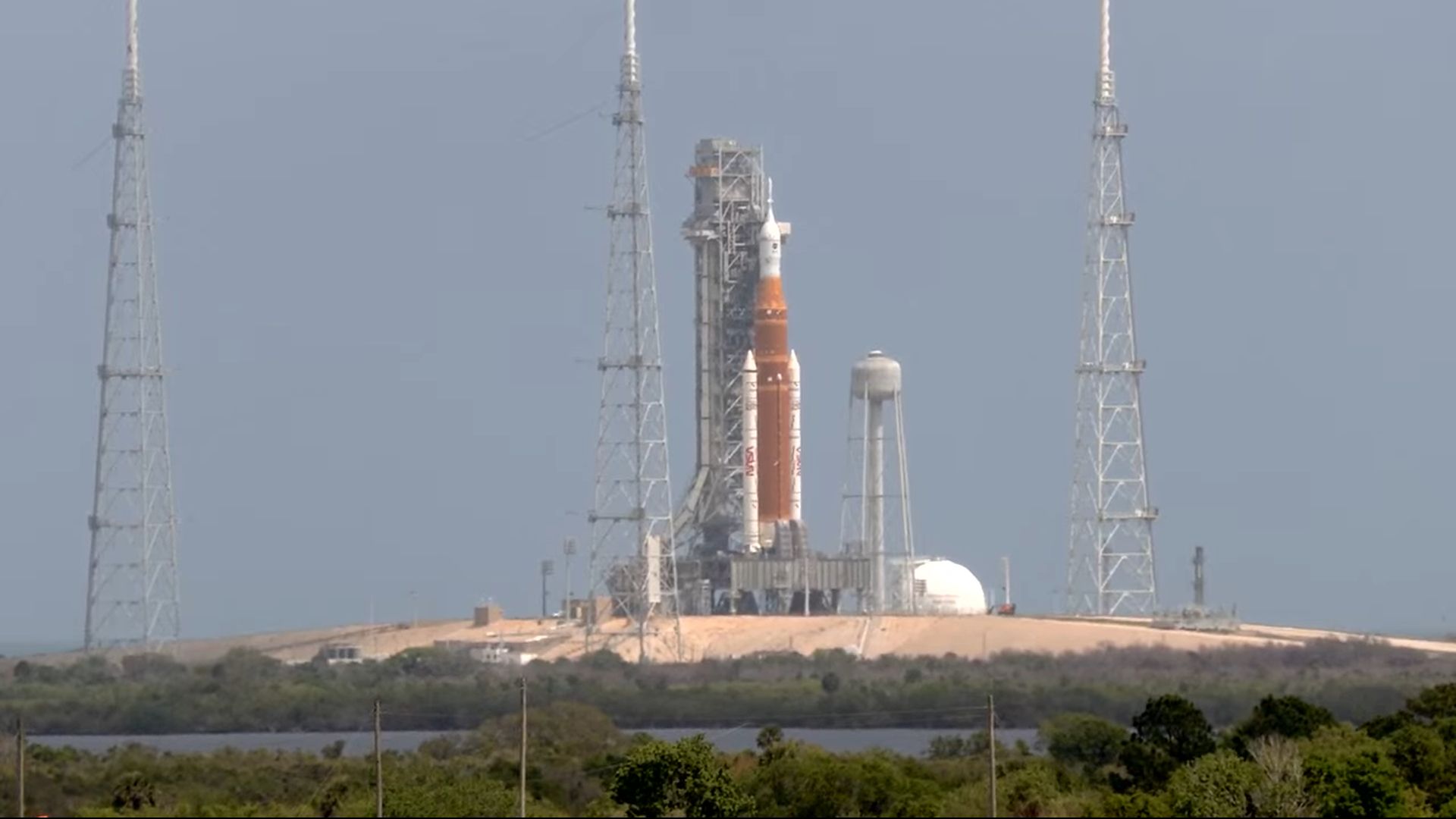
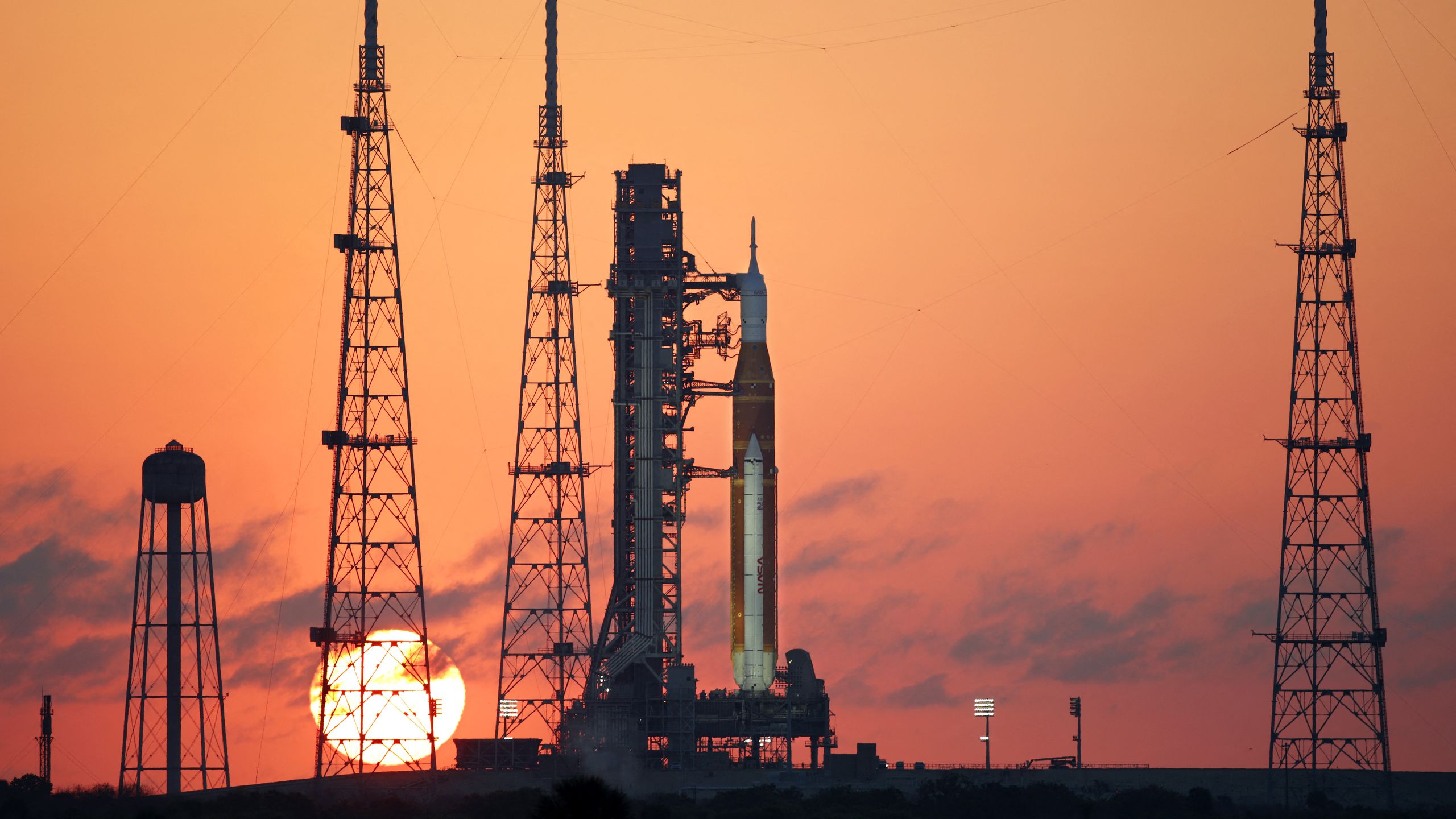
With a little more than a day remaining until NASA’s Artemis II launch, the mission’s four-astronaut crew said they’re ready for their 685,000-mile (1.1 million kilometers) 10-day journey around the moon and back. They will be sent into space by a colossal, 322-foot-tall (98 meters) rocket stack — taller than the Statue of Liberty — which will provide over 8.8 million pounds (4 million kilograms) of thrust to a capsule the size of a campervan.
Live Science will be following every moment of this journey, providing you with updates, commentary, expert insight and exclusive coverage from the historic launch.
So let’s strap in, quit mooning around, and get ready for humanity’s return to our celestial neighbor.


Ben Turner
You must confirm your public display name before commenting
Please logout and then login again, you will then be prompted to enter your display name.