



After years of frustrating delays, NASA’s Artemis II mission is about to launch astronauts to the lunar environment for the first time since the Apollo 17 mission in 1972, taking the next big step toward the agency’s ambitious goal of building humanity’s first moon base.
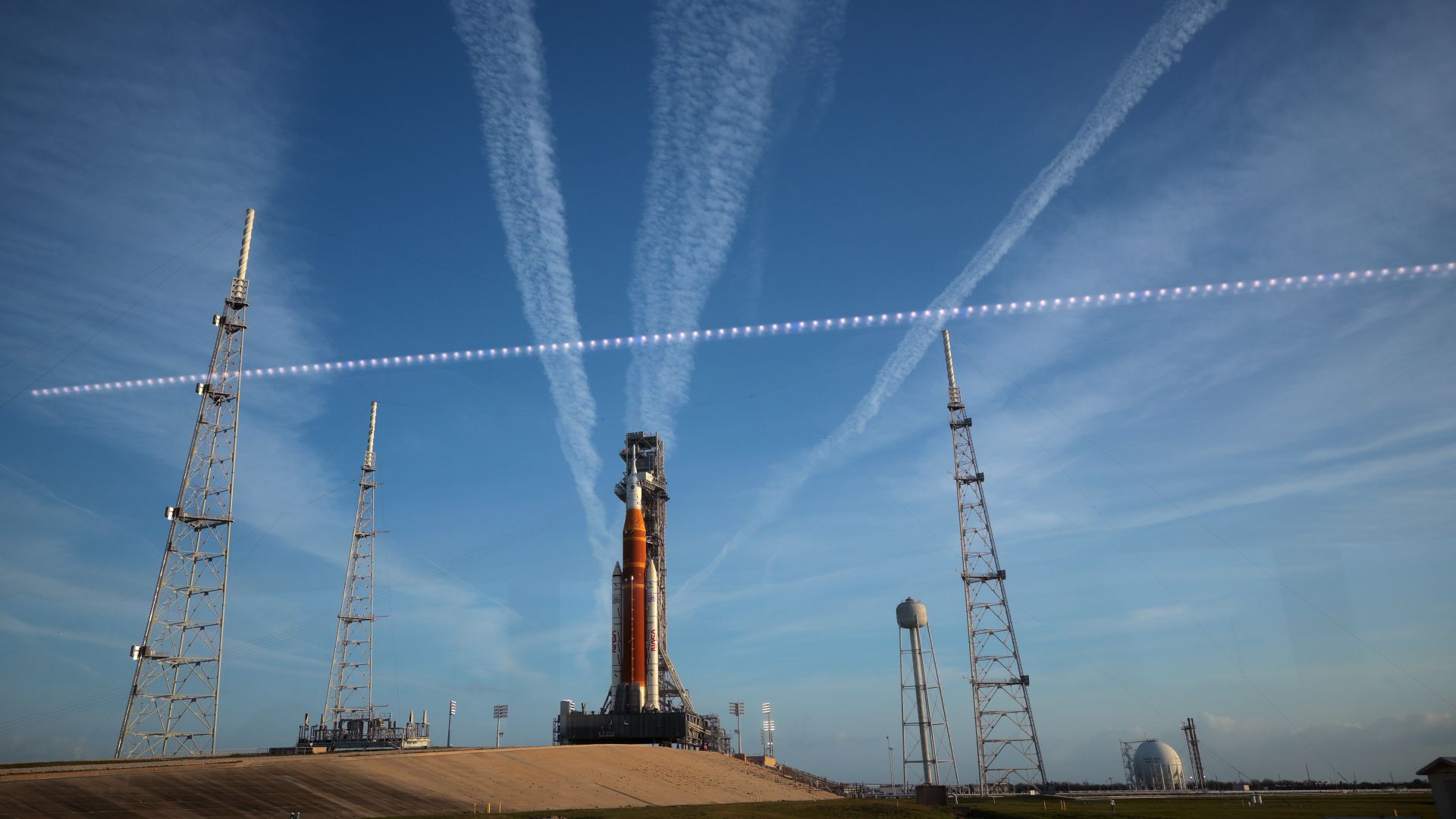
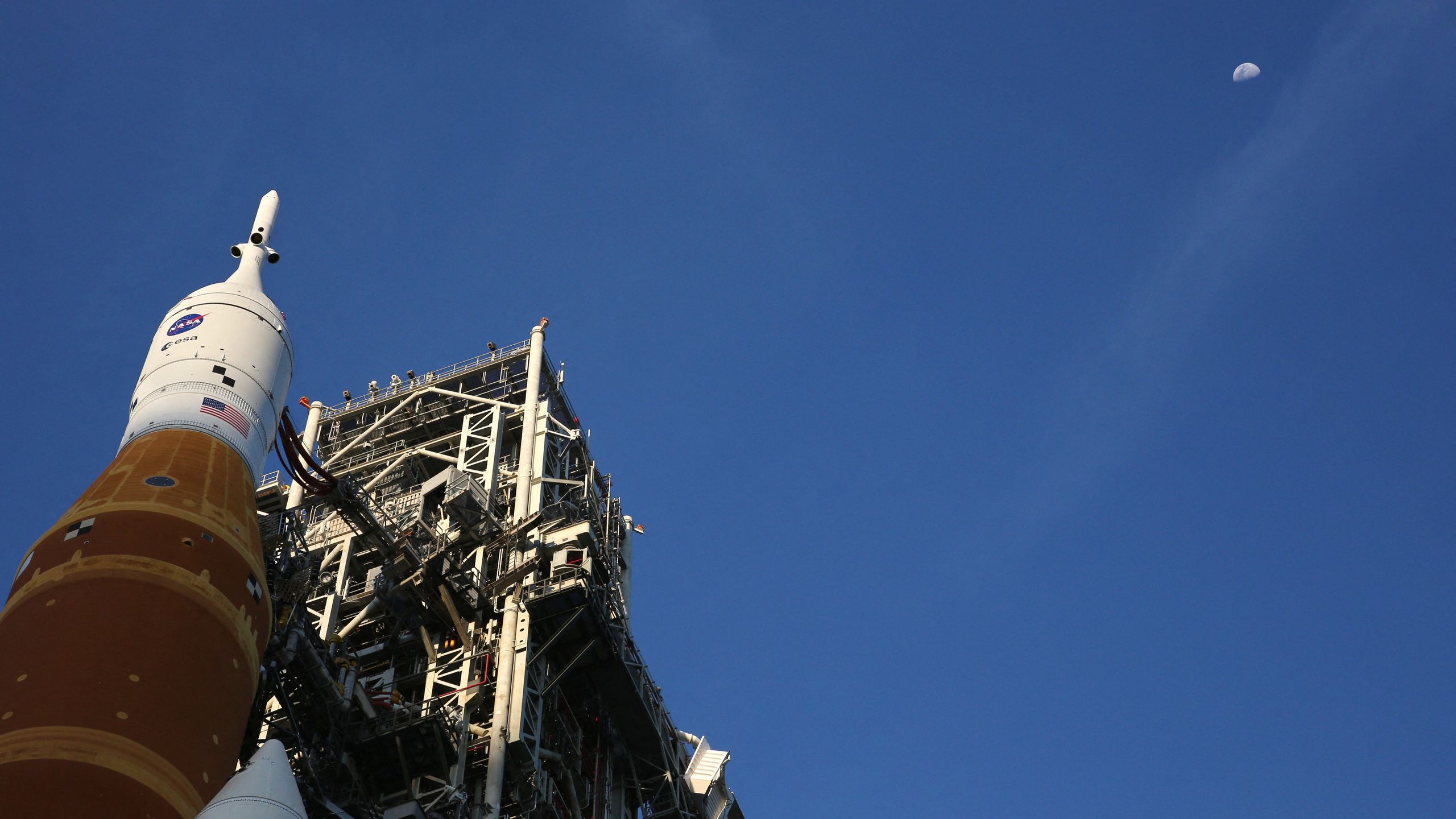
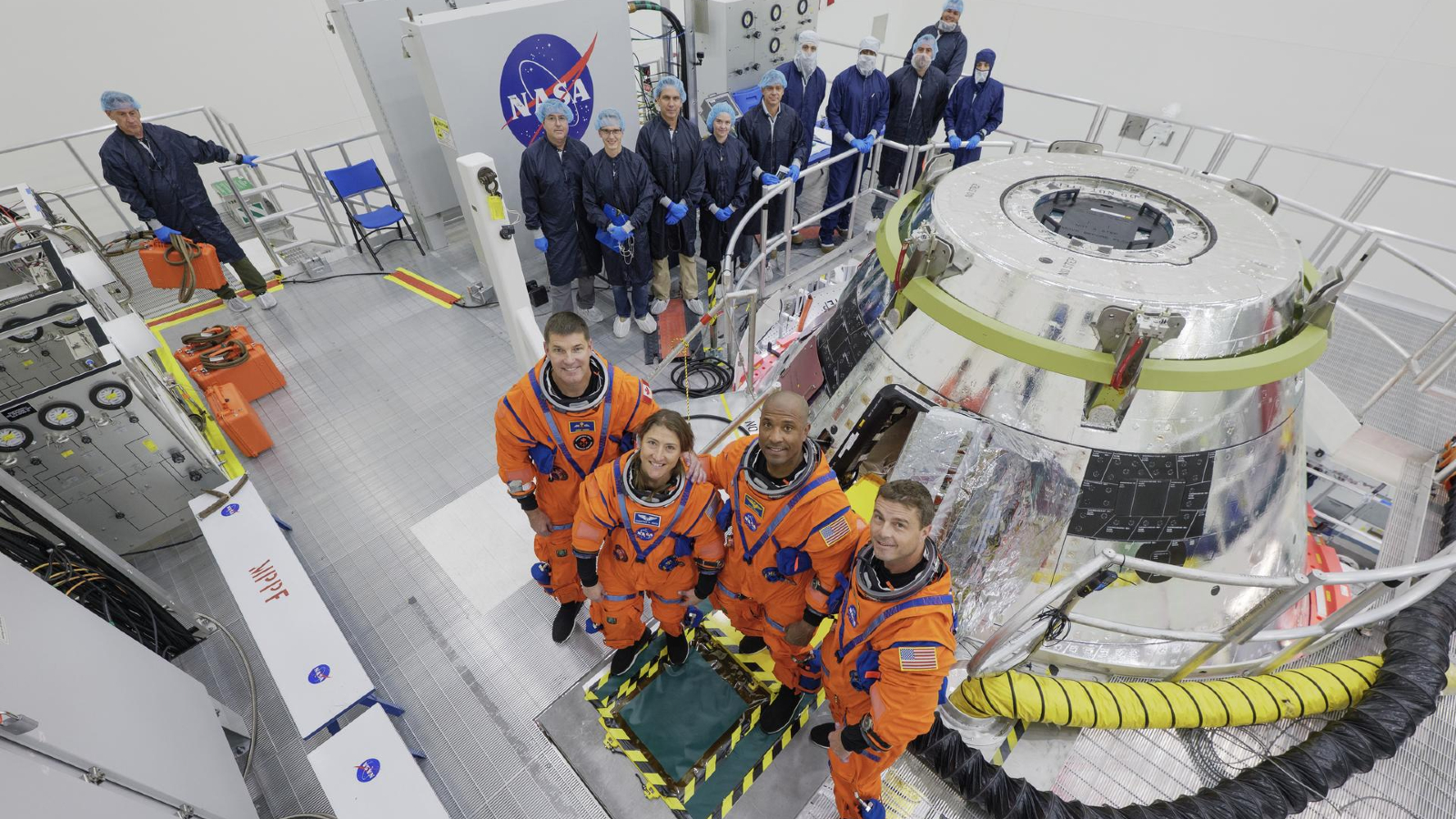
Artemis II’s record-breaking crew — which includes commander Reid Wiseman, pilot Victor Glover and mission specialists Christina Koch and Jeremy Hansen — is scheduled to lift off from Launch Pad 39B at Kennedy Space Center in Florida as soon as April 1. They will ride into space aboard NASA’s mega Space Launch System (SLS) rocket before slingshotting around the moon in the Orion capsule and eventually returning home around 10 days later.
Article continues below
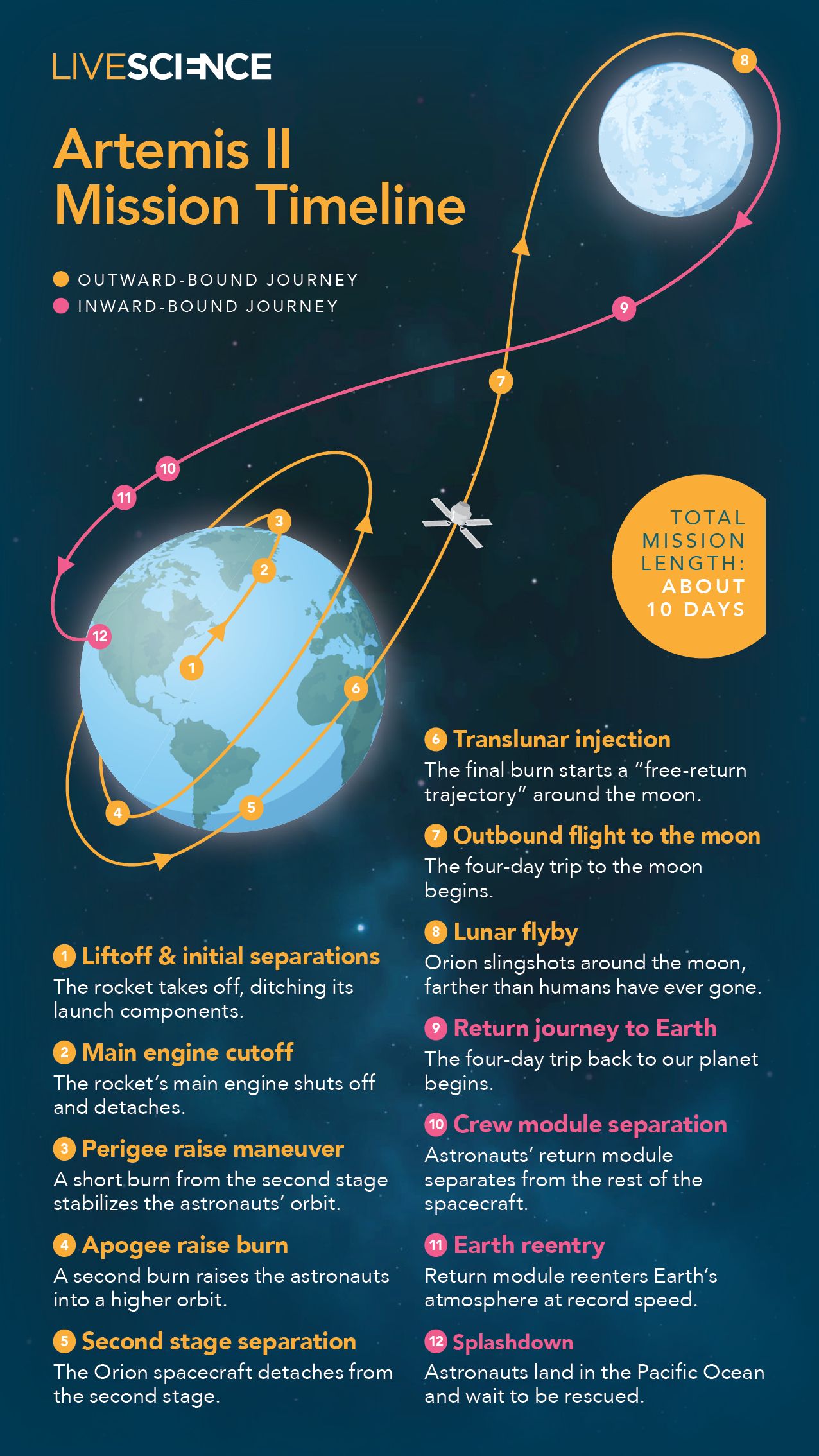
We’ve broken down the mission timeline into 12 key steps so you can better understand and follow along with this lunar adventure.
1. Liftoff and initial separations
The official launch sequence for Artemis II will begin roughly 49 hours before liftoff, when mission controllers arrive at Kennedy Space Center to start carrying out a multitude of safety and engineering checks, according to a NASA fact sheet.
But the fun really starts around three hours before launch, when the astronauts will be strapped in and sealed into the Orion spacecraft at the top of the 322-foot-tall (98 meters) SLS rocket. After a nervous wait, as they sit atop more than 700,000 gallons (2.65 million liters) of cryogenic fuel, the rocket’s four main engines will start firing seven seconds before liftoff, as millions of people around the world collectively chant the final countdown.
It will take approximately 6.5 seconds for the giant rocket to clear the launch tower after the two solid-fuel boosters ignite at liftoff (also known as T-0). From there, the crew will rise rapidly through the skies, with each member experiencing up to 4 G’s of force as they fight to escape our planet’s gravity. They are expected to break the sound barrier after 56 seconds of vertical flight (T+0:56).
Just over a minute later (T+2:08), at an elevation of around 30 miles (48 kilometers), the rocket’s empty boosters will be ejected. Several other nonessential components, including the launch abort system, will also be tossed away. This reduces the overall weight of the spacecraft and allows the rocket’s main engines to propel it the rest of the way. (The ejected components will likely fall back to Earth somewhere in the Atlantic Ocean.)
2. Main engine cutoff

Approximately 6 minutes later (T+8:06), the rocket’s main engines will also run out of fuel, before swiftly detaching and either burning up in the atmosphere or falling into the Pacific Ocean.
At this point, the astronauts and what remains of the rocket will be stuck in a fast and highly elliptical orbit with an apogee, or highest elevation, of 1,400 miles (2,250 km) — more than five times farther from Earth than the International Space Station.
The crew will rapidly and unevenly circle Earth for the next 40 minutes, while Koch and Hansen unstrap from their seats and carry out a series of tasks, including setting up the toilet, water dispenser and other basic equipment. At this point, the spacecraft’s solar arrays will deploy to help power the onboard systems.
This stage could prove to be a problem for Hansen, who is the only member of the crew who has not been to space before. Around half of first-time astronauts experience space adaptation syndrome, a form of extreme motion sickness. “I’m definitely worried about that,” Hansen previously told Ars Technica. If he is affected, he will have to be “very intentional” with his movements and “try to minimize” what he does, he added.
3. Perigee raise maneuver
Once Koch and Hansen have completed their tasks (around T+49), they will strap back in for the first orbital maneuver, which will raise the spacecraft’s perigee, or lowest elevation, to match its apogee. (If this didn’t happen, the spacecraft would start to fall back to Earth.)
This first “burn” will be carried out using the rocket’s second stage, dubbed the Interim Cryogenic Propulsion Stage (ICPS), and will last a minute or two. Wiseman and Glover will be monitoring the burn as they did during launch, but all of the major maneuvers will be fully automated.
Once this step is completed, the spacecraft will be in a relatively stable orbit around Earth, which will allow the team to take a short break before attempting to make the next steps away from our planet.
4. Apogee raise burn
Around an hour later (T+1:47:57), the spacecraft will carry out a second, longer burn with the ICPS to significantly raise its orbit.
This automated burn will last around 15 minutes. Once this step is completed, the crew will be stuck in a “high Earth orbit” with an apogee of 43,500 miles (70,000 km). At this max altitude, it will take them around 23.5 hours to orbit the planet. This orbit is also where Orion will eventually deploy four small research satellites, called cubesats, belonging to Argentina, South Korea, Germany and Saudi Arabia, according to a NASA statement.
At this point, the astronauts will pause their journey from Earth and prepare to carry out the final steps necessary for their “moonshot.”
5. Second-stage separation and “prox ops”
After the second burn, the ICPS will be mostly depleted and will separate from the rest of the rocket — but it won’t go very far.
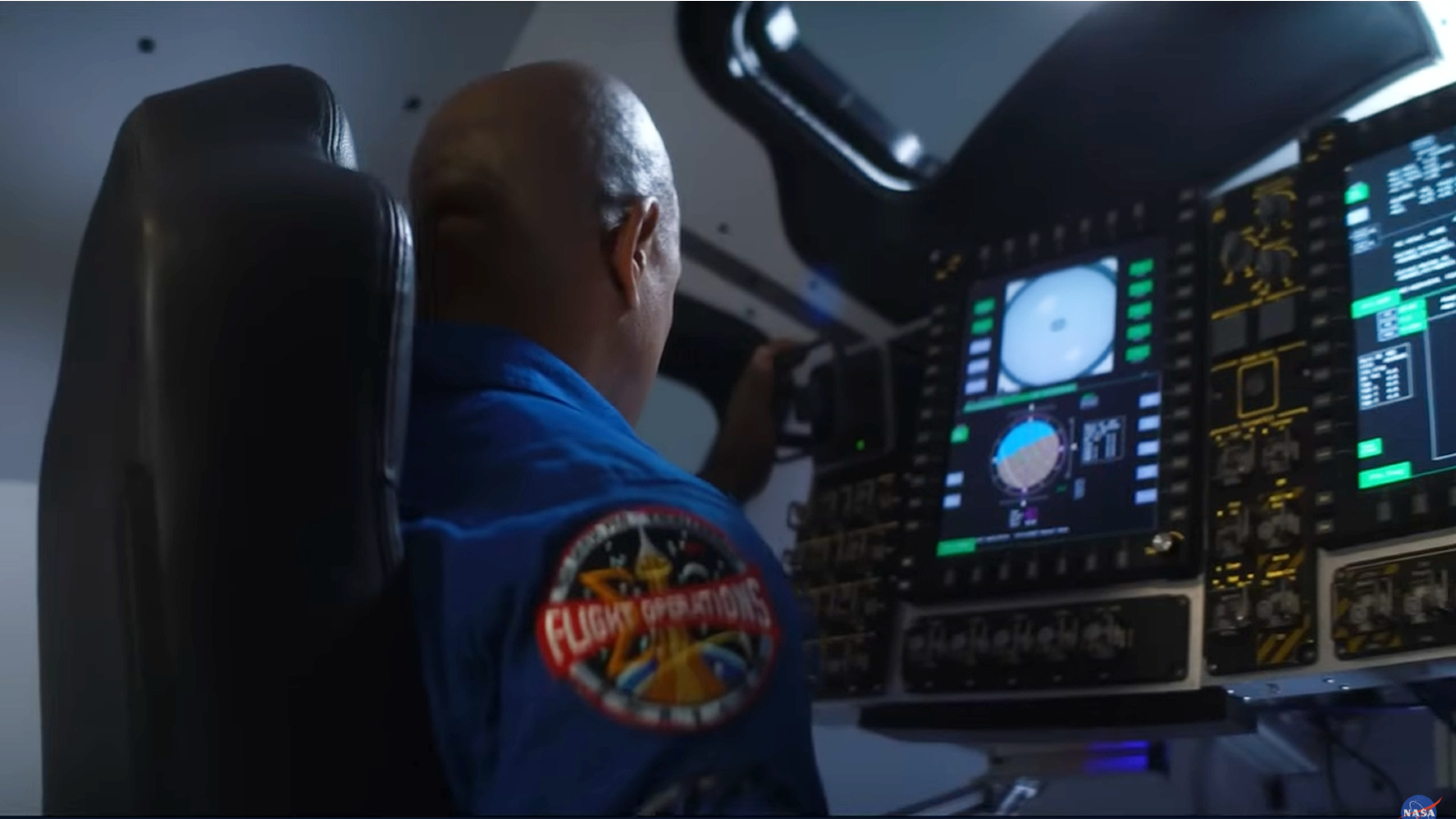
At this point (T+3:24:15), Glover will take control of the Orion capsule, dubbed “Ingenuity” by the Artemis II crew, and begin proximity operations, or “prox ops.” During this phase, which will last just over an hour, Glover will use a joystick to carry out various spaceflight tests around ICPS, using the spent engine as a proxy target that the craft must maneuver around, according to a NASA video.
This is an important step because the Orion spacecraft has never been piloted by humans in space before and needs to be properly tested for future missions, such as Artemis III and Artemis IV. Once prox ops is complete, the ICPS will carry out a final burn that will send it back to Earth to either burn up upon reentry or crash into the ocean, according to NASA.
At this point, the astronauts will exercise and eat their first meal in space, before sleeping for around four hours, according to Ars Technica. They will then be woken to oversee a series of trajectory-correction burns, to make sure they remain in a stable orbit, before going back to sleep for another four hours or so. When they wake again, they will find out if they can proceed with the mission or if they have to return to Earth.
6. Translunar injection
Once the team has the green light to proceed, the next step, dubbed the translunar injection, will be to fire the main engines of the European Service Module — a propulsion system developed by the European Space Agency and affixed to Ingenuity. (This module also helps provide other vital systems, like air, water and heating, and holds the solar arrays that power the Orion capsule.)
This final big burn will begin around 25.5 hours into the mission, when the spacecraft reaches perigee, the lowest point in its high-altitude orbit. At perigee, Earth’s gravity will give the capsule the final kick it needs to fully escape our planet. If the crew is not ready to proceed, they can wait another 23.5 hours for a second chance to pull off the maneuver.
Once the burn has finished, the astronauts will be locked into their final “free-return trajectory,” in which they will sail around the moon and back to Earth without any more major maneuvers. This will be the first time astronauts have completed this type of trajectory since the Apollo 13 mission in 1970, when astronauts were famously forced to abandon a lunar landing following an explosion on board their spacecraft.
From this point on, the spacecraft will return to Earth, barring any major system failures, according to Live Science’s sister site Space.com.
7. Outbound flight to the moon
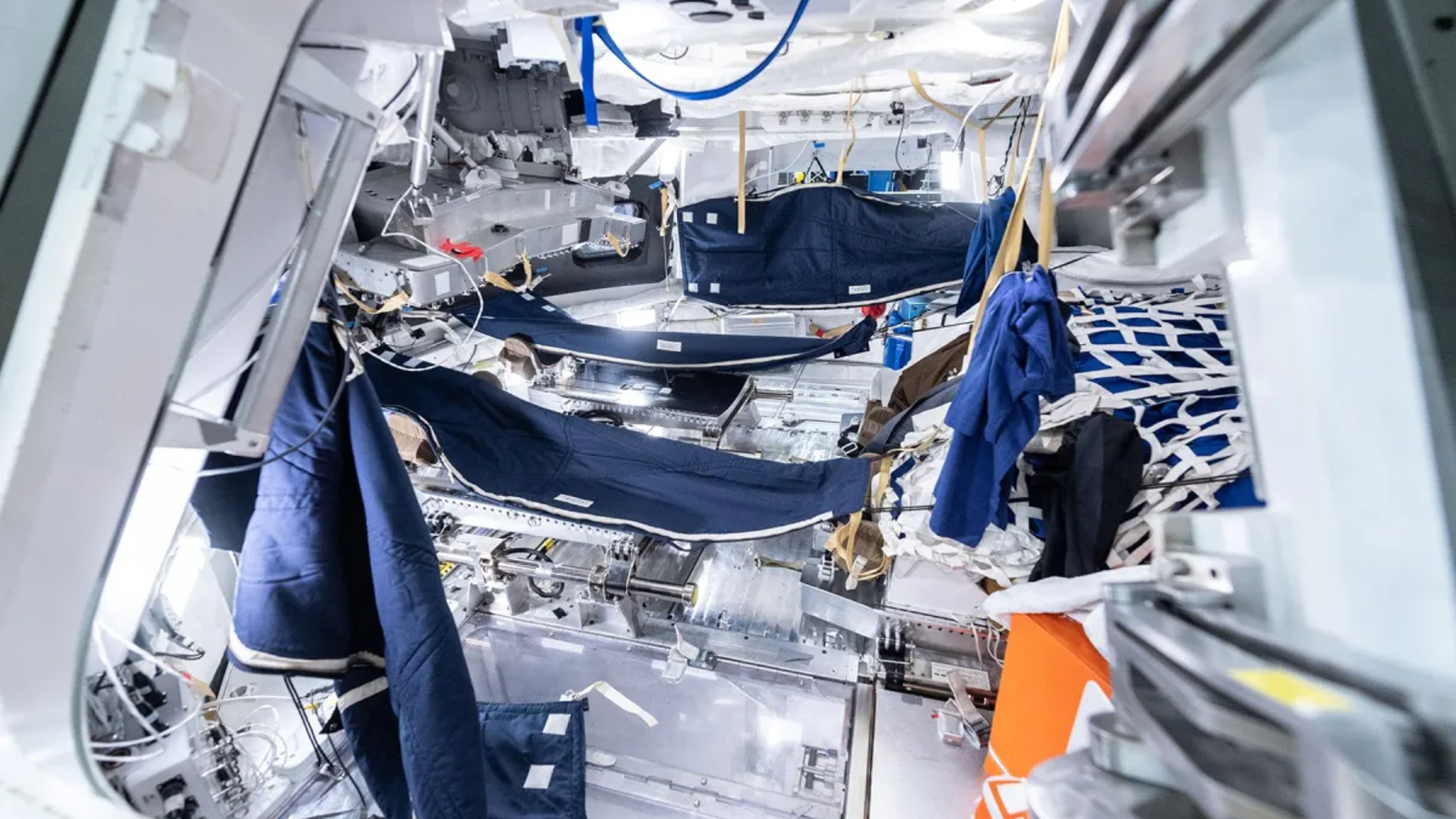
For the next four days, the astronauts will drift toward the moon. They may have to carry out a few subtle trajectory-altering burns, but for the most part, they will just be along for the ride.
During this time, the astronauts will eat, sleep and complete a number of exercises, including zero-gravity CPR and a “rapid spacesuits donning and pressurization demonstration,” according to NASA. They will also likely conduct media interviews from the capsule en route to the moon.
All of this work will be done in the cozy confines of Ingenuity, which has an interior volume of around 330 cubic feet (9.3 cubic meters) — around the same size as two minivans.
8. Lunar flyby
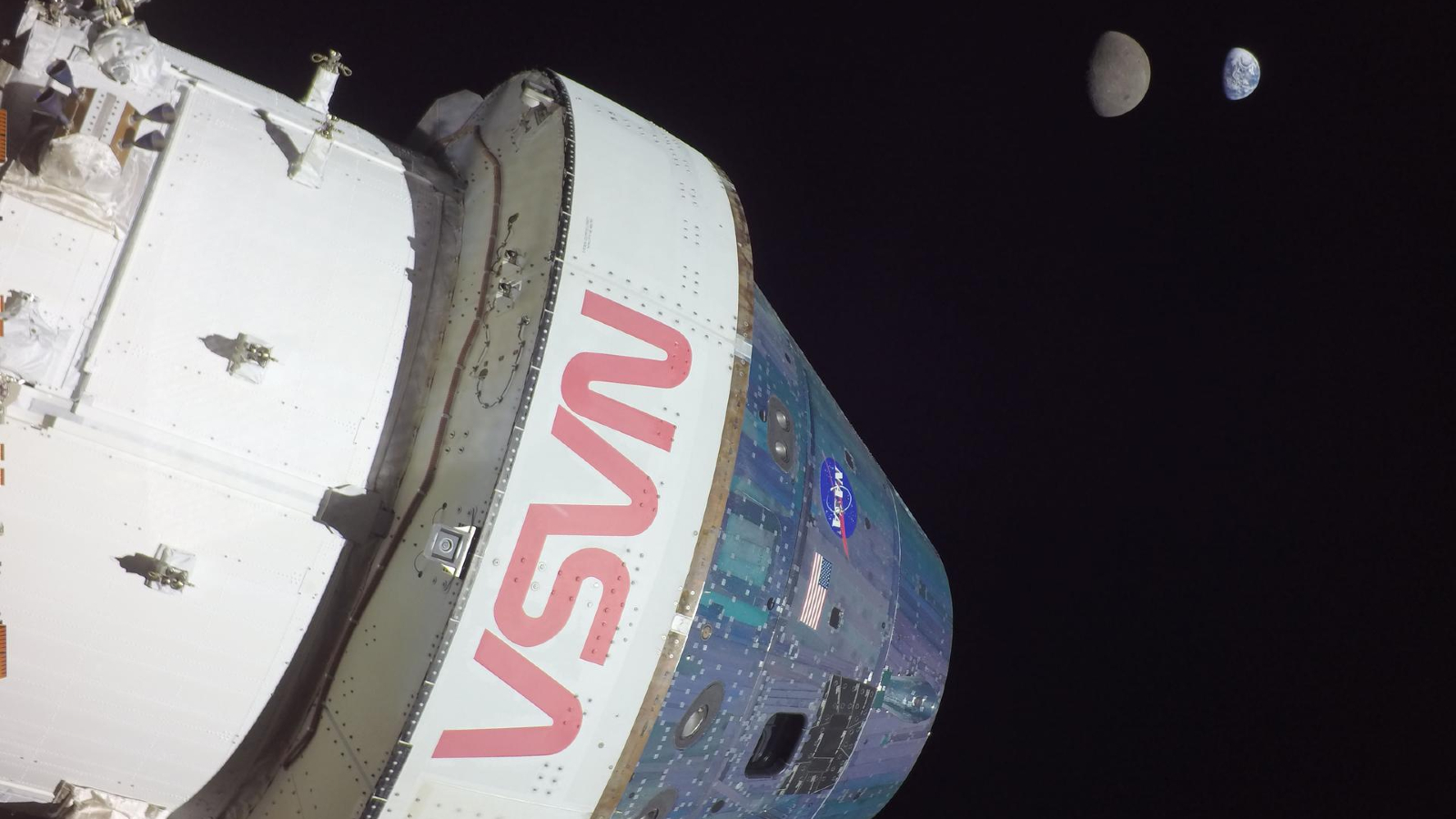
When the Artemis II crew finally reaches the moon, around the start of the sixth day of the mission, they will not have long to enjoy the lunar environment; their slingshot will take only a couple of hours.
For 30 to 50 minutes, the astronauts will go radio silent as the Orion capsule passes behind the far side of the moon. During this time, they will reach a maximum distance of 250,000 miles (400,000 km) from Earth, which will be the farthest humans have ever ventured from our planet — breaking the record set by the Apollo 13 astronauts.
One of the key tasks the team will carry out during the flyby is testing the Orion Artemis II Optical Communications System, which uses lasers to send and receive messages from Earth and will serve as the basis for future communication relays at NASA’s planned moon base.
They will also capture images of the moon’s far side, which are sure to be spectacular thanks to the team’s recent photography training. To the Artemis II astronauts, the moon will likely appear around the same size as a basketball outside the capsule’s windows, according to NASA.
9. Return journey to Earth
After completing their lunar flyby, the astronauts will sail back to Earth, which will take roughly the same time as the outbound journey and will be spent largely doing the same sort of things.
However, the seventh flight day, just after their lunar slingshot, “will primarily be off-duty time for the crew,” according to the NASA fact sheet.
Throughout the mission, the crew will conduct a number of experiments on themselves to test how the mission affects things like their sleep quality and stress levels, as well as monitor their blood, urine and saliva. The team is also carrying mini “avatars” of themselves — blood samples grown to simulate bone marrow on organ-on-a-chip devices — that will test how radiation and microgravity affect human health on a cellular level, Space.com previously reported.
10. Crew module separation
As the astronauts approach Earth’s atmosphere, the Orion capsule, which doubles as the crew’s return module, will separate from the European Service Module around 20 minutes before reentry.
This will be followed by a final burn that slightly raises Ingenuity’s altitude, slowing the capsule and providing the optimal angle of reentry that will lessen the immense strain on the spacecraft.
The European Service Module will reenter the atmosphere shortly before Ingenuity and will likely break apart due to its high speed, according to NASA.
11. Earth reentry

Watch On
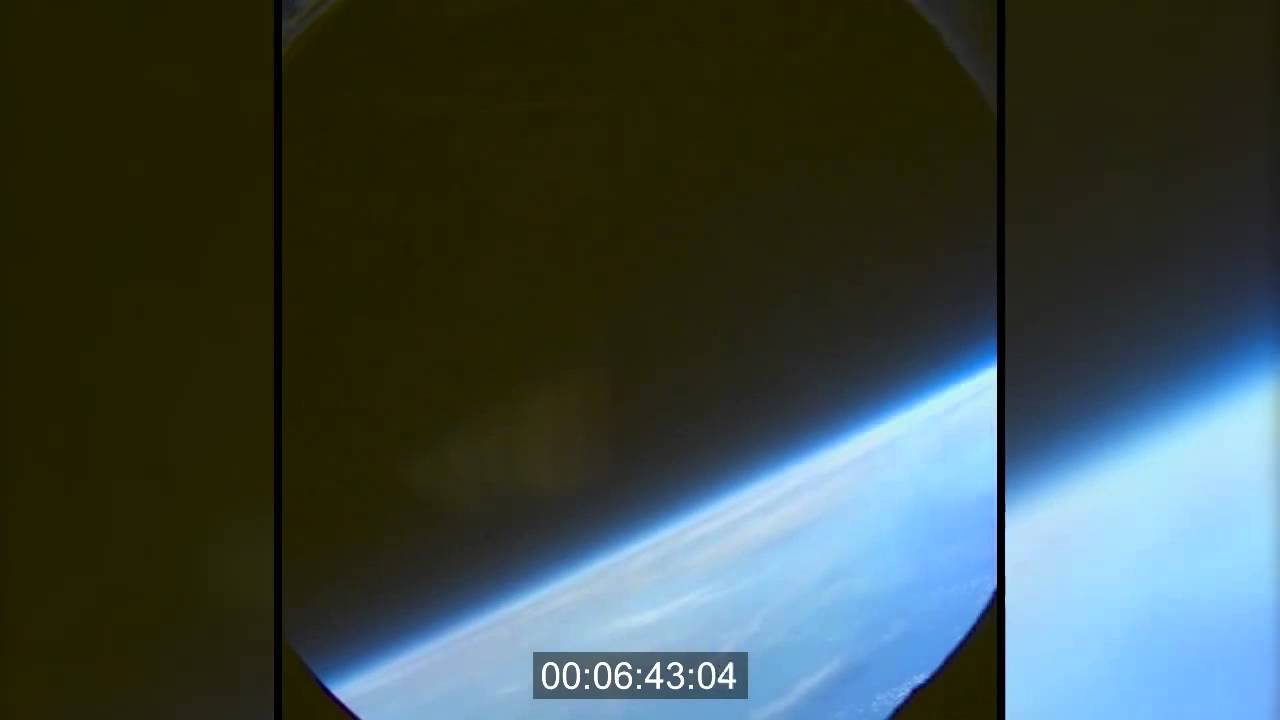
The estimated reentry speed for Ingenuity is just over 25,000 mph (40,000 km/h), which would be a record for a crewed reentry and the fastest any human has ever traveled.
At this velocity, the capsule’s exterior could reach temperatures of up to 3,000 degrees Fahrenheit (1,650 degrees Celsius). Some experts have questioned whether Orion’s heat shields can withstand this intensity, but NASA is confident that it will not be an issue.
The entire reentry process will take around 10 minutes, and the crew will be out of radio contact for several minutes during the crux of reentry, when the capsule is engulfed in superhot plasma.
12. Splashdown
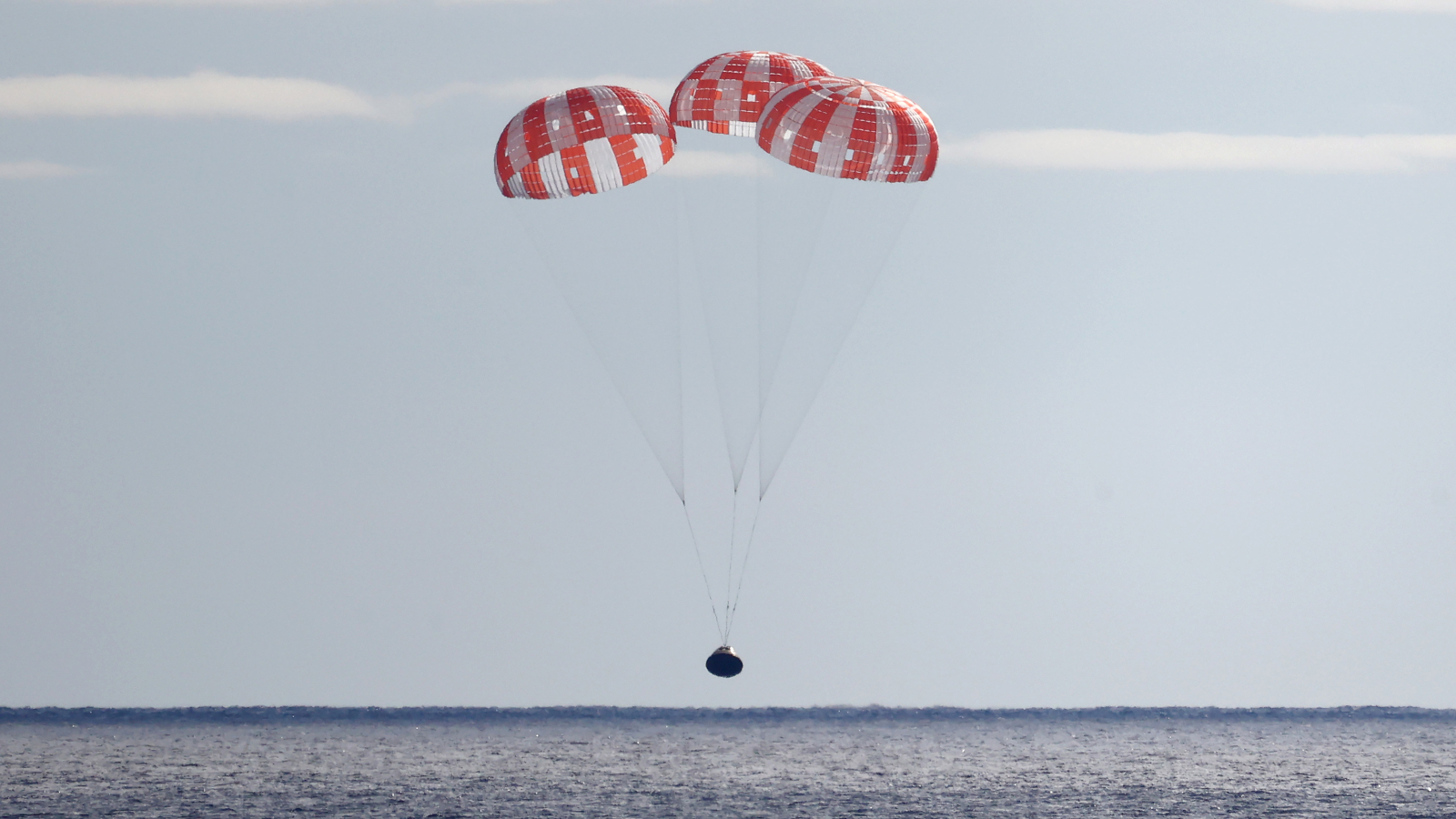
Once the capsule has reentered the atmosphere, it will rapidly free-fall toward Earth’s surface.
At 25,000 feet (7,600 m), two “drogue parachutes” — each 23 feet (7 m) in diameter — will unfurl and slow the capsule to around 307 mph (494 km/h). Then, at around 9,500 feet (2,900 m), the capsule’s three main, 116-foot-wide (35 m) parachutes will be deployed, slowing the capsule to just 17 mph (27 km/h) for a safe splashdown somewhere in the Pacific Ocean, according to NASA.
The capsule may land upright, on its side or upside down. However, five large airbags will quickly inflate around the top of the pod, ensuring that it ends up right side up. The exhausted astronauts will then wait for U.S. Navy vessels to collect them, thereby concluding Artemis II.