Follow us
Add us as a preferred source on Google
Subscribe to our newsletter
Archaeologists have unearthed the oldest evidence of cannabis use from a 2,800-year-old monumental tomb in Siberia. The presence of plant seeds in the grave and chemical traces of the drug in mummy hair suggest people practiced a funeral ritual that may have involved a grim practice: calming human sacrifice victims with cannabis.
In a study published Thursday (Nov. 5) in the journal Science, researchers investigated the contents of a “royal mound” burial at the Tunnug archaeological site in the Uyuk valley of southern Siberia. Archaeologists discovered four wooden structures containing several log coffins in the middle of the mound. On top of the wooden burial structures were the skeletons of horses that once formed a “spectral cavalcade,” a Scythian funeral tradition that involved sacrificing horses and humans. And inside the burial structures, the archaeologists discovered piles of tiny seeds from the plant Cannabis ruderalis, a wild type of cannabis or marijuana.
Cannabis likely originated in Asia and was cultivated thousands of years ago for various purposes, including for ropes and textiles, and 6,000 years ago as an oilseed crop, according to the study. But it’s unclear when people learned about the psychoactive properties of the plant. In the fifth century B.C., the ancient Greek historian Herodotus wrote that the Scythian nomads inhaled the fumes from burning hemp seeds. And evidence of cannabis use was previously discovered in a cemetery in China dated to about 500 B.C. The new study, however, pushes back this date by three centuries.
Latest Videos FromLive Science
Archaeologists found evidence of cannabis use in a burial mound in southern Siberia.
(Image credit: Frozen Corpses Golden Treasures, T. Wallace & G. Caspari)
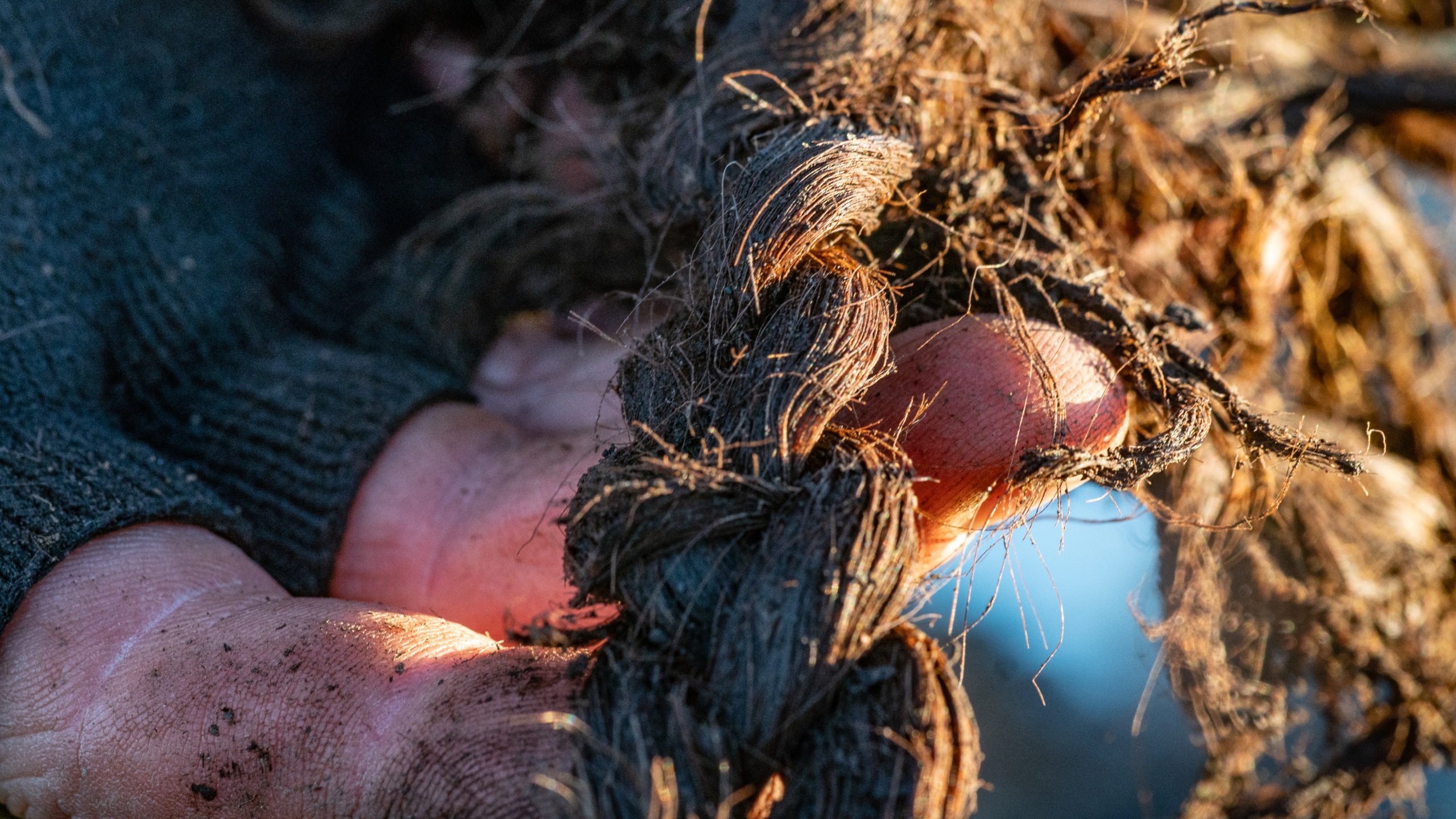
Researchers discovered more than 1,000 whole cannabis seeds and around 500 partial seeds in the Tunnug burial mound, and they carbon-dated them to between 800 and 760 B.C. They also recovered several human hair samples from the grave. An analysis of the hair revealed signals matching cannabinol and THC (tetrahydrocannabinol), psychoactive chemical compounds found in cannabis. The tests could not determine how much of the drug people consumed, however.
“The molecular traces in the hair and the cannabis seeds come from the same grave and suggest that cannabis was used for its intoxicating properties,” study first author Gino Caspari, an archaeologist at the Max Planck Institute of Geoanthropology in Jena, Germany, said in a statement.
But given the burial context of the discovery, the use of cannabis may have had a darker purpose.
“In this princely tomb, the burials were accompanied by extensive horse sacrifices and, most likely, human sacrifices as well,” Caspari said. The tradition of human sacrifice, in particular, “would have potentially made the plant a useful agent to calm individuals who were to be included in the rituals,” the researchers wrote in the study.
Get the world’s most fascinating discoveries delivered straight to your inbox.
The new study confirms the ancient use of cannabis in funerals in Central Asia and extends the date back to 2,800 years ago, the researchers noted. Future work is planned but will focus on other aspects of ancient cannabis.
“We have already begun sequencing some of the plant samples,” Caspari said. “This will help us learn more about the history of the domestication and spread of the crop soon.”
Caspari, G., Sadykov, T., Formicheva, D., Blochin, J., Armbruster, D., Happel, O., Ryabogina, N., Boxleitner, K., Spengler, R. (2026). Direct evidence for psychoactive cannabis use 2800 years ago. Science. http://dx.doi.org/10.1126/science.aeg3800