





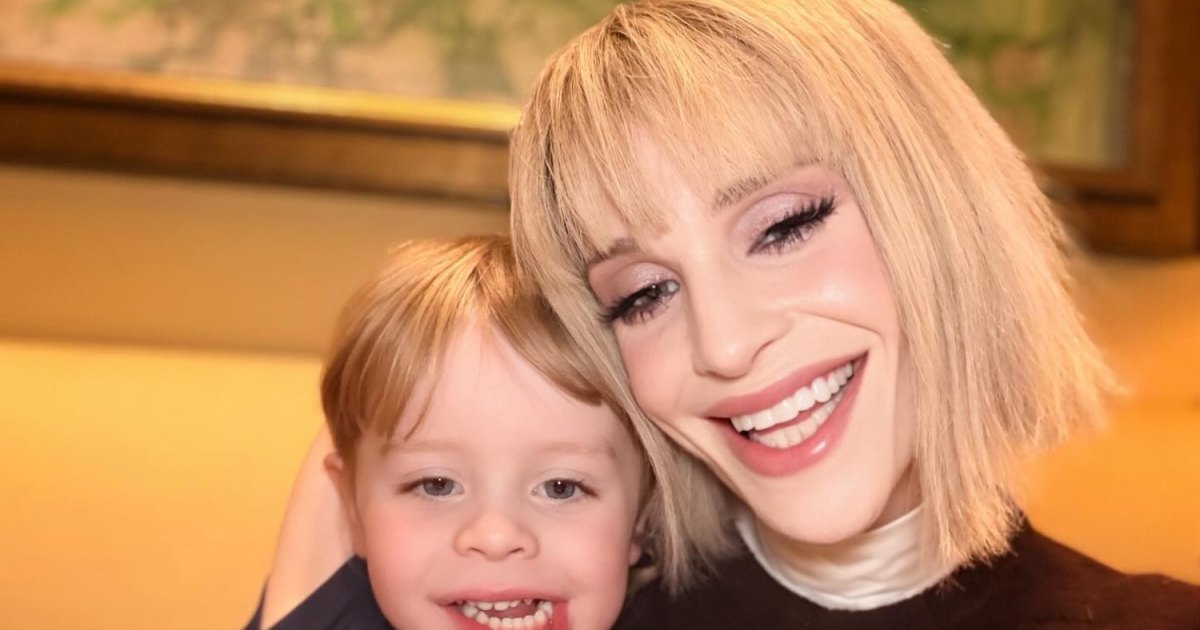



Chea Eagleson realized she was a mean girl while lying on the floor of an Indiana crack den. Then 17, the party girl was sprawled on the beer-stained carpet at 2 a.m. as two small, feral children slept by her side.
Before dropping out of high school the previous year, Eagleson had spread rumors that a classmate’s scab-surrounded mouth was really an outbreak of facial herpes, blocked her school lunch table from anyone but the “party girls” clique, and regularly got kicked out of class for disrespecting her teachers.
The reformed mean girl is now 36 and works as a minister and substitute teacher at her old stomping grounds, occasionally working alongside some of the same teachers she used to torture.
The mother of four says that because of an abusive home life and a deep desire to belong to something outside her troubled family, joining a clique of lip-glossed teen tyrants felt urgent to her survival — even though they were “spiteful and deeply anguished individuals,” Eagleson admits.
As her friends partied with older guys in the next room, Eagleson says her “inner child” emerged, wondering why she was so unloved — and why she would make anyone else feel as unworthy as she felt.
“I was like, ‘Why are these kids here? What am I doing here?’ I don’t want to be this person…It was something that shifted.”
Eagleson represents a horde of former “mean girls” who swear they’ve grown up — and are ready to take responsibility for their actions.
They type their victims’ names into social media search bars seeking to make amends. They lie awake hoping their own young daughters won’t be targets of similar cruelty.
And they wonder if every hardship, from a layoff to a random fender bender, might be karmic payback for their teenage sins.
But even after developing a fully formed frontal lobe, can a former high school mean girl ever truly change?
“Absolutely,” Christina King, a California therapist who specializes in helping tween and teen girls, told The Post, emphasizing that it’s entirely possible for these young women to evolve into empathetic, well-adjusted adults — though they have to want to, first.
King added that teen girls often use emotional abuse instead of physical blows to lift their own status, eviscerating unlucky peers through exclusion, gossip and backstabbing. These behaviors, she adds, are often “modeled” from close adults in their lives who are doing the same things.
After her crack den epiphany, Eagleson joined a church, got sober, finished school and earned advanced degrees. She married a man she lovingly describes as “the nerdy kid in school,” blending their families into a tight-knit unit.
But nearly 20 years later, she remains haunted by her mean girl past.
Eagleson still shudders when recalling an encounter with a fellow classmate a few years after high school, one whom Eagleson and her friends had relentlessly taunted. The young woman confessed that this petty, teenage cruelty had worsened her depression and even led her to seriously consider suicide.
“I’d had no idea,” said Eagleson, who apologized profusely in the moment. “I was so self-centered about my own problems…You’re not thinking about how other people are feeling.”
Hope Hobbs, a 30-year-old Oklahoma stay-at-home mother of two, told The Post she’s plagued by a similar gnawing guilt for her own mean girl crimes, hers largely revolving around cyberbullying as social media exploded during her high school years.
As her 5-year-old daughter starts kindergarten this fall, the millennial mom — who has spoken with her child about kindness after learning she and a friend were excluding other kids during pre-K playtime — feels her stomach drop whenever she thinks of her baby navigating the ever-evolving virtual world.
“I’m worried about karma,” Hobbs said. “I don’t want it to happen to my daughter because I did it to somebody else.”
Falling in with a rougher crowd as a sophomore after being “viciously bullied” in middle school, the Virginia native spent much of her free time online, noting there wasn’t much else to do in her small town.
Alone in her room, she entertained herself by virtually picking on a girl her friend group had rejected.
The abuse started with anonymous Facebook messages, sent under a fake account, calling her classmate “a worthless whore” and “so desperate it’s embarrassing,” and claiming a boy they both knew “doesn’t want your nasty ass, you’re ran through.”
She also commented under the girl’s posts with similar insults to twist the knife further, though she suspects the girl knew it was her.
Hobbs’s grandparents, who acted as her main guardians, were in their early 70s and had no idea how to work a cell phone, allowing her to catfish freely at home.
Hobbs, who said she “just [wanted] to fit in,” was never identified or punished for the abuse — including for posting a Snapchat video of the bullied girl’s new car, with her and her friends claiming she’d only gotten it by sleeping with a boy in exchange for the vehicle.
Years later, Hobbs noticed the bullied girl posting on Facebook about mental health struggles. She reached out to apologize and offer support, but was swiftly blocked.
Though she’s since left her small Virginia town to start a new life with her family in Oklahoma, and has worked with a therapist to “keep [herself] accountable,” the memories keep her up at night.
“I want to be the type of person today that younger Hope would look up to — the type of person I know I’m meant to be,” said Hobbs.
Tamiko Edwards, a 53-year-old social work program manager from Flint, Michigan, is selective when it comes to her mean girl regrets.
Though she and her pals kept a “slam book” — a real-life precursor to Regina George’s pink “Burn Book” in “Mean Girls” — and initiated regular altercations, the mother of two declined to call her teenage self a “real” bully, saying she only picked on people who were mean to her first.
Describing herself as loud, attractive and “popular my whole life,” Edwards was raised to carry herself with confidence; her mother told her and her sister never to let their self-esteem fall below a 10.
But after entering her inner-city public school, Edwards was mocked for her “boy-crazy” attitude and big mouth — which she now cites as the reason she bullied others.
“I needed to know who was a friend and who wasn’t,” she told The Post.
That fear was realized about a decade after graduation, when Edwards planned her birthday and realized she had no real friends to celebrate with.
“Everywhere I went, there was an issue,” Edwards said. “I had to sit back and be like, you know what? Maybe it’s me.”
Now 35 years removed from high school, Edwards says she’s changed, thanks to therapy, and has raised her children to respect others. She’s apologized to some former classmates and remains open to making amends with more.
Still, her “inner mean girl” isn’t gone entirely — just better managed.
“When you have an inner mean girl in you, she’s still there,” Edwards said with a laugh. “I just don’t let her come out.”


