



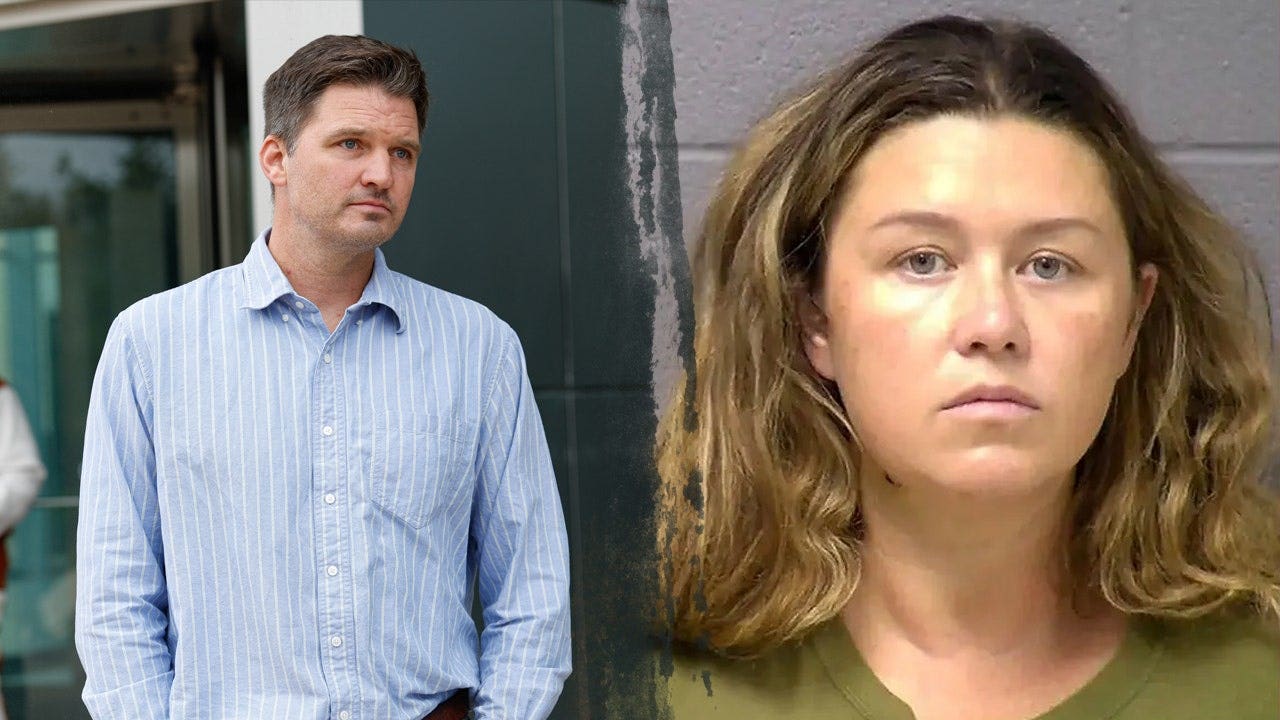




On July 20, 2026, 27-year-old Elizabeth Baron arrived at the Bereshit Lifestyle Center in Riverdale, New York, for an NAD IV+ injection.
The popular anti-aging molecule has become a highly sought-after treatment at med spas. The legal — but not FDA-approved — therapy has been touted by celebrities like Hailey Bieber and Kendall Jenner for its ability to repair DNA, increase energy, and boost metabolism, à la the “fountain of youth.”
The clinic was run by Luis Rojas Cabrera, a man who claimed he held a doctor’s license in the Dominican Republic but not, he allegedly admitted in the aftermath of the tragedy that unfolded, in New York.
While receiving her IV treatment, Baron went into cardiac arrest. She was rushed to the hospital, but was pronounced dead shortly after.
Her death shone a light on the enormous medical spa industry — where clients can book lunchtime body-contouring treatments, discounted injectables with hard-to-pronounce names, and beauty-boosting IV drips that promise to burn fat and cure hangovers.
As a result, medical spas have become one of the fastest-growing sectors of the beauty and wellness industry in New York City.
And the democratization of looking and feeling great has been profound; it’s never been more affordable.
At the same time, it’s never been more unregulated.
Med spas have increased sixfold nationwide since 2010, and are projected to explode into a $47 billion market over the next 5 years.
According to data obtained by The Post, in 2008, med spas occupied 20,641 feet of retail space. In 2024, that had jumped to 83,370.
But oversight of these businesses is complex, especially in New York, where it’s divided among multiple agencies. Who is responsible when something goes wrong may not be immediately clear.
Under New York Law, any company providing medical services needs to file as a physician-owned LLC or PLLC.
Attorneys say it is not uncommon for businesses to look like they’re compliant on paper by listing doctors or management companies on official documents, but in reality may be skirting the requirements.
Current loopholes exist that allow the hiring of “medical directors” if the company isn’t owned by a physician, or having the owner file as a business management partner — which can blur the lines of compliance. There also must be direct oversight from the medical supervisor as nurses administer treatments.
It’s much harder for regulators to figure out if those setups actually match what happens in real life. And the investigation into several hundred med spas across New York suggested dozens of spas operating outside of these requirements and should raise the alarm for the scores of consumers chasing youth and longevity.
Best-case scenario, you might receive watered-down Botox from an “aesthetic artist” with little to no training, injected into your frown lines.
Worst case, you could suffer lethal or close-to-lethal consequences.
In July, Felipe Hoyos Foronda, a phony surgeon from Queens, was sentenced to up to 15 years in prison for killing a 31-year-old woman last April, after she went into cardiac arrest from a lidocaine overdose during a body contouring procedure at a makeshift clinic.
Recently, a Hell’s Kitchen-based med spa was busted after the founder, Joey Grant Luther, was caught injecting clients with phony Botox from China — leading one woman to experience “double vision” and heart palpitations.
Even celebrity-favorite Sonia Dakar, an aesthetician in Los Angeles, had her license revoked in June 2026 after a patient sued her for “severe burns and permanent scarring” following a chemical peel.
A mushrooming problem
Online, there are now dozens of Facebook groups and forums titled “Botox Gone Wrong” and “Flawed Fillers & Botched Botox — An Awareness Group” that share med spa horror stories that include damage from lasers.
Overwhelmingly female, the members talk about aggressive treatments that have melted facial fat leaving them looking 15 years older with sagging, hallow skin, severe and ongoing facial pain from a compressed nerve following misplaced filler, or a 20-year old who became suicidal following a vascular oculsion on her chin that blocked blood flow and caused the skin to fall off, leaving her permanently disfigured and having to put her life entirely on hold.
One of them was 35-year-old New Yorker Tara*, who asked to use a pseudonym.
She started getting regular Botox at Peachy, a hugely popular New York medical spa, two years ago.
On more than one occasion, however, she recalled to The Post, the Botox left her with what she described as severe brow drop, heavy eyelids topped off with “crazy carrot top Spock eyebrows.”
Tara told The Post that she didn’t know any better and assumed, like many others, that the buzzy, Instagram-friendly med spa would give her desired results.
“It almost actually made me look older because it wasn’t done correctly,” she said.
“They tried correcting it, but instead of correcting it, they just made it worse by making my eyelids look super heavy.”
While she notes that her experience was hardly the most traumatic, it was enough for her to reconsider going back to the provider for any further aesthetic enhancements on her face.
“I think the biggest problem with a lot of these med spas is they don’t actually care if you return because that’s not their business model,” she said.
What is the business model?
Low outlay costs (rent, basic equipment and staffing), a high volume of patients and “affordable” premium fees that drive profits.
But experts described it to The Post as the wild west, which is complicated by ever-changing state guidelines.
New York City-based board-certified dermatologist Dr. Chang Son told The Post he frequently sees “aesthetic consultants” or medical assistants open spas by hiring nurses and low-cost medical directors, who are MDs, but often located out of state or retired, and take on the role as passive income.
This is the loophole that allows customers to think they’re under direct medical supervision and to help pass a sniff test with over-burdened regulators, as it appears legal on paper. In reality, sources told The Post this is technically unlawful but regulators don’t usually see it unless formal complaints are filed.
“They’ll hire nurses and a low-cost medical director just to sign charts, then quickly build a viable business,” he said.
Registered nurses often perform injectables with little supervision, and often charge less than the board-certified physicians, which draws in patients, Son said.
One former New York City aesthetician, who requested anonymity because she still works in the industry, told The Post she was hired and permitted to do laser hair removal on clients for several months after her professional license had expired.
“I know there are people doing injections who shouldn’t be,” she told The Post. “Technically I can do microneedling under my license, but I don’t know if a doctor has to be present. There were no doctors present at any place I worked.”
As shocking as that sounds, that unregulated supervision is more common than expected, especially in NYC.
Clinics skirting the rules
When Cleavage Clinic opened in Manhattan in 2023, it quickly attracted attention for offering a “non-surgical natural boob job” using injectable fillers instead of implants and radiofrequency microneedling designed to tighten skin — both procedures that New York considers medical treatments.
Women looking for breast enhancement can schedule a complimentary consultation with co-founder Brianna Tomaselli, who is described as a breast aesthetic specialist with no medical affiliation, after a simple online booking.
Depending on the client’s goals, treatment packages can be purchased and received in the chic Midtown office, adorned with white-tiled flooring and modern wood wall paneling, for up to $6,800.00.
The Cleavage Clinic is part of a new generation of aesthetic businesses that follow the same cookie-cutter model — slick branding, a massive social media presence, a novel procedure, and founders who don’t fit consumers’ expectations of a traditional medical practice.
In their case, Cleavage Clinic boasts a staff of registered nurses, performing services only meant for medical providers.
In New York, RNs cannot evaluate patients independently, diagnose, or create treatment plans.
But lawyers and doctors explained to The Post that nurses are permitted to perform some cosmetic procedures under a doctor or highly trained provider’s supervision, who must provide specific instructions for each patient and also must be on site.
Which is where Dr. Eeman Tariq comes in. The Cleavage Clinic lists Tariq, a “board-certified physician and artist” based in Florida, who works with several other clinics in various states and offers peptide and IV treatments, as its medical director.
Several attorneys interviewed by The Post said many med spas, such as this one, advertise a medical director, but that doesn’t necessarily mean a business complies with New York law.
“There are a few that I know of that have a medical director who isn’t even board-certified plastic or derm,” New York board-certified Dr. Darren Smith told The Post.
Smith said the common play is that a medical director is often just an MD, but not even affiliated with internal medicine, which is why a dentist can technically offer you Botox.
“95% of the time that is fine, but when there is a problem it’s not fine,” the surgeon said. “Filler is really dangerous; you can have tissue necrosis, which with rapid intervention can be reversed, but that is something you need advanced training to mediate.”
As similar medical spas have proliferated across New York, so too have questions over who is responsible for policing them. The law hasn’t evolved as quickly as the business has.
Consumers often assume a medical spa is simply another type of doctor’s office. But under New York law, “medical spa” isn’t a legal business category at all—it’s a marketing term used to describe businesses offering a mix of medical and non-medical aesthetic services.
Public records reviewed by The Post show Cleavage Clinic is set up as a standard limited liability company rather than a physician-owned professional corporation or professional limited liability company.
Under New York’s Corporate Practice of Medicine doctrine, attorneys told The Post that businesses providing medical services generally must do so through physician-owned professional entities—not ordinary LLCs.
Operating like a standard LLC business doesn’t automatically mean a spa is breaking the law—some work with doctor-owned companies that manage the medical side.
However, under New York’s Corporate Practice of Medicine doctrine, simply employing or contracting with a physician is not enough for a business performing medical procedures.
Attorneys say it is not uncommon for businesses to look like they’re compliant on paper by listing doctors or management companies on official documents, but in reality may be skirting the requirements.
And regulators often rely on complaints from physicians and others before opening investigations.
The Post reached out to the Cleavage Clinic to explain its corporate structure, identify the professional entity responsible for providing medical services, describe its physician supervision model, and explain how it complies with New York’s Corporate Practice of Medicine doctrine.
They have yet to respond.
When things go wrong
Attorneys and physicians interviewed by The Post said these business models make it increasingly difficult for consumers — and regulators — to distinguish compliant businesses from those operating in legal gray areas.
Board-certified dermatologist Dr. Anetta Reszko still remembers one of the worst complications she has treated: a woman whose nose tissue began dying after filler blocked its blood supply and failed to recognize it as a medical emergency requiring immediate treatment.
The patient ultimately required two reconstructive surgeries.
Complications are rare but highlight why experience and training matter. ‘Board certified’ can be a loosely thrown term.
Plastic surgery and dermatology are certified through ABMS-recognized specialty boards.
Many organizations offer certifications that aren’t equivalent to true specialty credentials.
“I’ve seen nurses call themselves doctors because they have a doctorate, which misleads patients,” Son added. “Patients assume a provider has an MD just because of a certificate.”
To make things more complicated, not all non-ABMS-certified providers are unqualified—some nurse injectors are highly experienced and even train others.
“It is often a misconception that a doctor is going to be better than a nurse or a nurse injector,” Dr. Alemi told The Post. “Because if a plastic surgeon doesn’t spend a lot of time doing injectables, then I think they’re less qualified than a nurse who’s doing that stuff all the time.”
As the industry grows, the burden of distinguishing qualified providers from polished marketing increasingly falls on consumers—a responsibility Reszko believes shouldn’t rest with patients alone.
“It’s actually difficult,” she said. “You go to some place with advertisers. The office is pretty. The girls at the front desk are very cute, and they said they had the treatment done. So you tend to trust that.”
But as aesthetic medicine grows, she said, regulators will eventually have to answer a broader question: “Who should be administering them?”
Until then, she said, patients should ask to see a provider’s own before-and-after photos, ask how often they perform a procedure and research who will actually be treating them.
“It’s your body,” she said. “You do have to do that research.”


