




Quick facts
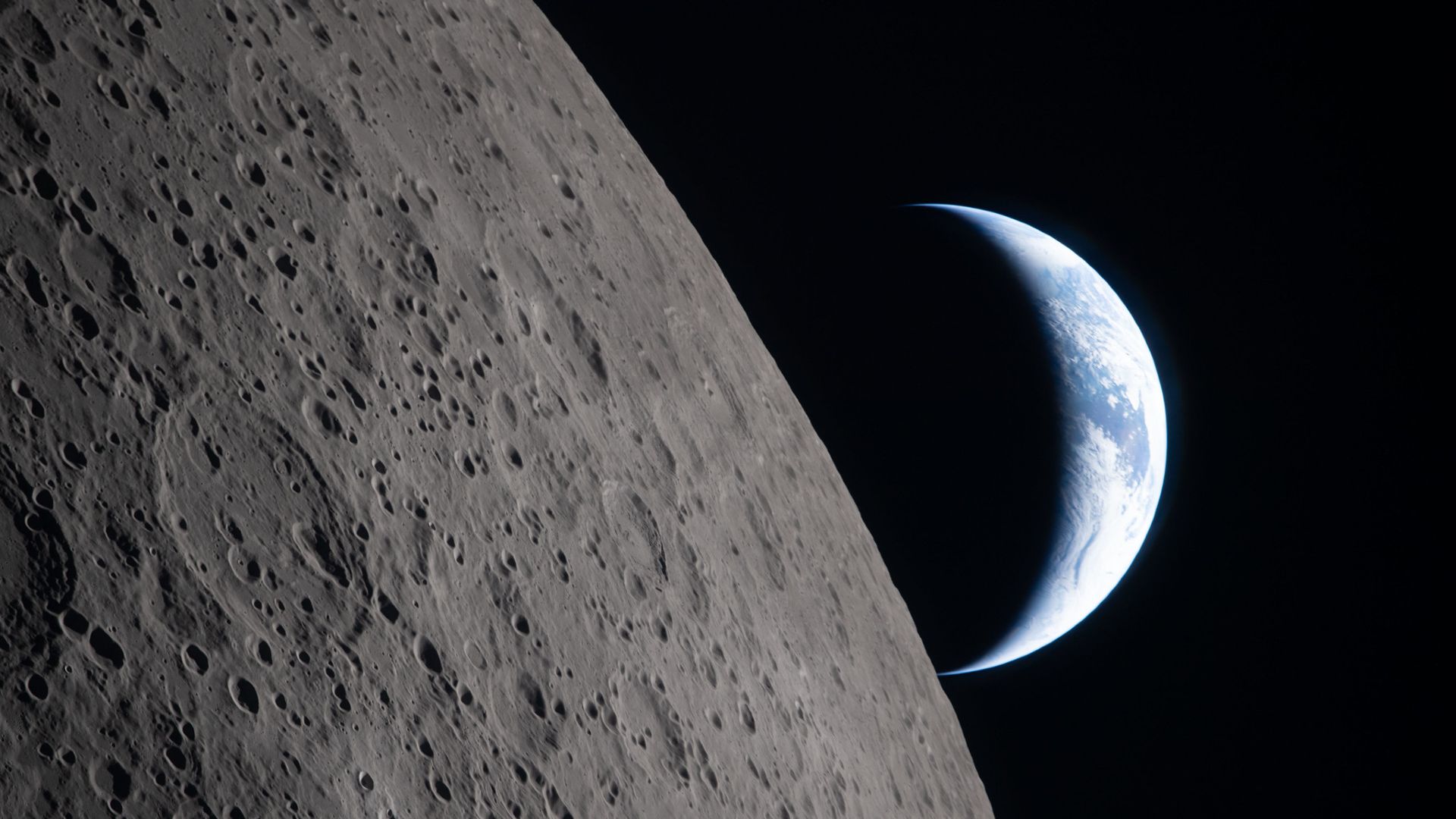
What it is: “Earthset” as seen by the crew of NASA’s Artemis II mission
Where it is: 4,070 miles (6,550 kilometers) above the lunar surface
When it was shared: April 6, 2026.
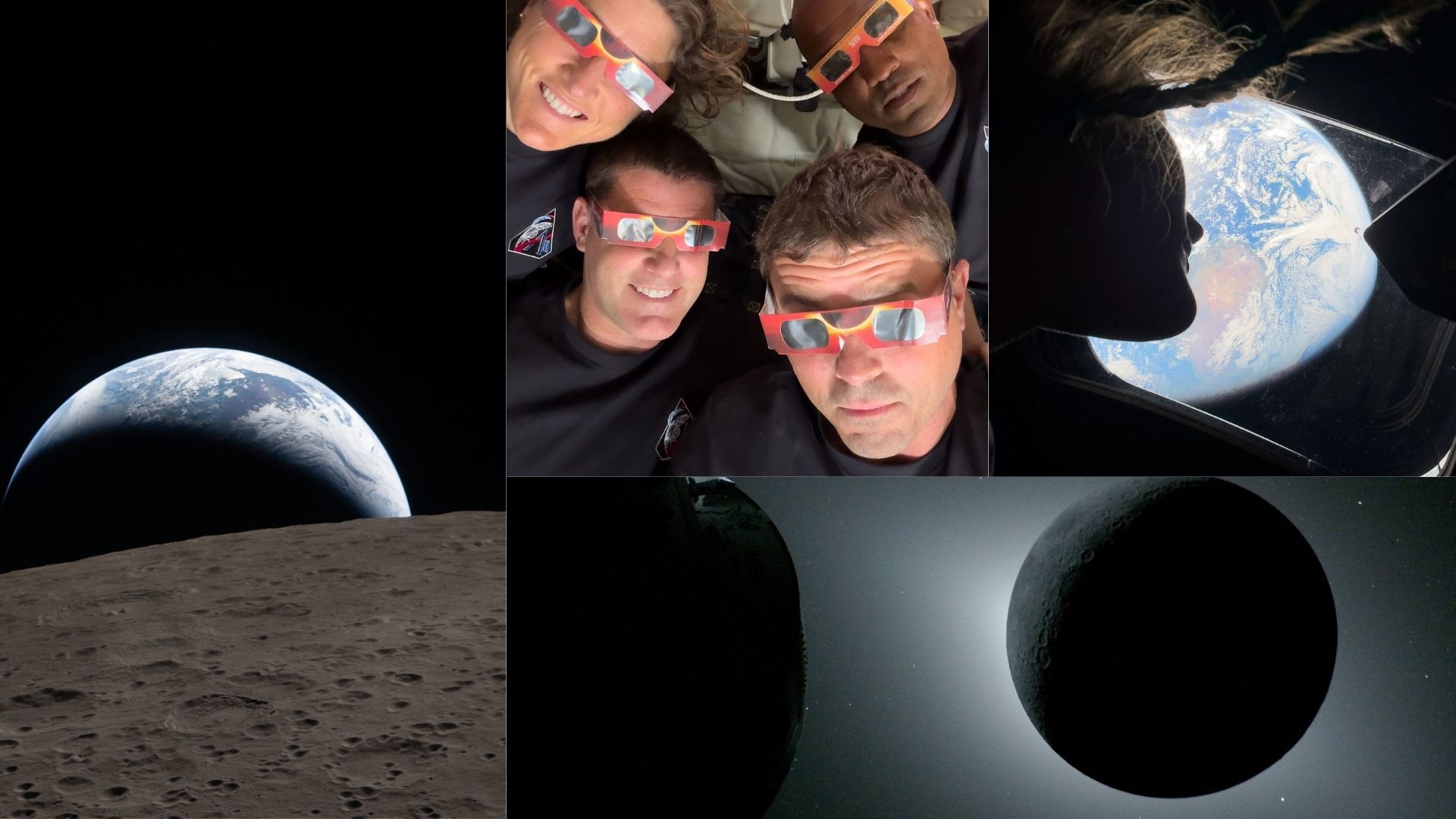
This striking image shows a crescent Earth slipping behind the moon’s rugged limb. This “Earthset” was witnessed by the crew of NASA’s Artemis II mission and is arguably the highlight of the first mission around the moon since 1972. Moments after this image was taken, the Orion spacecraft passed behind the moon, beginning a 31-minute communications blackout with Mission Control in Houston, Texas.
“I’m actually getting chills right now — just thinking about it, my palms are sweating,” Commander Reid Wiseman said from the Orion capsule during a live news conference on Wednesday (April 8). “It is amazing to watch your home planet disappear behind the moon. You can see the atmosphere. You can see the terrain on the moon projected across the Earth … it was just an unbelievable sight … and then it was gone. It was out of sight.”
The image inevitably invites comparison with the Earthrise captured during the Apollo 8 mission on Christmas Eve 1968 — the mission that took three humans around the moon for the first time. That photograph, taken by pilot Bill Anders, revealed Earth as a fragile, finite world suspended in darkness — a perspective widely credited with helping to spur the modern environmental movement.
The crew of Artemis II later took their own Earthrise image, but it was that initial Earthset — also taken a little farther out, in close up and in wide angle — that deeply affected Wiseman, pilot Victor Glover, mission specialist Christina Koch and Canadian Space Agency astronaut Jeremy Hansen.
Human minds shouldn’t have to go through what these just went through.
Reid Wiseman, Artemis II Commander
“The four of us took a moment,” Wiseman said. “We shared maple cookies that Jeremy had brought. We took about three or four minutes as a crew to reflect on where we were — and then it was right back into the science
“There’s a lot that our brains have to process,” Wiseman added. “Human minds shouldn’t have to go through what these just went through, and it is a true gift.”
The original Earthrise image announced humanity’s arrival at the moon. It was unexpected and improvised. Earthset was intentional — and signals humanity’s return to the moon after more than half a century.