



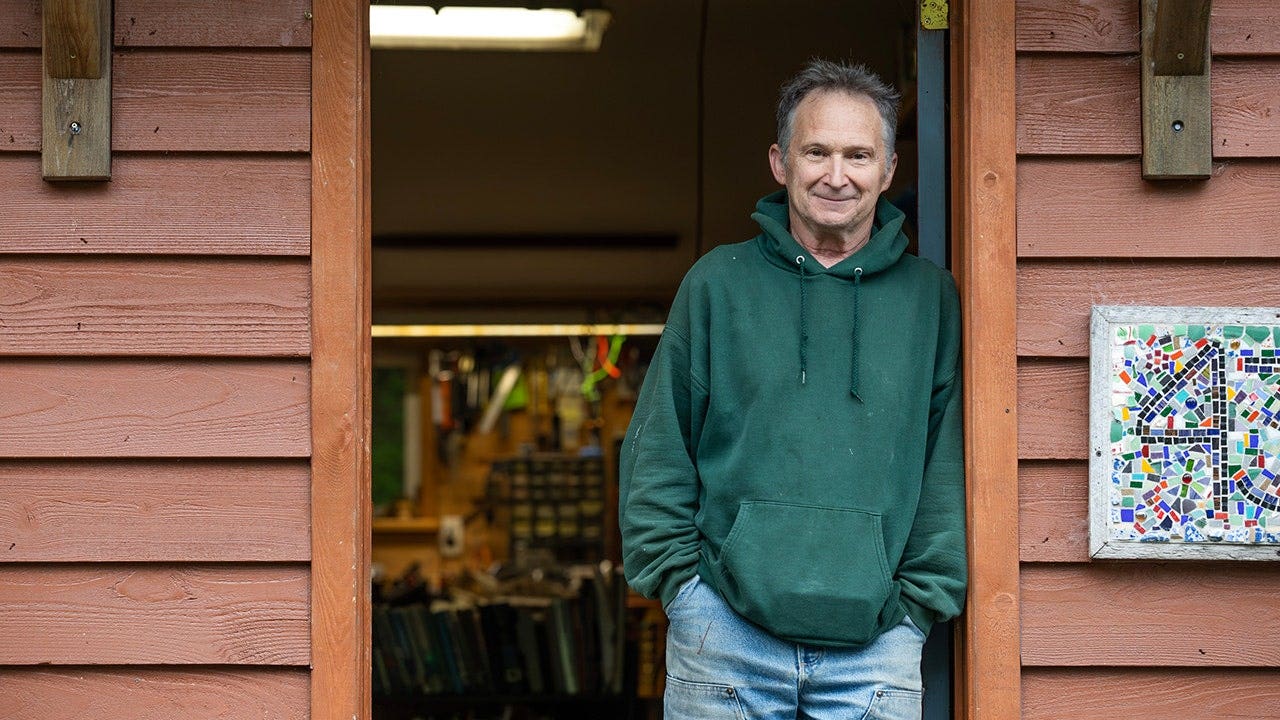






Godfrey Baguma is the first to proclaim it: “I am the ugliest man in the world! The whole world!”
Back in 2002, Godfrey, now 63, took part in the competition for Uganda’s ugliest person and won.
While most people would be pretty heartbroken to earn such a title, Godfrey lives with an extremely rare life threatening and condition called fibrodysplasia ossificans progressiva (FOP), also known as “stone man disease” — so standing out with such a superlative made him feel special.
“When I won the title for being the ugliest man, I was like, this is who I am,” he says in an exclusive clip from a new episode of “Most Extreme Humans,” airing Wednesday, June 17 at 9pm ET on TLC. “I’ve made it this far, I’m still good for something. It gave me confidence.”
What is FOP?
The muscles and connective tissue of people with FOP gradually turn to bone over the course of their life. This process starts in childhood, when the neck and shoulders become frozen, and gradually moves down through the limbs, restricting movement.
If muscles around the mouth and jaw turn to bone, it can block speech and eating. Bone expansion around the ribcage can limit breathing.
“This disease attacks the muscles. They grow and turn into bone there is a lot of pain,” Baguma said.
What’s especially frightening is that any kind of injury (like a fall or surgery), and even viruses like the flu, can cause bone to grow even faster.
Even injections like vaccinations or numbing at the dentist’s office might cause extra bone to form.
Swelling is a major problem of FOP as new bone presses on lymphatic vessels, obstructing the flow of lymphatic fluid, and causing the liquid to pool in a limb.
Baguma’s condition is extremely rare, affecting one in a million people worldwide, with only several hundred cases ever recorded.
People with FOP have some options for treatment, including a drug that limits new bone formation, which was approved by the FDA in 2023. They may also take antibiotics because of their increased risk for respiratory infection, and corticosteroids to help with pain and swelling.
People like Baguma also need special shoes and braces to help walk and go about daily life as bone stiffens the limbs.
Godfrey’s story
Baguma was born in a small village in Uganda, where he faced ridicule and discrimination.
“Over the years, many people have called me ‘gorilla,’” he says in the new episode. “Some call me ‘monkey,’ some call me ‘baboon.’ This is normal. I’m used to it now.”
He first noticed something was wrong when he experienced abnormal swelling to his cheek at age 10.
Still, he went undiagnosed well into adulthood, going on to have eight children — six with the love of his life, Namande Kate.
“I told her that I didn’t choose to look the way I do and that if she feels I am a burden, she is free to leave me,” he previously told KFM.
However, she told Barcroft: “Godfrey’s not handsome on the outside, but he has a good heart. I wish people would see him the way I see him.”
About a decade ago, Dr. Tony Wilson, the head of medicine at Mbarara Hospital in Uganda, performed an MRI and finally diagnosed him. He was reassured that he could not pass the condition on to his children.
All the while, he has refused to let this condition define him. He’s pursued music, motivational speaking and comedy.
He encourages others with messages of self-acceptance and striving to overcome adversity and systemic discrimination.
Baguma shares his story on “Most Extreme Humans,” a new show on TLC telling the stories of people living with rare medical conditions and overcoming the odds.


