


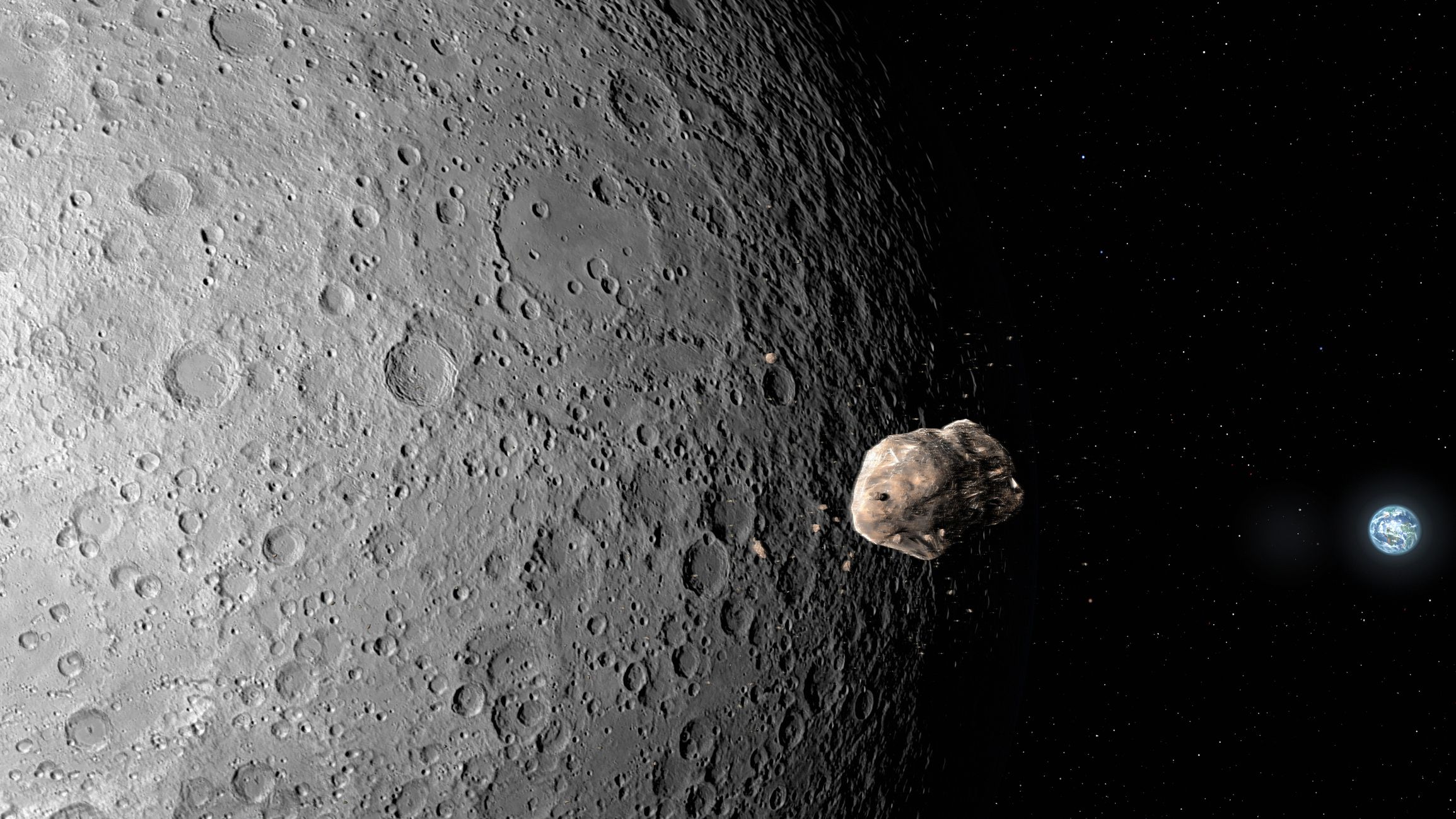
The moon will officially be spared from an explosive encounter with a “city-killer” asteroid in 2032, new observations from the James Webb Space Telescope (JWST) reveal.
Collected on Feb. 18 and Feb. 26 with JWST’s sensitive infrared instruments, the new observations of the near-Earth asteroid 2024 YR4 allowed NASA astronomers to refine previous estimates of the space rock’s trajectory — dropping the chances of a lunar impact from 4.3% to zero.
Riskiest asteroid ever
Asteroid 2024 YR4 was discovered in late 2024 by the Asteroid Terrestrial-impact Last Alert System (ATLAS) network
Subsequent telescope observations soon showed that the space rock was a whopper, measuring between 174 and 220 feet (53 to 67 meters) in diameter — about as wide as the Leaning Tower of Pisa is tall — and that its trajectory would bring it extremely close to Earth. If an asteroid this size were to hit our planet, it could wipe out a city with the equivalent force of 500 Hiroshima bombs, Live Science previously reported, earning it the “city killer” nickname.
While telescope data on the asteroid was still limited, astronomers estimated that it had a slight chance of smashing into Earth. The predicted likelihood of a collision peaked at 3.1%, which were the highest odds of a potential asteroid collision ever. Within months, new data from JWST and other telescopes brought those odds down to zero, while the chances of a lunar collision remained at 4.3%.
What would happen if such a large asteroid hit the moon? It certainly wouldn’t be the first time the moon took a hit from a space rock, but it would have been the first time scientists could predict a large lunar impact from a known asteroid and watch it happen in real time. Some astronomers theorized that the resulting explosion could have been visible from Earth with the naked eye, while others warned of a potential rain of debris that could trigger a brand-new meteor shower over our planet.
Now, with Earth and the moon officially safe from 2024 YR4, the asteroid will remain a tempting target for astronomers who want to test planetary defense models, and it could help us prepare for additional close encounters. NASA plans to watch the asteroid with JWST again in 2028, when it heads back our way — and passes by safely.