



DETROIT, Mich. — Michigan’s Senate race on Tuesday has turned into the battle royale between two competing visions for the Democratic Party.
The primary election between Dr. Abdul El-Sayed and Rep. Haley Stevens (D-Mich.) had been an unusually competitive swing state matchup between a hardcore progressive and a more moderate Democrat amid the national debate between the two sides roiling the party.
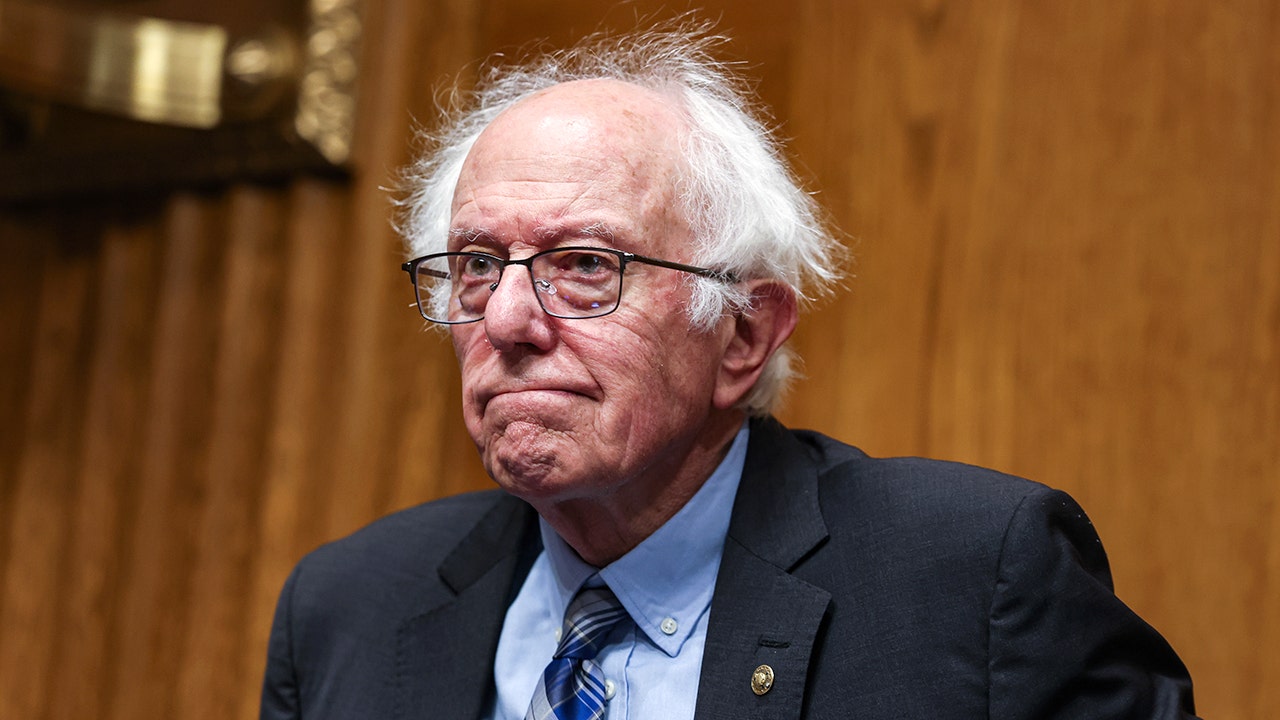
The competition tests the theory whether a lefty outsider backed by Sen. Bernie Sanders (I-Vt.) and Rep. Alexandria Ocasio-Cortez (D-NY) is needed to tap into the energy of the base, or whether an established lawmaker who has supported Israel is only electable in a battleground state.
“Michigan is Ground Zero in the battle for the future of the Democratic Party — pitting corporate-funded status quo insiders against shake-up-the-system economic fighters,” Adam Green, the co-founder of the Progressive Change Campaign Committee, who has stumped with El-Sayed, told The Post.
“When Abdul wins the general election, it will send a signal to scared electability voters that they can vote for the candidate who inspires them in the 2028 presidential primary without political risk.”
Whoever wins will face off against Republican Mike Rogers in a must-win state for Democrats’ chances of retaking the Senate. Rogers narrowly lost to Sen. Elissa Slotkin (D-Mich.) in 2024, while President Trump carried the battleground state in his march back to the White House.
Beyond the Senate race, which has garnered the most national attention, Michigan has key Democratic battles in Rep. Jack Bergman’s (R-Mich.) 1st District and Rep. Tom Barrett’s (R-Mich.) 7th District, testing the left-moderate divide.
Even some bluer districts are facing lefty challenges such as the 13th District, held by Rep. Shri Thanedar (D-Mich.), who is squaring off against Democratic Socialists of America (DSA)-backed Donavan McKinney.
Michigan had been the birthplace of the “uncommitted” movement against former President Joe Biden in 2024 and backed Sanders the 2016 Democratic presidential primary.
The Senate race is the most closely watched test of the moderate vs hardcore progressive split within the Democratic Party, and El-Sayed is entering primary day as the clear favorite with a roughly 10-point lead on the RealClearPolitics aggregate.
But some polls spell trouble for him winning in November, including an EPIC-MRA survey that has him losing to Rogers 43% to 46%, while Stevens is winning 44% to 42%.
Still, that’s a remarkable turnaround from 2018, when Gov. Gretchen Whitmer (D) crushed him by nearly 22 percentage points in the gubernatorial primary.
“I think one of the big differences between now and 2018 is that Trump won again in 2024, and it’s proof that running these ‘electable,’ ‘moderate’ candidates isn’t enough,” Michael, 29, from Royal Oak who is backing El-Sayed and didn’t provide his last name, told The Post.
“Gretchen Whitmer just spent the last few months of her time as governor of Michigan kind of selling out,” he added, noting he voted for Whitmer. “I think that’s proof positive of like, hey, just because someone might be able to win at one point in time, it doesn’t mean that what they’re doing is best for Michiganders.”
While far-left candidates, aligned with the DSA, have won some upset victories this cycle, those wins have largely been relegated to deep blue districts. That’s true for all five of the DSA candidates who won House primaries to date.
Technically, El-Sayed isn’t a member of the DSA and has insisted that he is a capitalist, not a socialist. But many DSA members and allies would undoubtedly view his victory as proof that they can compete in swing states.
On Sunday, he headlined an online fundraiser titled, “Battle for the Soul of the Party,” featuring numerous prominent lefty figures such as actor Mark Ruffalo and “Breaking Points” co-host Krystal Ball. The message was clear: Michigan is a proxy fight for the larger battle within the Democratic Party.
Stevens disagrees with that.
“It’s a Michigan moment for me, baby,” Stevens told reporters Sunday, shrugging off the notion her contest with El-Sayed is about the larger identity crisis within the Democratic Party.
During a campaign stop with retiring Sen. Gary Peters (D-Mich.), who endorsed her alongside Whitmer, the two grumbled over how outsiders have been meddling in the Michigan race and trying to make it part of a national fight.
“There are other folks coming in from other states that look a whole lot different than Michigan that think that they know more about Michigan than we do here in Michigan, but Haley basically represents the kind of people in the Midwest who roll up our sleeves [and] get to work,” Peters told The Post.
If money is any indication, outsiders see the Wolverine State battle as hugely consequential. With over $80 million in ad spending on the Democratic side, it has been the most expensive Senate primary in the party’s history, according to AdImpact.
Notably, the GOP Texas Senate primary this year topped it with nearly $100 million.
“We’re Michigan, we don’t really give a s–t what other states are doing and saying,” former state Democratic Party Chair Lon Johnson told The Post. “We care about having senators that work for us. We’re not here to promote a candidate in their national cause.”
Johnson backs Haley and thinks that El-Sayed will “have a very difficult time getting elected in Michigan.”
El-Sayed has seized on the outside spending to make a boogeyman out of the American Israel Public Affairs Committee (AIPAC). The group’s aligned United Democracy Project has splurged some $30 million backing Stevens in both spent money and additional ad reservations.
Given El-Sayed’s criticisms of Israel and its military campaign in the Gaza Strip, many observers see the primary as another test of the potency of that issue with Democratic voters.
“I think El-Sayed is a horrible person,” Melanie West from Franklin, Mich., who backs Stevens, bluntly told The Post. “I think he’s bad for the Jewish community.”
“I’m not an Israel-before-everything kind of person at all. I have a lot of criticism for what’s going on in Israel,” she added. “But I do think that we have a problem in the United States and globally with the rise of antisemitism; hate crimes are all against Jews.”
West noted that her Jewish children favor El-Sayed, much to her chagrin. Before Trump’s political rise, she saw herself as a swing voter, but now can’t envision herself backing a Republican. She’s unsure what she will do if El-Sayed wins the party’s nod.
El-Sayed’s anti-Israel rhetoric appears to have earned him more supporters than detractors within the Democratic Party in Michigan, at least according to the polls.
“You’ve got two different ways that the Democratic Party [is] straying. One way is for the people, one way is kind of cosplaying as the Republican Party in some elements. So yes, I think we are fighting for the soul of the [party],” said Hana Elnemr, 22, from Toledo, Ohio, who has volunteered for El-Sayed’s campaign.
“We don’t really have to do what-aboutisms anymore. It’s right there in front of you. It’s possible. We just have to want it badly.”