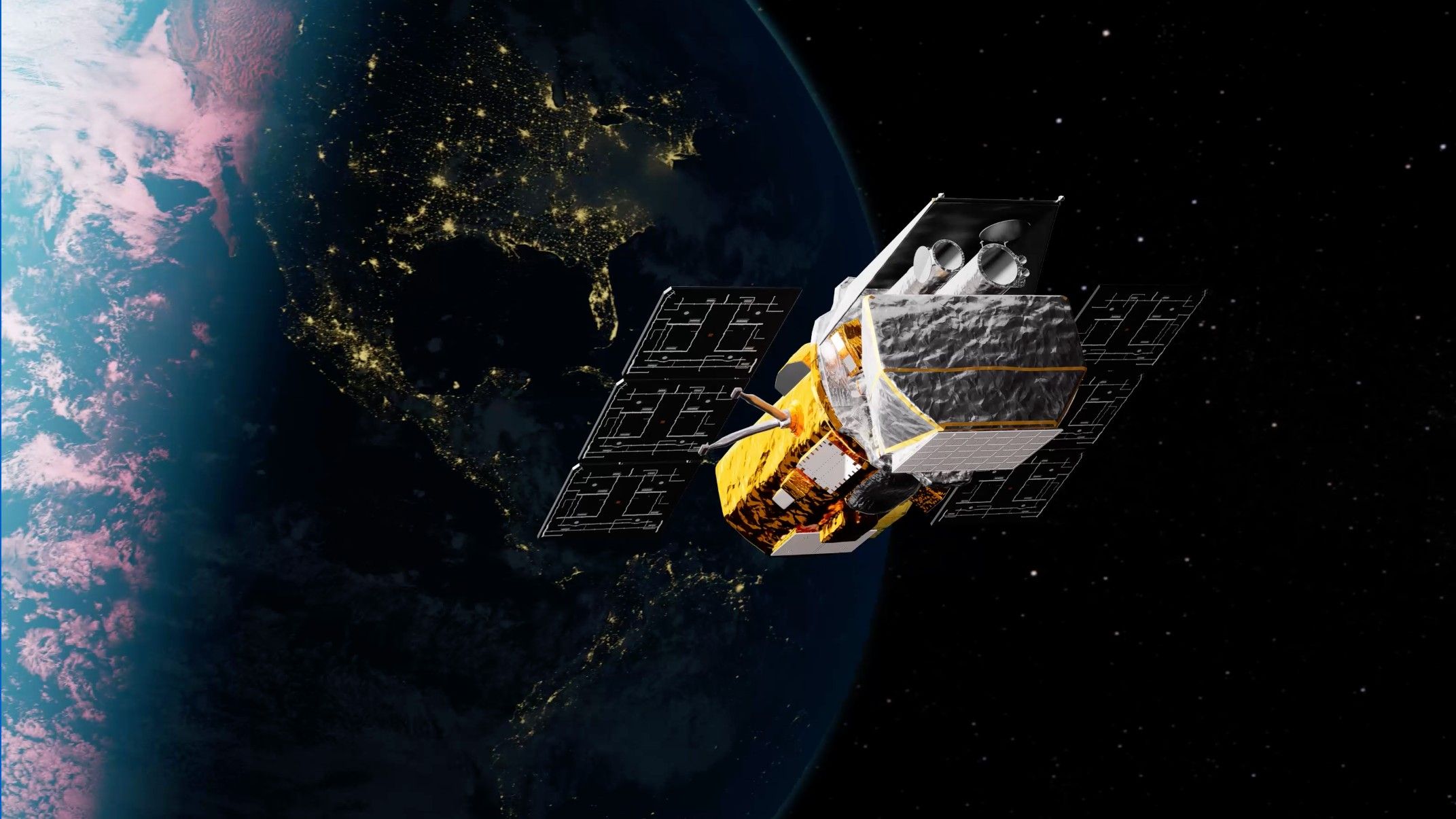
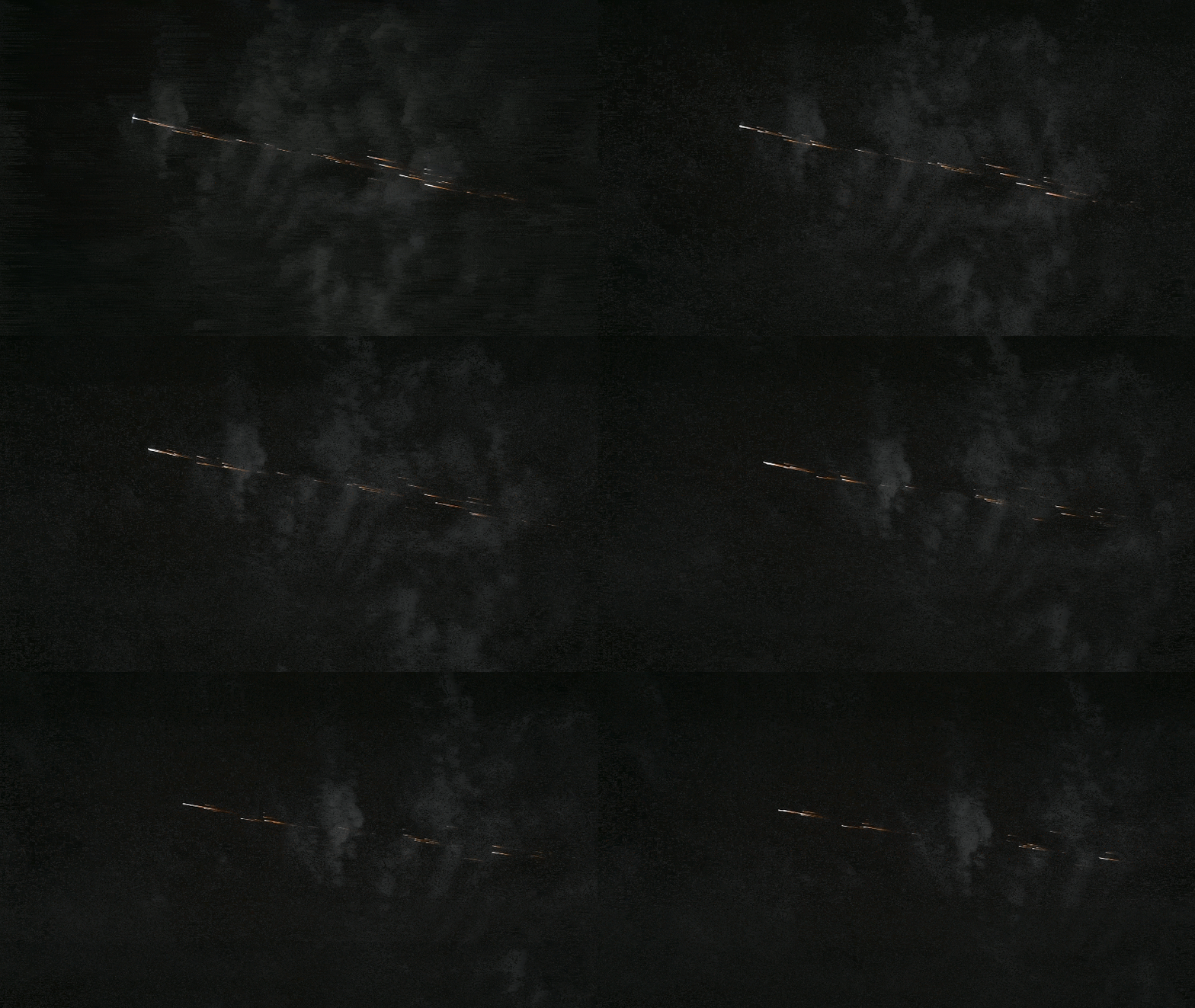
NASA’s decades-old Neil Gehrels Swift Observatory is rapidly falling out of orbit and could tumble back to Earth as early as tonight (Nov. 3), the space agency says.
According to NASA’s latest estimates, shared yesterday (Nov. 2), the roughly 3,200-pound (1,450 kilograms) spacecraft will likely reenter Earth’s atmosphere around 3:30 a.m. EST Wednesday (Nov. 4), with an uncertainty of plus or minus 11 hours — meaning the defunct observatory could plunge down as early as this evening.
An independent analysis from the private nonprofit Aerospace Corporation, which tracks thousands of objects in orbit, similarly estimates that the telescope will reenter the atmosphere at 5:12 a.m. EST Wednesday, give or take eight hours. Both estimates suggest the Swift spacecraft may be no more by Wednesday morning.
Latest Videos FromLive Science
As with all spacecraft reentries, the risk to humans is minimal. Most of the Swift telescope is expected to burn up in the atmosphere, according to NASA. Any surviving fragments will likely fall somewhere between 20.6 degrees south latitude and 20.6 degrees north latitude — a range that includes parts of Mexico, the Caribbean, Central and South America, the Arabian Peninsula, India, Africa and Oceania, but also a lot of ocean.
NASA predicts that the chances of Swift debris falling over a populated area are approximately 1 in 2,100. For comparison, the odds of a person being struck by lightning in their lifetime are 1 in 15,300, according to the National Weather Service.
NASA will continue to update their predictions as the reentry window draws closer.
What is the Swift spacecraft?
Swift has detected thousands of deep-space explosions, including sudden flares from neutron stars (illustrated here).
(Image credit: NASA’s Goddard Space Flight Center)
The Neil Gehrels Swift Observatory is a multiwavelength optical, ultraviolet and X-ray telescope that launched in November 2004 on a mission to study the most powerful explosions in space. Initially designed for a two-year primary mission, the telescope ultimately spent more than 10 times that duration hunting for supernovas, gamma-ray bursts and black-hole-induced eruptions around the universe.
Get the world’s most fascinating discoveries delivered straight to your inbox.
Swift has been rapidly losing altitude for more than a year, after rampant solar activity increased the drag on the aging spacecraft. This past August, a costly mission to boost Swift’s orbit with a private spacecraft failed shortly after launch, hammering the final nail in Swift’s coffin.
Engineers on the Swift team officially shut down the observatory’s science operations on Oct. 20, after the spacecraft fell too low in orbit to continue taking steady observations of the sky.
As Swift goes out with a fiery bang, it leaves behind a trove of scientific data, including contributions to more than 7,000 scientific papers so far, according to NASA. This number will only increase as Swift’s final observations are processed.