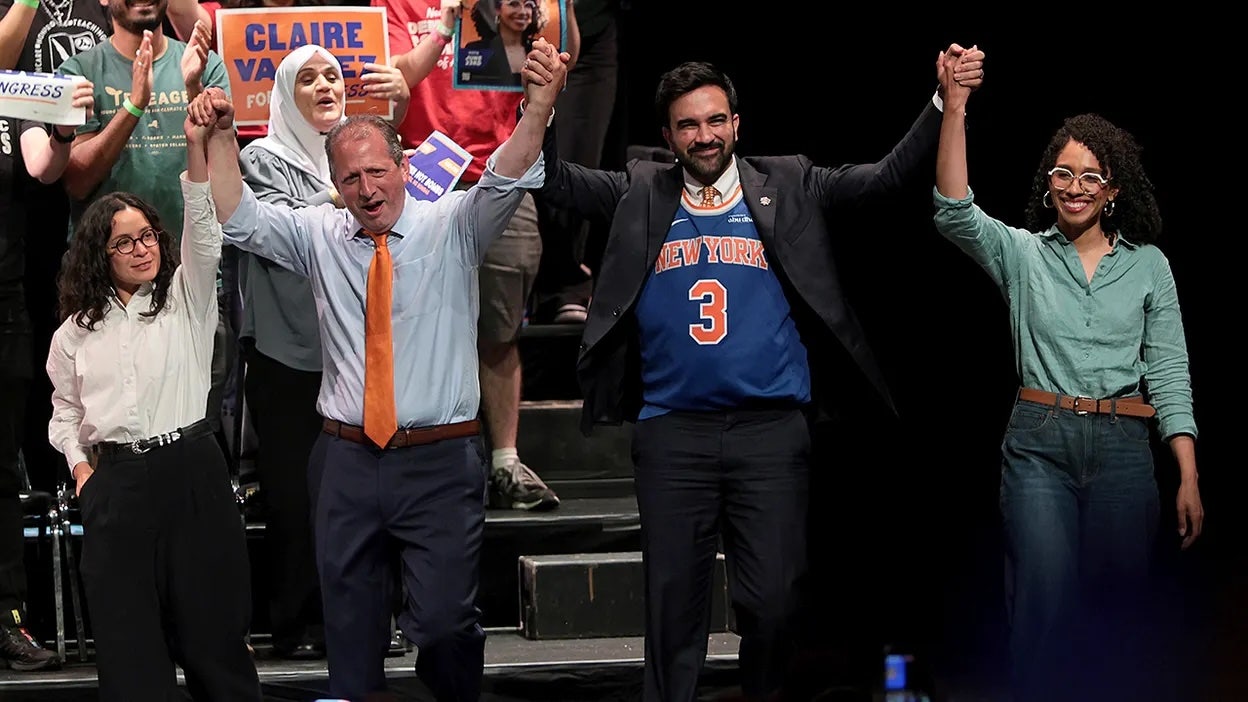





Lefty mayoral candidate Nithya Raman accused the incumbent Karen Bass of engaging in “pay-to-play politics” over a proposal that would expand who qualifies for short-term rentals in Los Angeles.
The blistering criticism came in a lengthy social media thread posted just hours after Raman held a press conference targeting a proposal tucked inside Bass’ 2026-27 city budget plan.
The proposal would loosen current city rules and allow some non-primary residences — including investment properties and apartments — to be used as short-term rentals through platforms such as Airbnb.
“Hours after I held a press conference exposing Mayor Bass’s secret deal to allow rental homes to be turned into vacation rentals, filings were published showing that Airbnb is spending big on a PAC to get her reelected,” Raman wrote on X. “This is what pay-to-play politics looks like.”
In a series of follow-up posts, Raman alleged the mayor was helping corporate interests at the expense of renters struggling with soaring housing costs.
“Here’s how pay-to-play works: A politician delivers policy favors to a corporation or special interest. The corporation spends money to keep the politician in power,” Raman wrote. “But the everyday people of Los Angeles lose.”
The fight centers on Bass’ proposal to revisit Los Angeles’ short-term rental restrictions ahead of the 2028 Olympics and other major international events headed to the city.
Under current law, Los Angeles residents can generally only rent out their primary residence on a short-term basis.
Bass’ budget proposal would explore allowing owners of second homes and non-primary residences to legally operate short-term rentals — a move supporters argue could generate additional tax revenue and expand lodging options for tourists.
“This is obviously false — another conspiracy theory from a failing candidate who is grasping at straws after her debate disasters and polling showing she won’t make the runoff,” Alex Stack, campaign spokesperson for Bass told The Post.
“The City should absolutely be exploring every way to maximize the economic benefit from the Olympics and to generate revenues paid by visitors, not Angelenos. This proposal is a temporary program that allows the City Council to help determine how long it lasts,” he added.
The proposal was in a more than 500-page budget document and included discussion of potential “prepayment” of transient occupancy taxes from short-term rental companies before the Olympics, Raman argued.
Airbnb has supported the broader effort to expand short-term rentals in Los Angeles.
Raman repeatedly referred to the proposal as a “secret Airbnb deal” and claimed it would worsen the city’s affordability crisis.
“The price of Mayor Bass’s secret Airbnb deal is higher rents,” Raman wrote. “Buried in the middle of a 524-page document, this proposal would allow landlords to list non-primary residences (like apartments or investment homes) as short-term rentals.”
The councilmember further alleged a direct connection between the proposal and political spending supporting Bass’ reelection effort.
“Airbnb is the biggest funder of a PAC spending $1,000,000 to keep Karen Bass in office,” Raman wrote. “Bass delivers the policy Airbnb wants. Airbnb spends millions to elect Bass. Angelenos pay higher rents.”
Download The California Post App, follow us on social, and subscribe to our newsletters
California Post News: Facebook, Instagram, TikTok, X, YouTube, WhatsApp, LinkedIn
California Post Sports Facebook, Instagram, TikTok, YouTube, X
California Post Opinion
California Post Newsletters: Sign up here!
California Post App: Download here!
Home delivery: Sign up here!
Page Six Hollywood: Sign up here!
But Airbnb pushed back on Raman’s claims after being contacted for comment by The Post, pointing to a newly released economic study backing the proposed ordinance.
“To myth bust Nithya’s claims,” an Airbnb spokesperson pointed to “a new study out on housing and Vacation Rental Ordinance revenue impact.”
The company cited a new report from Beacon Economics estimating that expanding short-term rentals in Los Angeles could generate roughly $70 million to $80 million annually in tax revenue within three years if the proposed Vacation Rental Ordinance is approved.
According to the report, Los Angeles’ current restrictions on short-term rentals have cost the city an estimated $439 million in transient occupancy tax revenue since 2020.
The study also argued that short-term rentals account for less than 1% of the city’s housing stock and are concentrated in higher-income neighborhoods, suggesting the city’s broader affordability crisis is being driven by wider housing supply shortages.
The proposal, backed by Mayor Bass, would allow a capped expansion of licensed and regulated short-term rentals ahead of major international events including the 2026 FIFA World Cup and 2028 Olympics.
“Our analysis indicates that an expanded short-term rental framework like the proposed Vacation Rental Ordinance could substantially increase transient occupancy tax revenue and help the City better meet rising tourism demand ahead of major global events,” Beacon Economics Research Manager Stafford Nichols said in a statement.
The report was released by Save Our Services, a coalition of labor, housing, business and civic groups advocating for new city revenue sources without raising taxes.
Raman, who launched her 11th hour mayoral campaign earlier this year, has attempted to position herself as a progressive alternative focused on housing reform and campaign finance independence.
“I am not for sale. My campaign takes no corporate money,” Raman wrote. “It is powered by thousands of Angelenos who have donated, volunteered, and talked to their friends about our vision for an affordable city that works.”
Bass’ office has defended the short-term rental discussions as part of broader preparations for major events coming to Los Angeles, including the 2028 Olympics.
The California Post has reached out to Bass’ office for comment.