




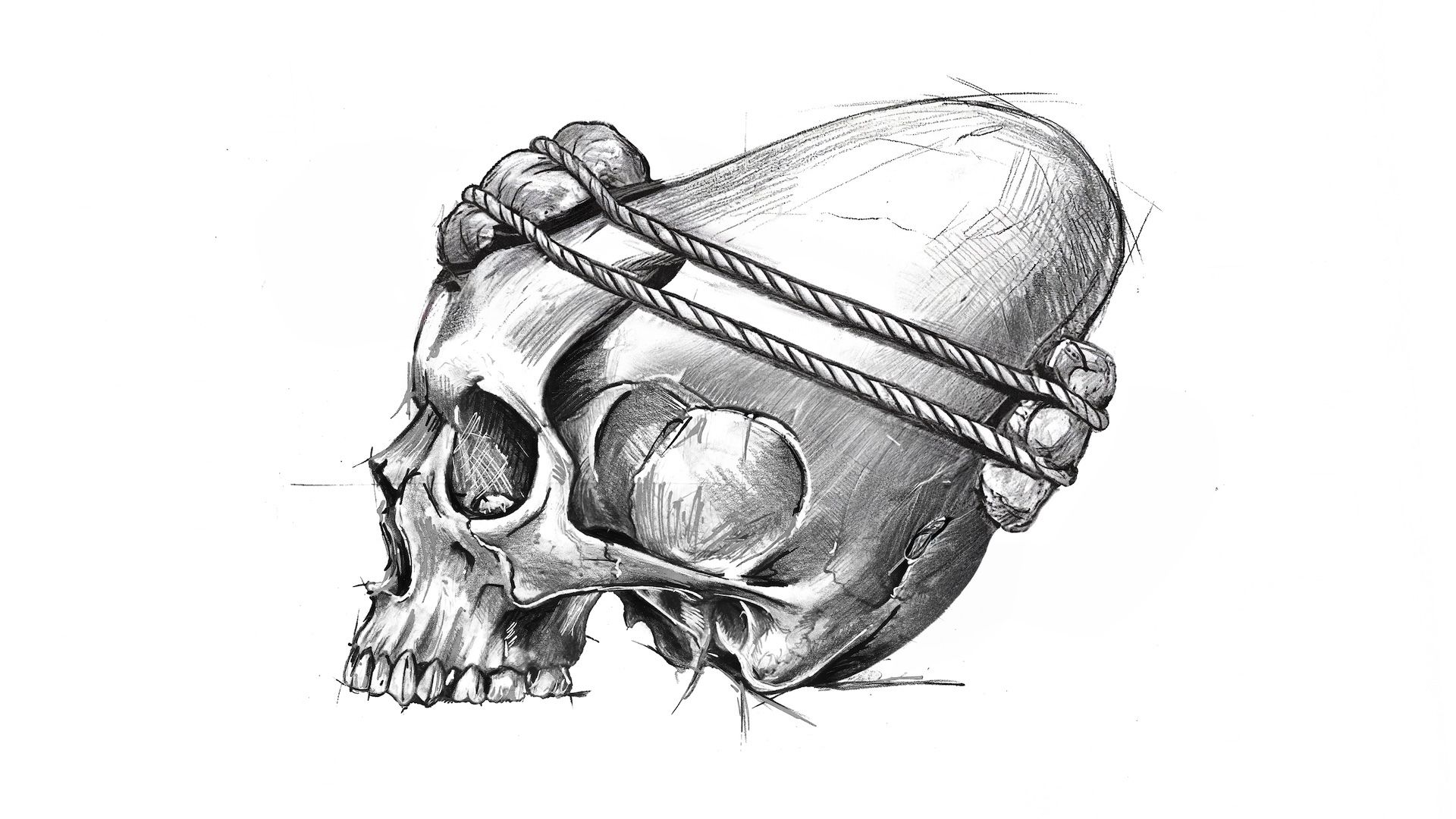
When the Spanish first reached the Andes, they found something surprising: Many of the locals had long, pointy heads. They discovered that the Collagua, an indigenous group in Peru that was conquered by the Inca, had a practice of shaping the head starting in infancy, before the skull bones fused and soft spots disappeared.
The Spanish jumped to the worst conclusions.
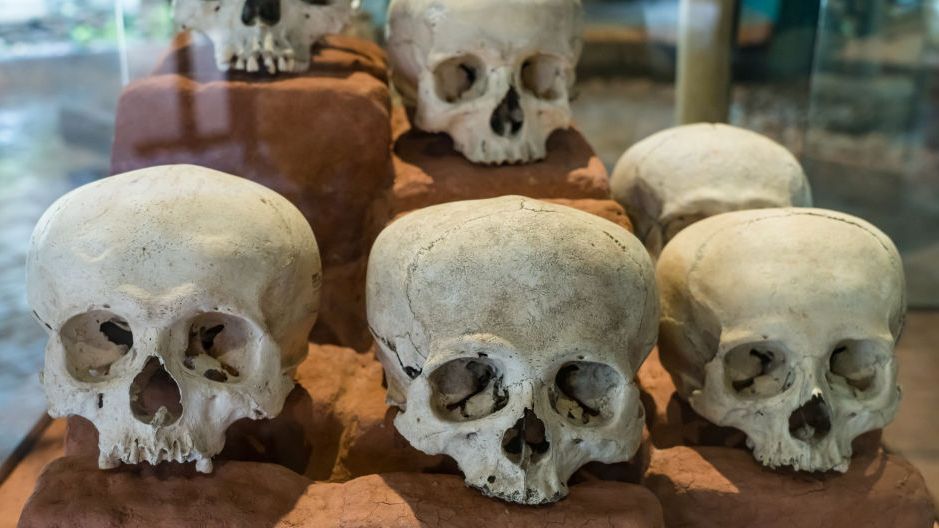
Prehispanic Indigenous groups were not the only ones to practice head shaping. For centuries, archaeologists have found skulls on every continent except Antarctica that show evidence of “cranial vault modification” — heads shaped to be either flatter or more conical than they would be if left alone.
Given that babies cannot bind their own heads, experts think head shaping was done by caregivers. Now, archaeologists are beginning to uncover clues about why people performed this practice for millennia, particularly in places like the Andes, where the practice has been documented the best.
Through systematic analysis, what experts are uncovering is a profusion of practices and explanations, some of which are baffling or contradictory. In some places, a shaped head may be a marker of group status, while in other places, head shapes differ even among close family members. And in other places, the feature used to identify it — the unusual head shape — may not even have been the intent of the practice, researchers are finding.


“Something as ostensibly shocking as cranial modification may have been almost a routine practice for some children in some time periods,” Matthew Velasco, a bioarchaeologist at the University of North Carolina at Chapel Hill who studies head shaping in the Peruvian Andes, told Live Science.
What’s more, it likely originated very deep in human history — and emerged in many times and places, Velasco said. “I think we have to start from the assumption that the meaning varies across time and space.”
How are heads shaped?
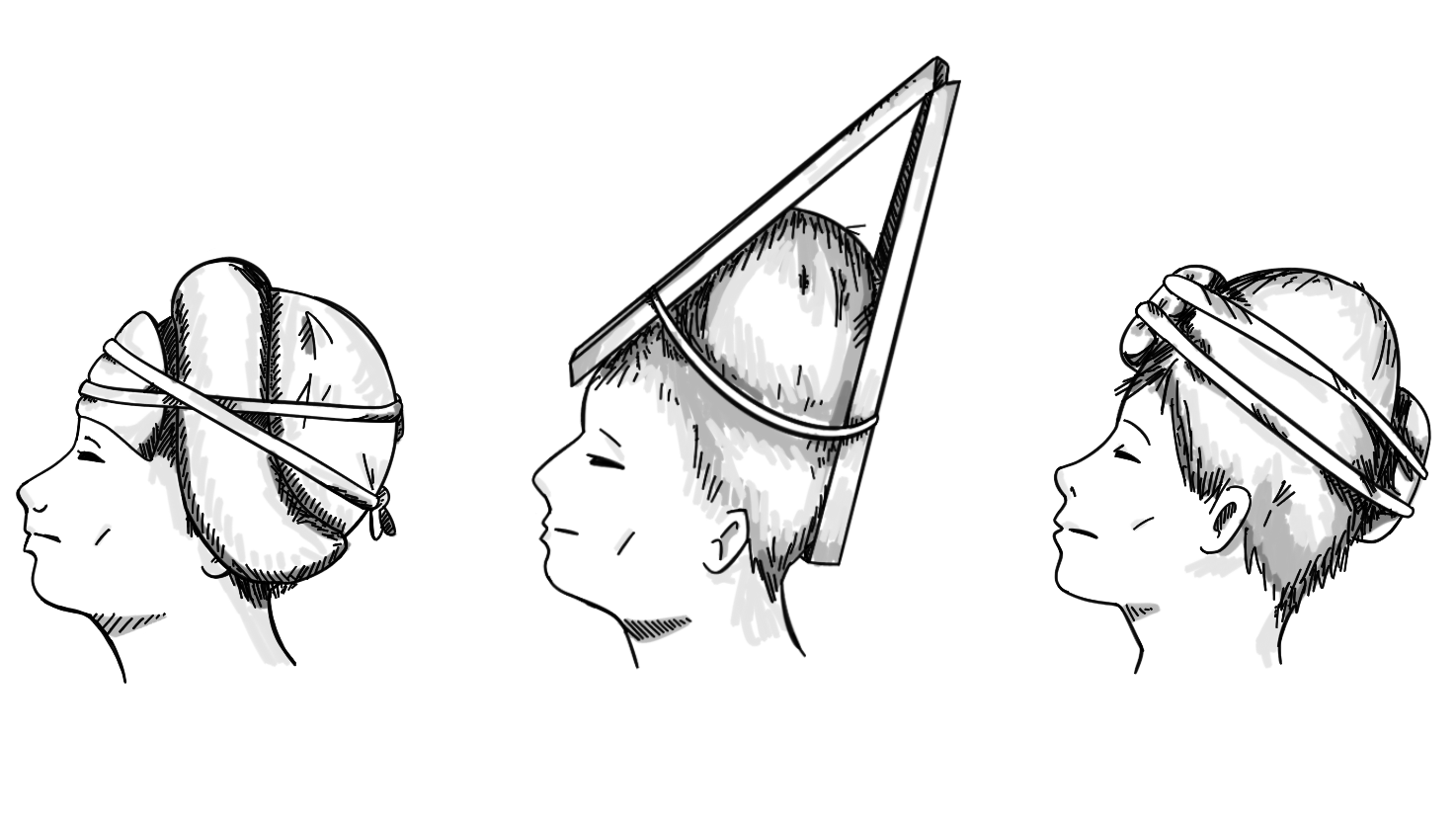
Bone remodels easily when children are young, so a simple strip of wrapped cloth can control how the head grows, much like how a bonsai tree can be shaped and pruned, Torres said. For example, nowadays, babies with plagiocephaly — a flat spot caused by sleeping in one position — are often prescribed helmet therapy to change their head shape.
This was a slow and gradual process done with fabric and pillows.
Christina Torres, bioarchaeologist at the University of California, Riverside
Experts have identified more than two dozen apparatuses that were used to create different head shapes, but “the most typical method would be just wrapping the baby’s head circumferentially and making a longer, more conical shape,” Torres explained, as this technique requires the least equipment and the least training.
Based on historical records from groups that practiced it, head wrapping began by around 6 months of age in most cultures and ended within a year or two, Tyler O’Brien, a forensic anthropologist at the University of Northern Iowa, wrote in “Boards and Cords” (Bloomsbury Publishing, 2024), a book about the worldwide history of cranial modification. The shaping was likely done by a mother or midwife.
There’s not a lot of information, though, on whether this practice was painful, but it does not appear to have had any major consequences for brain development, Torres said.

“There’s one instance where [bioarchaeologists] think a child died because of cranial modification, where the head was compressed too much,” she said. “That is anomalous, as far as I can tell. This was a slow and gradual process done with fabric and pillows.”
So, although Spanish explorers in the Andes said they were shocked by “brains coming out” and explorers in Borneo and Vanuatu said kids’ eyes “bulged from their sockets,” these subjective accounts are probably greatly exaggerated, O’Brien wrote. In reality, the child likely adapted quickly to any discomfort, and the brain would have conformed to the shape of the skull, resulting in no ill effects on cognition or intelligence.
If not done properly, however, head shaping that involved overly restrictive or infrequently changed bindings could cause infection. “I think the worst thing you could have is a [skin] ulcer that gets infected and then eats through the bone, which does happen,” Christine Lee, a bioarchaeologist at the University of Mississippi, told Live Science. Scalp infections and temporomandibular joint (TMJ) issues also may have occurred, Torres said.
Archaeological evidence for head shaping
To identify a shaped head, archaeologists sometimes used visual inspection as well as human skull measurements, known as craniometry. Craniometry has been around since the 19th century, when American naturalist and eugenicist Samuel Morton used cranial traits to create racial hierarchies that have since been debunked.
Although there is no standardized, agreed-upon method to determine if a head has been shaped, archaeologists often use a 3D, mathematical analysis of cranial measurements to see whether the ratio of certain measurements, such as the width, length and height of the skull, are outside the range of what is expected as part of natural variation and are thus likely to have been intentionally shaped.
That analysis suggests that head shaping is widespread in the archaeological record. Cranial modification has been found in skulls from Europe, the Near East, Africa, Asia and Oceania, and it is most strongly associated with the Americas. But that doesn’t necessarily mean it was more common there; rather, evidence of shaped heads may have been better preserved in the Andes, where the cool, dry conditions did not degrade mummified remains as quickly, Velasco said.
In fact, the oldest archaeological evidence of head shaping comes from Australia. Two artificially flattened skulls were discovered in the southern state of Victoria at the site of Kow Swamp, which is at least 13,000 years old.
And ancient skulls reveal the practice boomed in the Neolithic period, appearing in Europe around 12,500 years ago, in China around 11,000 years ago, and in what is now Iran around 10,000 years ago, according to O’Brien.
Related: ‘Cone-headed’ skull from Iran was bashed in 6,200 years ago, but no one knows why

Early accounts
Some of the earliest explanations for head shaping, which come largely from Spanish explorers in the Americas, are some of the most suspect. That’s because few explorers bothered to ask practitioners why they engaged in head shaping. Instead, these wild stories were often based on rumor or hearsay.
For instance, Christopher Columbus first reported head shaping among the Indigenous people of Hispaniola, the island that encompasses the Dominican Republic and Haiti, in 1492. He illogically guessed that the islanders had flat heads because their mothers pressed them tightly between two wooden planks, causing the skull bones to thicken like helmets and protect them from Spanish blows, according to Pilar Zabala Aguirre, an anthropologist at the Autonomous University of Yucatán in Mexico, who has compiled more than 100 Spanish historical records on the practice.
Other explorers invented different possible explanations: ethnic grouping; high military rank; attributes such as courage, bravery or obedience; the ability to carry heavier loads strapped around the forehead; health improvements; and beauty ideals, Zabala found.
These explanations are even more suspect because they were often tied to racism or beliefs in the superiority of Western culture or even used to explicitly make that argument.
For instance, English physician John Bulwer cataloged various types of body modification in his 1650 book “Anthropometamorphosis,” condemning them as disfiguring and an affront to God, according to O’Brien.
It wasn’t until the early 20th century that anthropologists moved away from “studying abnormal head shape in the living ‘other’ and describing it as hideous, frightful, and disgusting,” O’Brien wrote, and toward a less-biased understanding of cranial variation.
Changing understanding of the practice
Using those robust, less biased methods, archaeologists are gradually unwrapping some of the mystery surrounding the practice, mostly in the Americas. And what they’re finding is not an overarching trend, but a range of reasons and practices.
For instance, the Collagua in Peru ostensibly “told the Spanish that they shaped the heads of their children like the mountain from which they come,” Velasco said.
Among the Indigenous Caddo people of Oklahoma, meanwhile, different kinds of shaping reflected membership in different clans, Lee said.
Yet head shaping differed not only within cultures but even within families. Velasco’s ongoing research, which involves analyzing the DNA of extended families buried together in the Andes, has revealed that the heads of biologically linked people were often shaped in different ways — so one family member might have an elongated head, while another might have an unmodified, rounded head.
In fact, in some cultures or families, the shapes of the heads may have been the unintended result, rather than the goal, of a practice that was more important to them, such as binding.
“The shape itself might actually be collateral to the practice” in the Andes, Torres said.
Related: Unusual, 1,400-year-old cube-shaped human skull unearthed in Mexico
In the same way that some people swaddle their children, the same way that there’s religious circumcision, you bind the heads of your children because that is what we do to our children.
Christina Torres, bioarchaeologist at the University of California, Riverside
Instead, in some parts of the Americas, head shaping may have lingered simply as a tradition. For instance, in the Andes, the practice may be part of a rite of passage for either the infant or the mother, Torres said. If head shaping began around 6 months of age, that is a time when the baby’s first teeth were coming in and weaning foods may have been introduced. There, head shaping may be similar to putting jewelry on a child or baptizing them to protect them, she said.
Among the pre-hispanic people of the Andes, “it’s basically a child-rearing practice,” Torres said. “In the same way that some people swaddle their children, the same way that there’s religious circumcision, you bind the heads of your children because that is what we do to our children.”
Related: ‘Alien’ skull of toddler is actually evidence of long-standing practice of head shaping

A natural conclusion
In fact, the idea of shaping a head into a conical form may have been presented by birth itself. The infant cranium naturally deforms when it passes through the birth canal, Velasco said.
“When my child was born, for example, he had a slightly conical head,” he said. “Birthing presents this possibility to every parent, and it doesn’t take much of a leap to feel the supple head of a child and to wrap it, to clothe it.”
Thus, it’s not surprising that many cultures might have stumbled upon head shaping, given that “anyone who has observed or assisted a human birth will recognize that the human head is malleable,” Velasco added.
This recognition of the plasticity of a baby’s head may have spurred a need to protect it. For example, among the Maya, modifying an infant’s head was likened to putting a roof on a house and was thought to protect the child.
That protection may have then become more metaphorical than physical. In some places, it has “an almost talismanic aspect to it,” Lee said, as if something bad might happen to the child if the shaping were not done. “That implies there must be almost a fear of not doing it.”
Beauty and ‘in-group’ status
Outside the Americas, few historical records describe head shaping, but “it seems to have been independently invented in multiple places,” Torres said.
Each of these places may have had different justifications for the practice. In prehistoric China and Japan, for instance, head shaping was likely a status marker tied to the elite. Lee thinks it’s likely that in ancient Asia, head shaping — similar to foot binding in more recent times — represented an extreme way of achieving a beauty standard.
Similarly, during the fourth to seventh centuries in Europe, head shaping surged in popularity among the Huns, skeletons reveal. Without historical evidence from the Huns detailing the reason for this practice, experts have conjectured that it was a “fashion wave” in the Eurasian steppe that conferred higher social status.

But head shaping often leaves subtle traces, meaning people who engaged in the practice may not have looked much different from those who didn’t. That suggests the practice was not necessarily a striking visual marker of in-group status, which raises questions about whether that was its purpose.
“Hair hides a lot,” Lee said. “There are people today with unusually shaped skulls, and it just doesn’t show depending on their haircut.” For example, venture capitalist Marc Andreessen and political consultant Roger Stone both have (presumably naturally) pointier-than-average heads.
Modern cases of head shaping
Although cranial vault modification has been going on for tens of thousands of years, it persisted well into the 20th century in parts of Africa, Oceania and Europe.
The Arawe people in Papua New Guinea practiced head shaping as late as the 1930s, according to a study of several villages in 1955. The Arawe used bark-cloth bandages to create what they considered an aesthetically pleasing “long-headed” style.
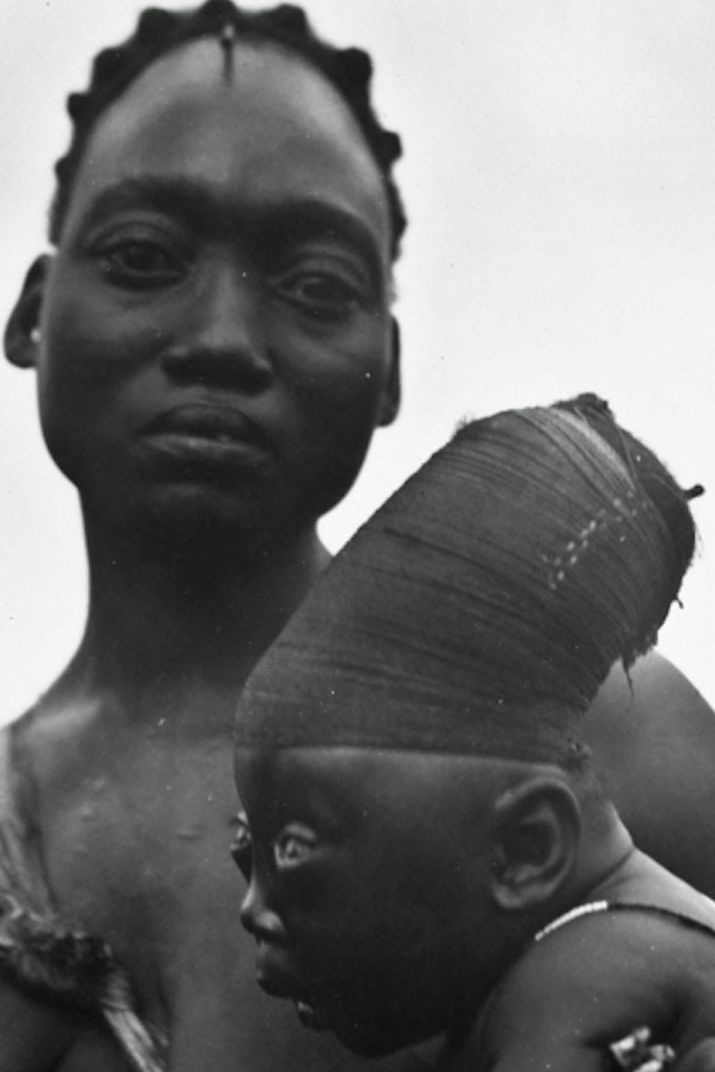
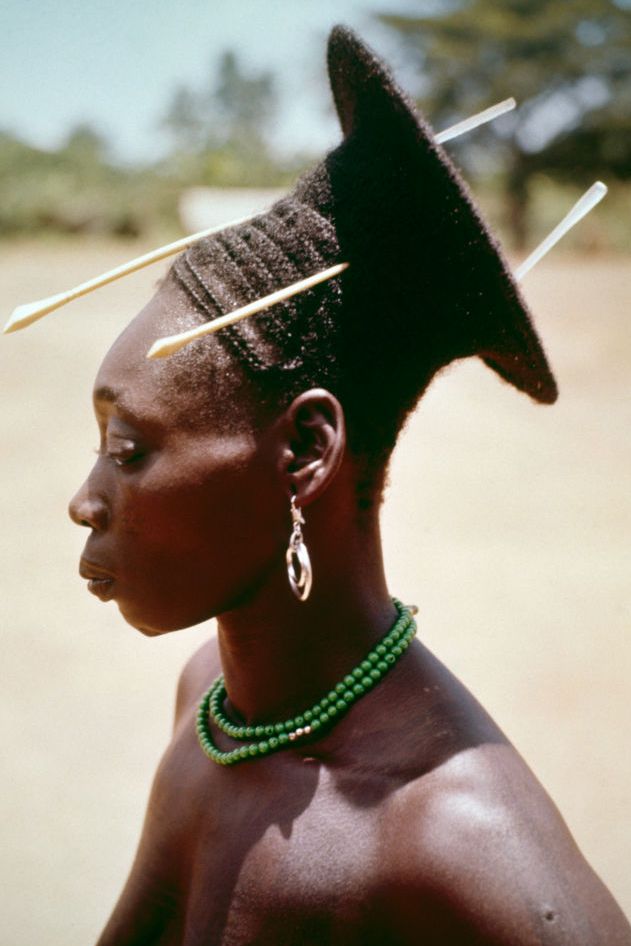
Among the Mangbetu people of the Congo, the practice of “lipombo” involved tightly wrapping an infant’s head with cloth bandages to encourage a long, conical shape thought to be beautiful and powerful. The Belgian colonial government outlawed the practice, which died out in the 1950s.
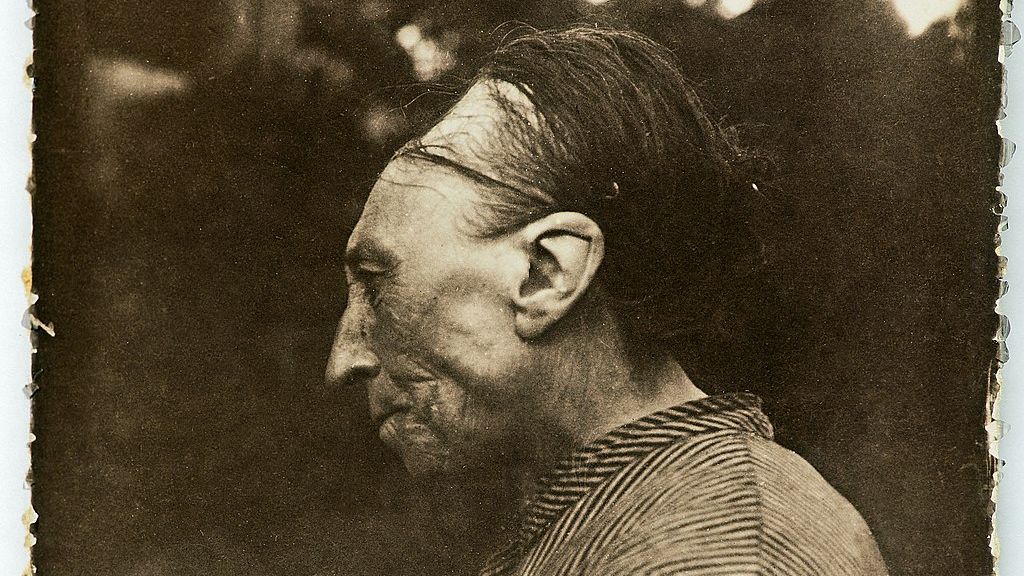
And in early 20th-century France, some parents chose to band their newborns’ heads immediately after birth for up to four years in a practice called “bandeau,” which practitioners thought protected babies from injury. The “Toulouse deformity,” named after the region where it was practiced, has been captured in a series of historical photos, but bandeau declined in popularity and disappeared by World War I.
“This is not something that is simply a brute barbarian practice that people evolved out of,” Velasco said. “It is fairly independent of social complexity.”

The practice of shaping an infant’s head to look like an “alien’s” may seem foreign or bizarre to us in the 21st century. But the human body has long been a canvas for cultural, spiritual and personal expression.
The earliest known tattoos date back at least 5,000 years in Copper Age Europe, tooth filing and “grills” go back 2,000 years to the Maya, and neck elongation was practiced 1,000 years ago in Southeast Asia. Today, we tend to modify the soft tissues of our bodies through common practices like ear piercing and circumcision, but also more uncommon procedures like horn implants, eyeball tattooing and Brazilian butt lifts.
“Cranial modification is part of a practice that is universal: body modification and presentation,” Velasco said. “We all invest our future in our children in different ways. That’s how I think about cranial modification. It’s like an investment in the future of a child. And when you put it in that way, it’s hard not to relate to it.”