Science news this week: James Webb telescope finds a never-before-seen substance, China’s ‘Great Green Wall’ grows faster than natural trees, and a Medici murder mystery is solved
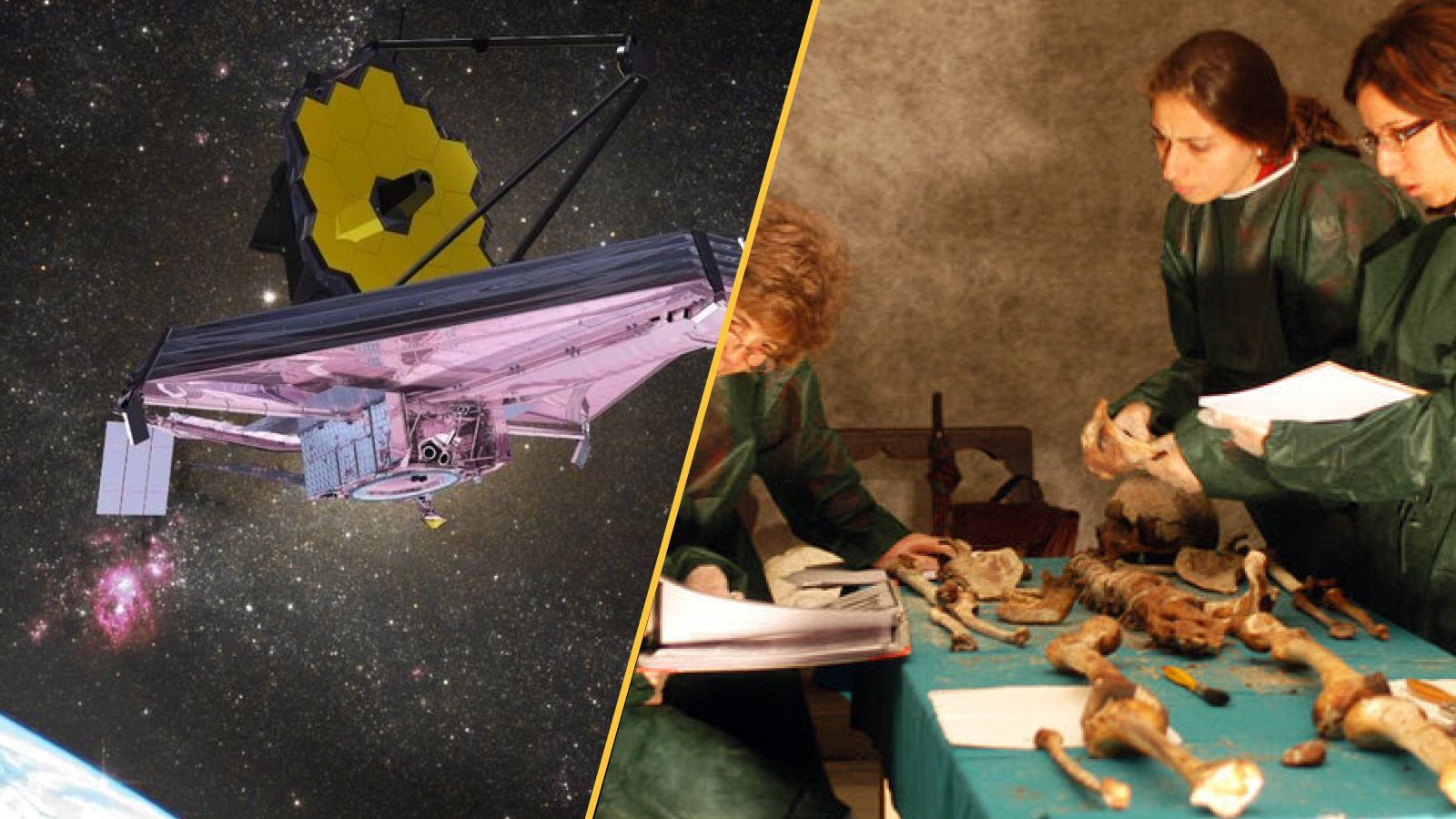
This week’s science news was all about goings on in space, with reports that the James Webb Space Telescope (JWST) picked up a signal from a mysterious, never-before-seen substance on Pluto and Titan.
The space telescope detected a specific absorption line in the spectra of these worlds’ atmospheres, revealing the characteristic trace of a unique and unknown molecule. It’s unclear exactly what the molecule could be, and the mystery is made even more compelling by the fact that the environments of Pluto and Titan are very distinct.
And just in time for Independence Day weekend, the sun has launched a string of eruptions to Earth that will likely paint the night skies with colorful auroras.
China’s ‘Great Green Wall’ grows faster than natural forests
The San Jacinto and southern San Andreas faults have reached their highest levels of tectonic stress in 1,000 years.
(Image credit: PEDRO PARDO via Getty Images)
China is no stranger to engineering projects designed to bring its environment to heel; we’ve recently covered the Asian powerhouse’s attempts to tame nature through the creation of atmospheric rivers, the world’s biggest dam and water transfers. But these are hardly China’s only forays into sculpting its natural environment, with the country having planted more than 66 billion trees along its northern borders to halt the advance of the Gobi and Taklamakan deserts.
Now, new research has revealed a startling detail about the trees in this “Great Green Wall”: they’re growing significantly faster than natural forests. Exactly why remains a mystery, but, as Live Science contributor Brian Owens reveals, it could be due to a stronger response from the trees to rising atmospheric carbon dioxide.
Discover more planet Earth news
Get the world’s most fascinating discoveries delivered straight to your inbox.
—‘It sounds so impossible’: Student studying fungus that makes users hallucinate tiny people may be on the verge of a scientific breakthrough
—‘Uncharted territory’: Record high ocean temperatures confirmed for June as El Niño strengthens its grip
—Study suggests life on Earth has around 1.8 billion years left — but the biosphere might evolve to survive even longer
Life’s Little Mysteries
AI is getting better at solving CAPTCHAs. Does that mean CAPTCHAs are obsolete?
(Image credit: Cosminxp Cosmin via Getty Images)
Are you a robot? It used to be a question that only humans could answer — by clicking on traffic lights or strings of warped and grainy characters, or Completely Automated Public Turing tests to tell Computers and Humans Apart (CAPTCHAs). But what happens now that autonomous artificial intelligence (AI) agents can ace some of these trials without detection? Have they made CAPTCHAs obsolete?
—If you enjoyed this, sign up for our Life’s Little Mysteries newsletter
Medici murder mystery solved
Researchers analyzed the remains of brothers Giovanni and Francesco de’ Medici for evidence of malaria.
(Image credit: Courtesy the University of Pisa)
The Medici family ruled Renaissance Tuscany with an iron fist, fulfilling their ruthless ambitions with methods so underhand that the name of their most famous advisor, Niccolò Machiavelli, became a synonym for skulduggery.
So, when two brothers from the infamous family died under mysterious circumstances, it was believed for 500 years that they were murdered, possibly by arsenic poisoning. Now, science has revealed the true culprit behind the medieval cold case, and it’s not what we expected.
Discover more archaeology news
—Ancient ring discovered underground in Scotland could be a Stonehenge-like monument
—500-year-old freeze-dried potato snacks discovered in Inca storage room in Peru
—2,000-year-old scrolls buried by Mount Vesuvius eruption finally deciphered with help from AI
—Rise in cancer in younger adults may be explained by faster ‘biological aging,’ early study hints
—Dead-end bitcoin mining wastes as much energy as Switzerland’s entire hydropower generation capacity
—CERN shuts down Large Hadron Collider until 2030, upgrading the atom smasher to its most powerful form yet
—Scientists figured out how to shrink huge ultrafast lasers so they fit on a tiny chip — the ‘holy grail’ of the field
Science Spotlight
Japan has rolled out a creative strategy to rein in antibiotic resistance. Should the U.S. follow suit?
(Image credit: Nicoletta Lanese (left and right panels); Getty Images (central panel); edited by Live Science)
Antibiotic resistance is a growing threat in the U.S., with more than 2.8 million Americans developing antimicrobial-resistant infections each year. The solutions to this worrying trend can be very complex— such as moving agricultural systems away from their overreliance on antibiotics, or preventing the rapid spread of superbugs through international travel.
But stopping doctors from overprescribing antibiotics is one of the easiest strategies in the battle against this “silent pandemic.” And it turns out that Japan has already fought it with some success, driving down antibiotic overuse with an innovative new policy. To investigate further and ask what notes the U.S. should be taking, Live Science’s health editor Nicoletta Lanese visited Japan and reported back on their investigation.
Something for the weekend
If you’re looking for things to keep you busy over the weekend, here are a smattering of our best expert opinion pieces, alongside a crossword, an interview and a quiz, that we published this week.
—‘It’s more than a hope, it’s a guarantee’: The Vera C. Rubin Observatory’s 10-year movie of the universe is about to ‘blow our minds,’ chief scientist Tony Tyson says[Interview]
—Live Science crossword puzzle #50: Longest-serving president in US history — 1 across [Crossword]
—Ancient empires quiz: Can you match these lands to the historical powers that ruled them?[Quiz]
Science photo of the week
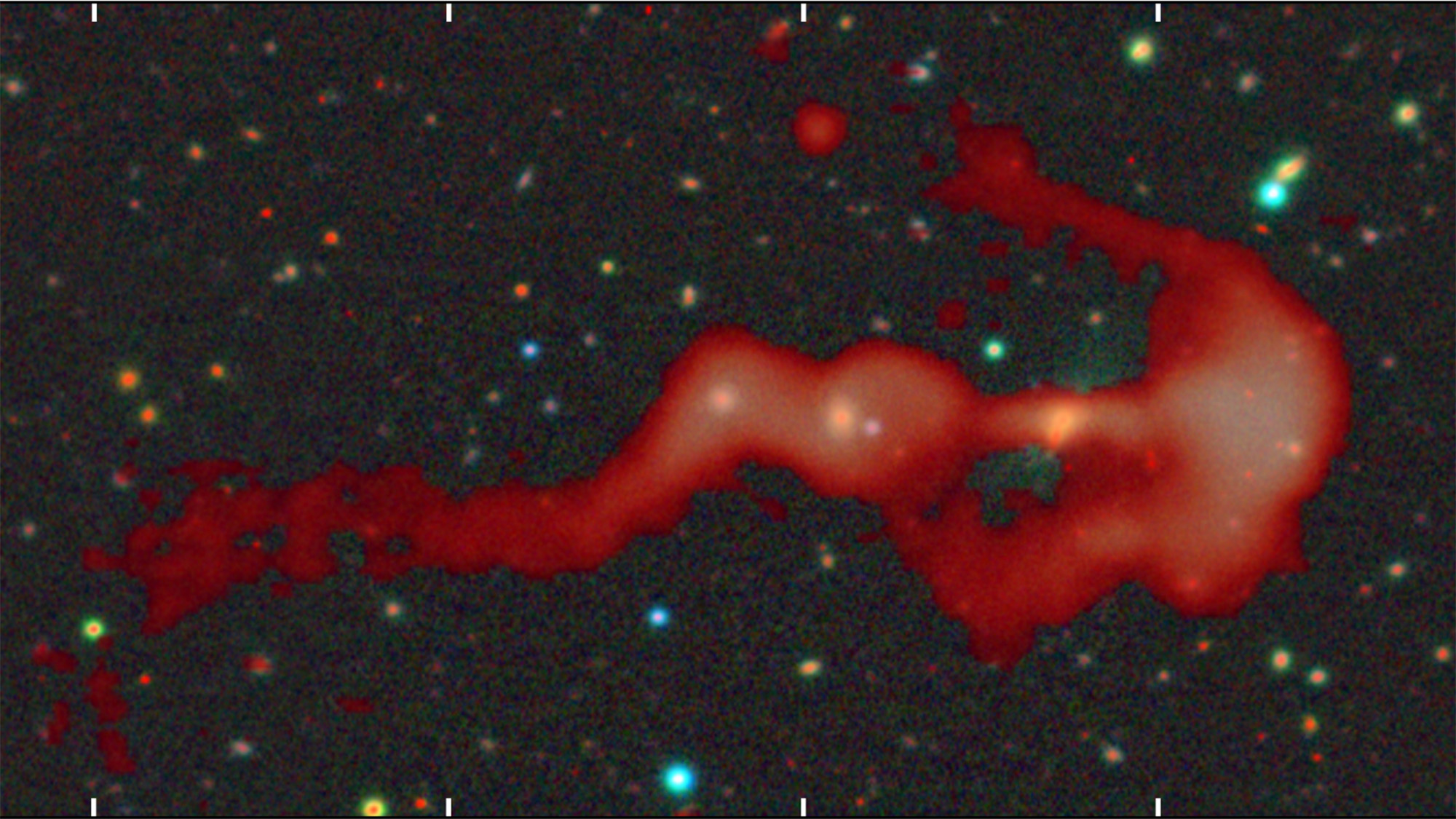
The ‘bow and arrow’ galaxy shows its highly unusual shape in radio wavelengths.
(Image credit: Hota, Dabhade and Ghosh et al and the RAD@home Collaboratory)
If you ask me, it looks more like a rusty anchor, or a blurry deep-sea fish. But whichever way you see it, the newly discovered “bow and arrow” galaxy — or, more formally, the RAD-Bow-And-Arrow Radio Galaxy (RAD-BAARG) — is an oddball unlike any other recorded.
The galaxy’s unique structure is likely the result of gravity, which is warping RAD-BAARG into a funhouse mirror version of its former self as it falls into a nearby galaxy cluster. A shock front from this plunge surrounds the galaxy as it moves through hot gas.