



Archaeologists investigating a 17th-century graveyard in the High Arctic are uncovering evidence of the perils that plagued early modern whalers, including extensive physical labor in their jobs and diseases such as scurvy. But the burial site is disappearing rapidly due to climate change, making archaeological excavations a race against time.
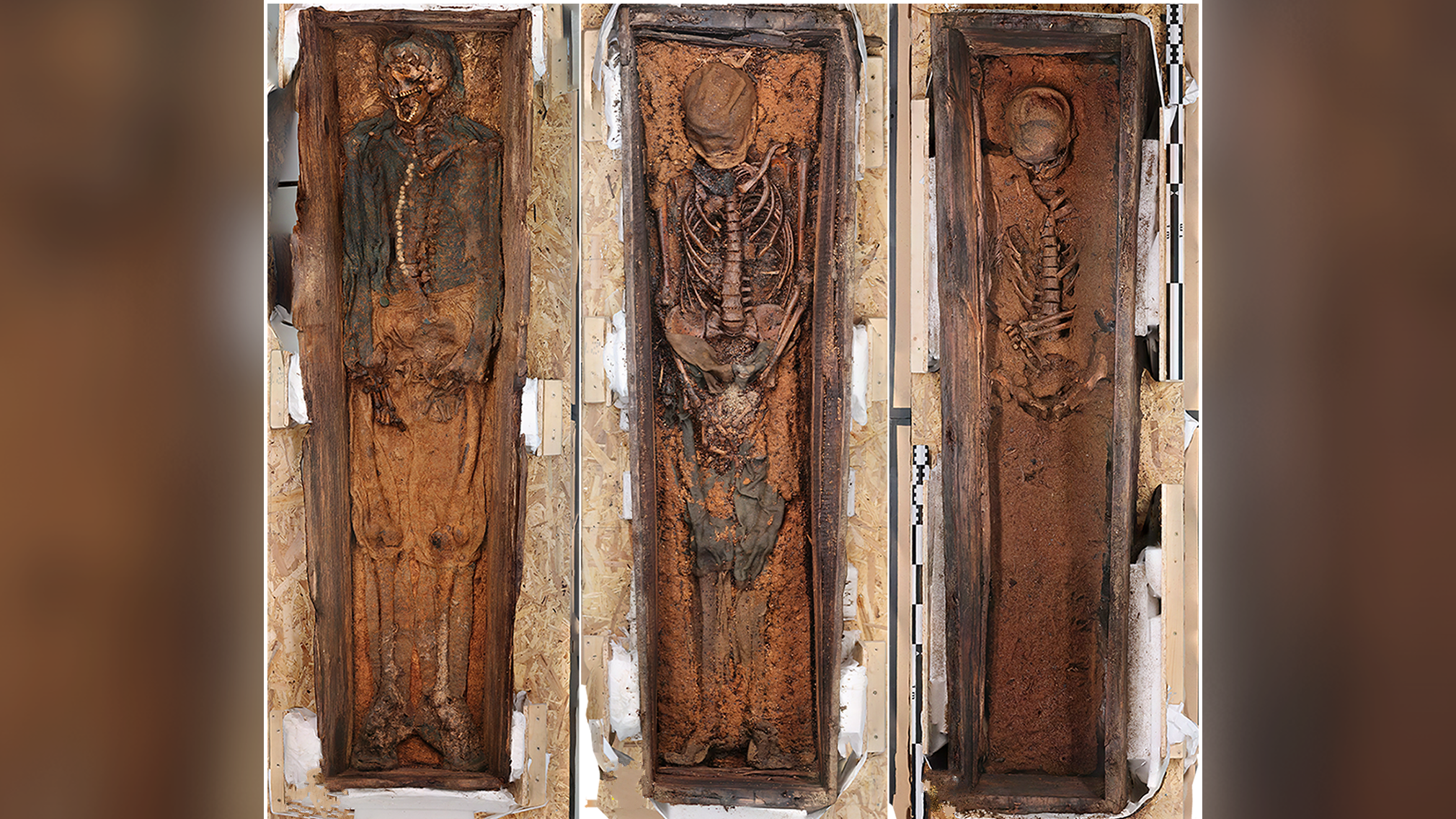
Likneset, which means “Corpse Point” in Norwegian, is the largest whaling burial site on Svalbard, an archipelago halfway between the North Pole and the northern coast of Norway. Hundreds of shallow graves marked with stone cairns have been found there in a cemetery that dates to the 17th-to-18th-century boom in Arctic whaling.
In a study published Wednesday (May 20) in the journal PLOS One, archaeologists examined 20 burials from Likneset and found that the men buried there lived short, difficult lives — and that these burials are at risk of disintegrating due to climate change.
“Early modern Arctic whaling was among Europe’s first large-scale extractive industries, and the labor was highly manual,” study first author Lise Loktu, an archaeologist at the Norwegian Institute for Cultural Heritage Research, told Live Science in an email. Loktu co-wrote the study with Elin Therese Brødholt, a forensic anthropologist at Oslo University Hospital.
The work carried out by the whalers was extremely physically demanding, involving tasks like rowing boats, hauling live whales, towing carcasses, processing blubber, and performing heavy shipboard work under cold, wet and physically exhausting conditions.
“What is striking in the skeletal material is that we can actually see this workload reflected in the body,” Loktu said.
In their analysis of the whalers’ skeletons, Loktu and Brødholt found evidence of degenerative joint disease, trauma, and extensive strain in the men’s shoulders, upper chest, spine, hips, knees and feet.
“Several very young adults already show advanced wear and degeneration normally associated with much later stages of life,” Loktu said, suggesting these men were overusing their bodies for a long period of time.
The vast majority of the whalers also had evidence of scurvy, a deficiency of vitamin C that leads to muscle weakness, bleeding gums, tooth loss, anemia and a host of other problems. Scurvy is rare in modern countries where fresh fruit and vegetables are available, but it frequently affected sailors on long-distance journeys in the 15th to mid-19th centuries. At that time, Europeans did not understand the biological cause of scurvy and tended to avoid eating foods that Indigenous Arctic people consumed to prevent it, such as muktuk, a dish of whale skin and blubber that is a good source of vitamins C and D.
“Scurvy does not only affect bones; it also compromises the immune system, increases vulnerability to infection, weakens wound healing and contributes to overall physical decline,” Loktu said. “We believe this likely played an important role in weakening the men physically.”
Several whalers had evidence of wear on their teeth, which suggests they regularly smoked a pipe.
The researchers also found dental evidence that most of the men smoked a pipe. By constantly clenching a clay pipe between their teeth, the men developed circular indentations in their enamel. Smoking is known to deplete the body’s stores of vitamin C, which could have contributed to the development of scurvy.
“While smoking itself cannot explain the scurvy, tobacco use may potentially have worsened overall health and nutritional stress,” Loktu said. “It seems likely that prolonged hard labor, nutritional stress, disease and general physical frailty ultimately became the ‘last straw’ that tipped already weakened bodies beyond recovery.”
Loktu and Brødholt also focused their study on Likneset because parts of the burial site have already been lost to coastal erosion. They compared graves excavated at three times — the late 1980s, 2016 and 2019 — and discovered that the permafrost-preserved burial area found 40 years ago was already collapsing due to climate-driven processes, including rapid Arctic warming. This may present problems for future studies of early modern whalers.
“Rapid Arctic warming is accelerating the degradation of permafrost-preserved archaeological sites, placing organic-rich whaling burials on Svalbard among the most vulnerable heritage contexts,” the researchers wrote in the study. These findings suggest that preservation conditions should continue to be monitored, “as climate-driven degradation and coastal erosion are rapidly reducing the informational value of archaeological archives on Svalbard,” they wrote.
Loktu, L. & Brødholt, E.T. (2026). Skeletons in the permafrost: Exploring climate-driven heritage loss and occupational health at the early modern whaling burial site of Likneset, Svalbard. PLOS One. https://doi.org/10.1371/journal.pone.0347033
What do you know about the bones in your body? Test your knowledge with our human skeleton quiz!