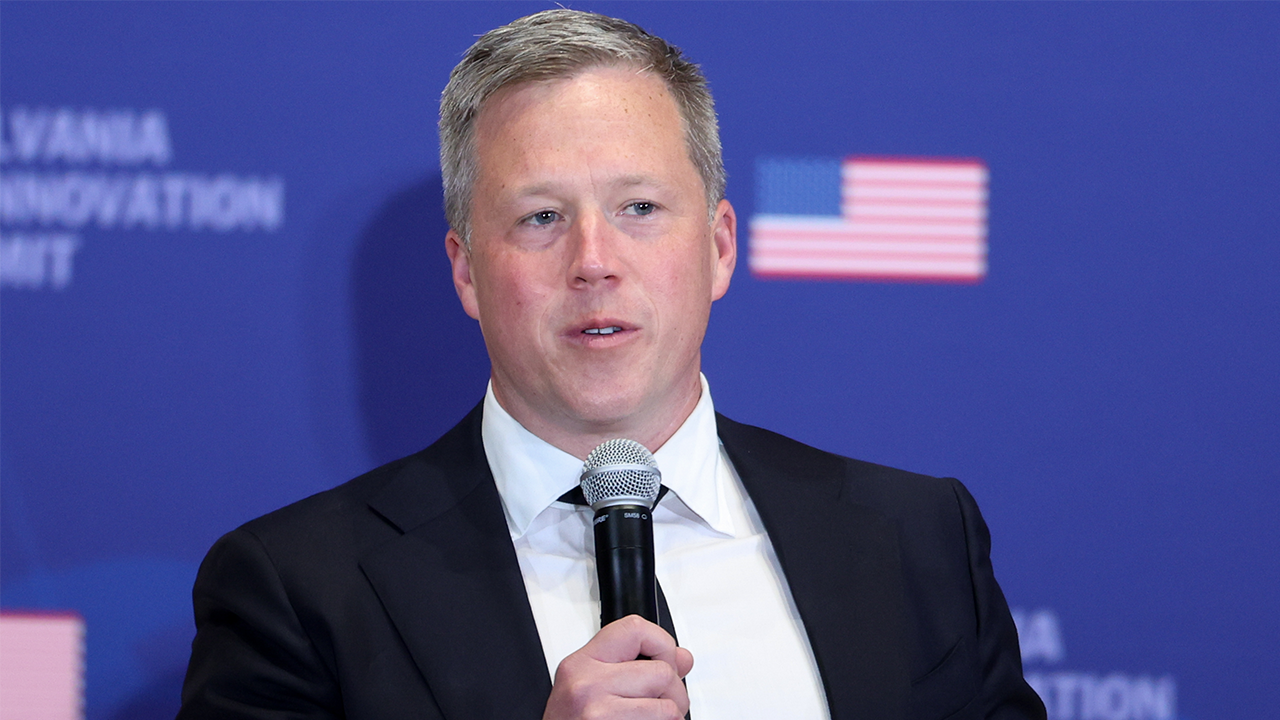




Mayor Karen Bass grabbed the lead in Los Angeles’ high-stakes mayoral race Tuesday night, but a confident Spencer Pratt said he will advance to take her on in the runoff election come November.
At 10:15 p.m., with about 48% of the vote counted, Bass had 36.65% of the vote, Pratt had 29.55% of the vote and Raman had 20.79%, according to the Associated Press.
Pratt spoke with reporters outside his party at Don Antonio’s Restaurant when asked about the early election results and advancing to a runoff. “I am ready for whatever God puts in front of me,” Pratt said.
“I was going to be happy if I wasn’t moving forward, but now I feel very confident,” Pratt told reporters.
The mayoral candidate said the months ahead will give him an opportunity to showcase the team he plans to surround himself with if elected.
“We have five months to build our team, show the experience I’m going to surround myself with and put together the best team this city could ever dream of,” Pratt said.
“At the end of the day what’s been resonating is that people just want the truth and they want to know somebody’s heart — I try to be as true to my authentic self and I just believe a lot of Los Angeles is so excited to hear from a non political,” he added.
“They want somebody to speak the truth for their communities and fight for them. They want a fighter that’s going to step up when they city fails them or their elected leaders fail them and I’m ready to be that person for Los Angeles,” Pratt said.
Speaking to supporters Tuesday night, Raman delivered what appeared to be an emotional and at times tearful address, thanking volunteers and backers for helping what she called “this little campaign” grow into a serious contender.
She told supporters that just a few months ago her candidacy was considered a long shot and reiterated her vision of Los Angeles as a city that remains affordable and accessible to working families.
Meanwhile, Bass struck a confident tone before supporters at her election night watch party, telling the crowd, “In a few hours, we will declare victory.”
To avoid a runoff, Bass would need to secure more than 50% of the vote.
The high-stakes contest has been shaped by voter concerns over homelessness, public safety, affordability, government accountability and the city’s recovery from the devastating Palisades Fire.
“We won’t realistically know for another 10 to 14 days,” Rick Taylor, a veteran political consultant with more than 50 years of experience in Los Angeles politics told The California Post. “Forty-five to 50 percent of the votes are mailed in. The county has to verify signatures and make sure every ballot is legitimate before it’s counted.”
Polling leading into Election Day showed Bass, Raman and Pratt separated by only a few percentage points, setting up what could be an extended period of vote counting.
It’s been 21 years since an incumbent Los Angeles mayor was forced into a runoff after serving a first term.
In 2005, then-City Councilman Antonio Villaraigosa defeated Mayor James Hahn, who was seeking reelection.
“Even 21 years ago, Mayor Hahn faced two very credible opponents,” Taylor said. “That was a much tougher election than this one. We also didn’t have the homelessness crisis then that we have now.”
Bass, who was elected in 2022 after defeating billionaire developer Rick Caruso, has argued she deserves another four years to continue the work her administration has started.
Under Los Angeles’ top-two election system, the two candidates receiving the most votes will advance to a November runoff unless one candidate receives more than 50% of the vote.
Bass entered the race as the incumbent and early favorite.
A former member of Congress and the California Legislature, she campaigned on her administration’s efforts to address homelessness through the Inside Safe program, reduce crime and prepare Los Angeles for major international events including the 2026 FIFA World Cup and the 2028 Olympic Games.
But Bass spent much of the campaign defending her record against criticism over persistent homelessness, public safety concerns, affordability challenges and the city’s response to the Palisades Fire.
Raman entered the race in February and immediately emerged as Bass’ most significant challenger from the political left.
The chair of the City Council’s Housing and Homelessness Committee built her campaign around housing affordability, expanding housing production and improving city services. However, her campaign was repeatedly challenged by controversies surrounding homelessness policy and neighborhood quality-of-life concerns.
Taylor was particularly critical of Raman’s performance during the campaign.
“Nithya Raman has disqualified herself from higher office,” Taylor said. “She showed voters she was not ready for the job.”
The biggest surprise of the race, however, has been Pratt.
The former reality television personality entered the race after losing his Pacific Palisades home in the Palisades Fire, initially drawing skepticism from political observers.
But Pratt steadily transformed from a novelty candidate into a serious contender as his campaign gained traction online and attracted voters frustrated with traditional politicians.
Pratt built his campaign around homelessness, public safety, wildfire recovery, animal welfare and government accountability. He repeatedly argued that Los Angeles is in decline and needs dramatic change, positioning himself as an outsider willing to challenge the political establishment.
His campaign gained significant momentum following a televised NBC4-Telemundo mayoral debate in May, where he aggressively challenged both Bass and Raman on homelessness, crime and city services.
Taylor argued the debate marked a turning point in the race.
“It was Raman’s failure more than anything else,” Taylor said. “She showed she was not up for the job.”
The debate generated widespread attention on social media and helped introduce Pratt to voters who may have previously known him only from television.
In the final weeks of the campaign, Pratt’s social media presence exploded, with campaign videos generating hundreds of thousands of views and helping him build a following well beyond traditional political audiences.
What began as a long-shot candidacy increasingly became one of the dominant storylines of the election.
The campaign unfolded against a backdrop of continuing concern over homelessness, rising housing costs, public safety, budget pressures and wildfire recovery.
As of 7:00 p.m. Tuesday 339,591 ballots had been cast in the city of Los Angeles.