





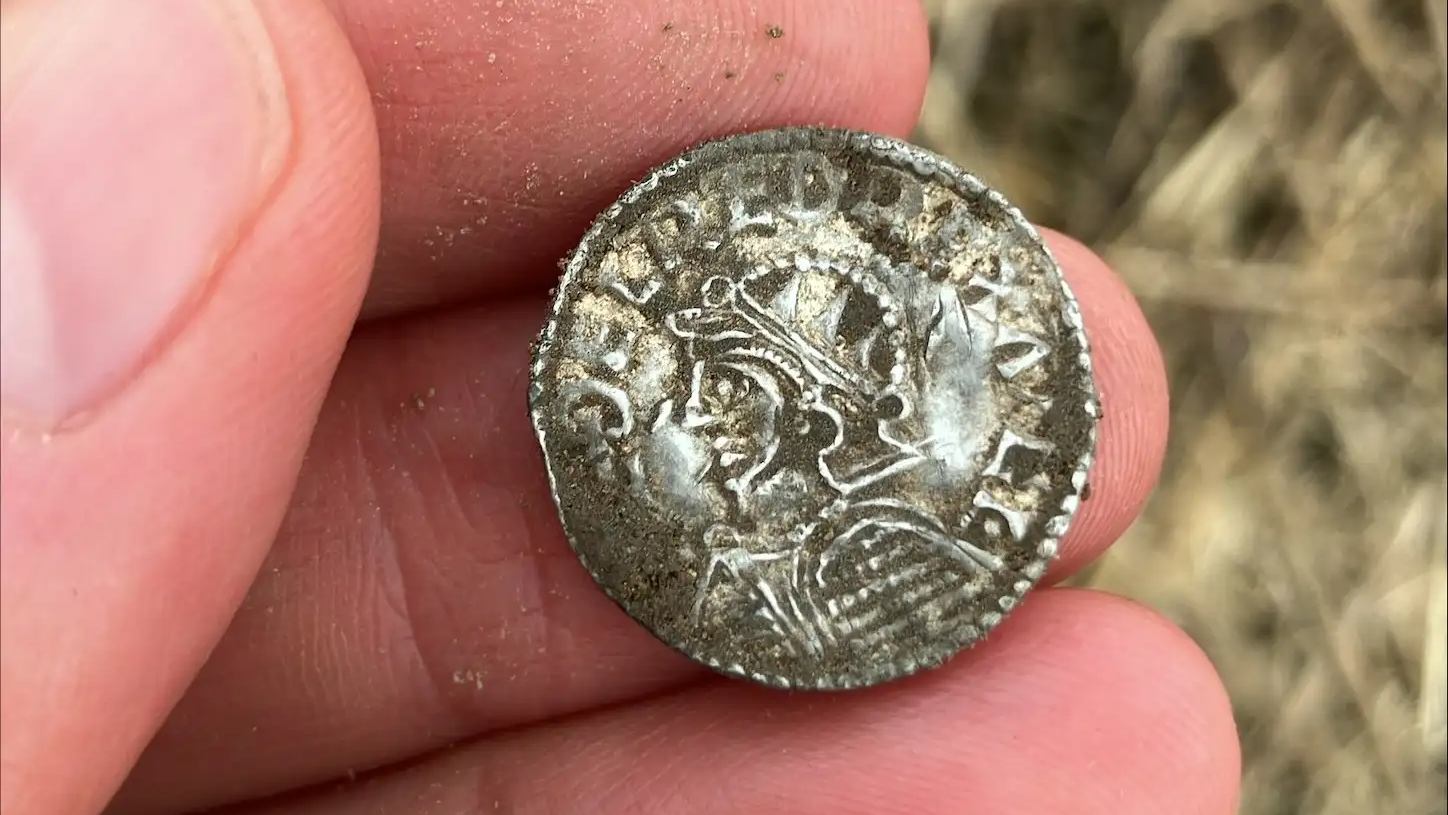
Archaeologists in Norway have uncovered a Viking Age hoard containing 2,970 silver coins minted in England, Germany, Denmark and Norway. It is the largest Viking coin hoard ever discovered in Norway — and archaeologists aren’t done digging yet.
Two metal detectorists found the first 19 coins April 10 on a farm near the village of Rena in eastern Norway, according to a translated statement from Norway’s Directorate for Cultural Heritage. The detectorists alerted local archaeologists, who joined the search the following day.
Experts at the Museum of Cultural History in Oslo are already examining the coins, dubbed the Mørstad Hoard after the farm where it was discovered. Examples include coins minted under Æthelred II (king of England from 978 to 1016), Cnut the Great (king of England, Denmark and Norway from about 1016 to 1035), and Otto III (the Holy Roman emperor from 996 to 1002).
“Foreign coinage dominates the circulation of money in Norway up until Harald Hardrada ([ruled] 1046-1066) established a national coinage,” Svein Gullbekk, a numismatist at the Museum of Cultural History, said in a statement. But a few of the coins discovered in the hoard were minted under Hardrada, meaning the hoard was deposited around 1050, just as Norwegian coinage took off, Gullbekk said.
A handful of coins from the largest Viking coin hoard in Norwegian history.
(Image credit: Innlandet County Authority)
The hoard may represent a stash of Viking wealth made not from raiding but from the industrial-scale processing of natural resources from local bogs in Scandinavia.
“Ore was extracted from the bogs, and the processed iron was exported to Europe,” Jostein Bergstøl, an archaeologist at the Museum of Cultural History, said in a statement. “From the 900s until the late 1200s there was an enormous iron production in this area.”
The soil conditions likely helped to preserve the coins, according to Smiseth.
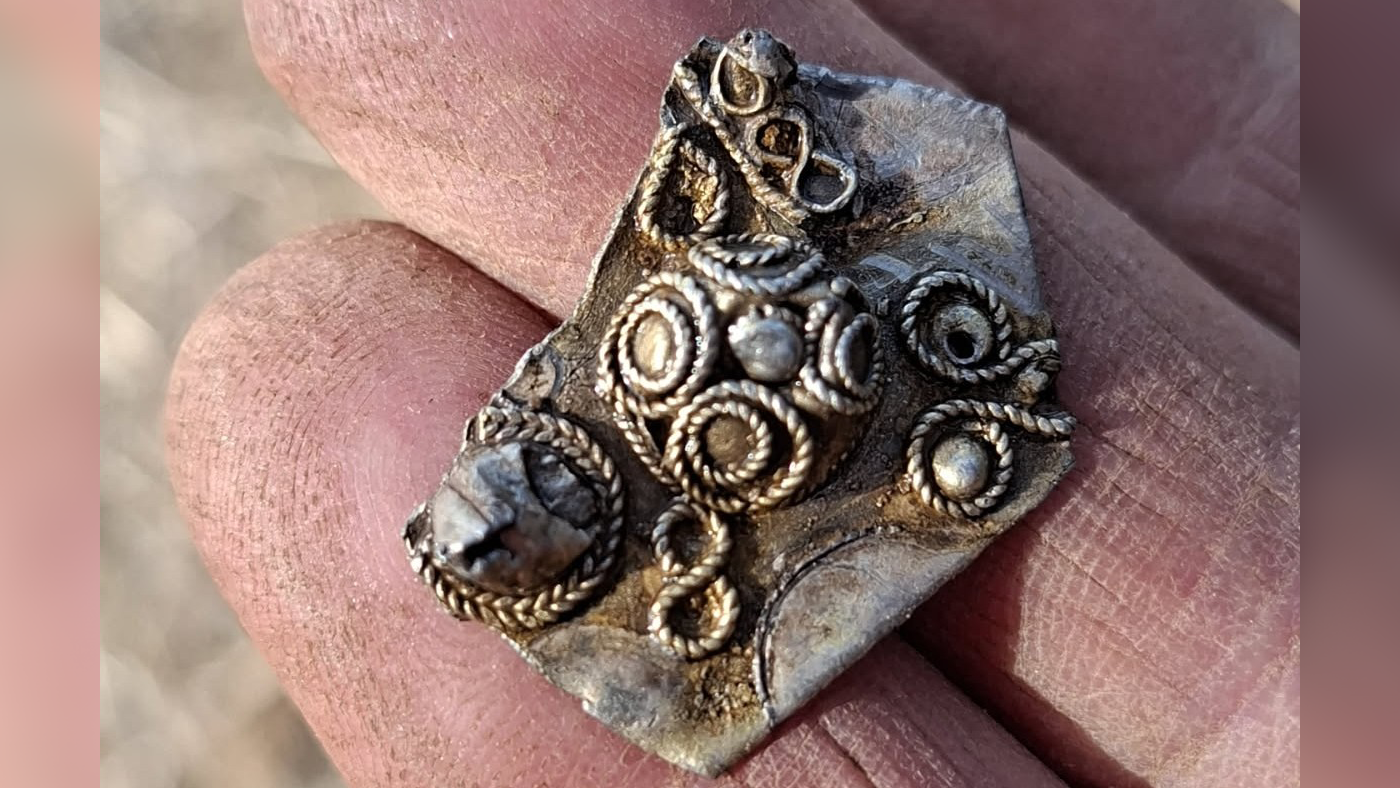

Archaeologists also recovered hacksilver — pieces of silver jewelry cut up and used as currency in the Middle Ages.
(Image credit: Innlandet County Authority)
“This is a truly unique discovery of the kind that you may only experience once in your career,” Smiseth said in a translated statement. Along with the coins, the archaeologists have uncovered pieces of hacksilver — cut fragments of silver jewelry that were used as currency in the Middle Ages.
Archaeologists are still working at the site to see if there are additional items in the hoard or if any evidence of a settlement might be in the area. But the Mørstad Hoard has already made history.
“We have previously found Viking Age coin hoards containing around 2,000 coins, but never more than 3,000,” Gullbekk told Science Norway. “They have broken a barrier here. This is truly exceptional.”
See how much you know about ancient Norsemen with our Viking quiz!