



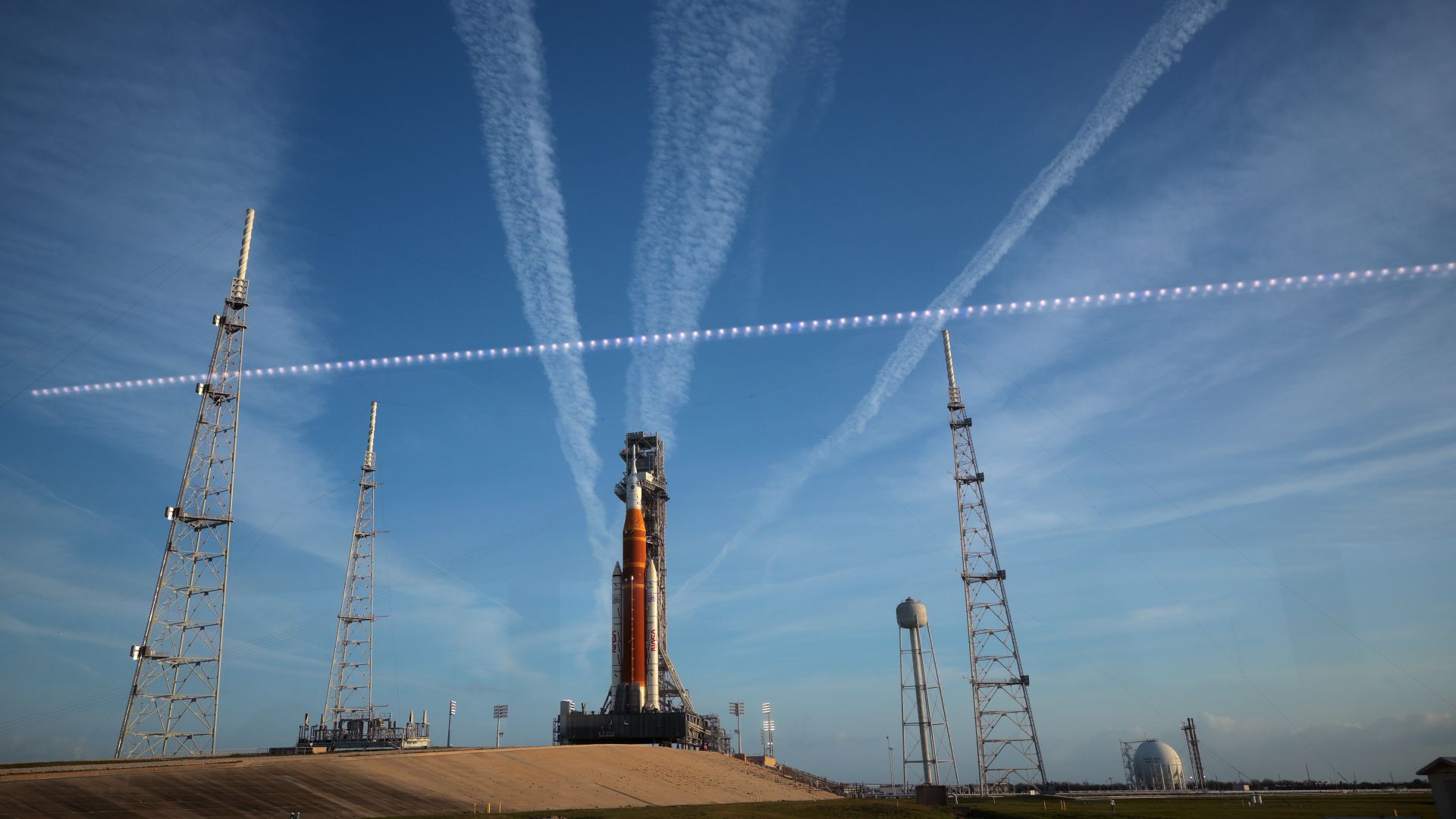
NASA’s Artemis II mission remains on track for its planned April 1 launch, the space agency announced in a prelaunch news conference Tuesday (March 31).
At the news event, held at the Kennedy Space Center in Florida, NASA managers emphasized that both the vehicle and team are ready to fly, with current conditions not pointing to any major last-minute technical concerns. The briefing also broke down the two biggest possible spoilers of tomorrow’s launch :the weather on the ground and in space.
However, Mark Berger, NASA’s Launch Weather Officer for the Artemis II mission, highlighted that the flare is not currently expected to affect the launch. Artemis launch criteria is designed to avoid liftoff during severe solar conditions, but based on the latest outlook, this flare appears to be something NASA is monitoring rather than something that is stalling the launch.
“There is nothing here screaming ‘no go’ for any of these attempts,” Berger said at the prelaunch conference.
That leaves Earth’s weather as the more pressing concern. NASA’s latest forecast heading into launch day called for an 80% chance of favorable weather, with high ground winds as the main issue. Berger mentioned that some precipitation could occur on launch day, but shouldn’t be an issue.
“It looks pretty good,” Berger added.
The prelaunch news conference also invited some lighthearted curiosity about whether anyone might try to sneak an April Fool’s joke into the countdown. NASA did not indicate at the conference that it was aware of any jokes or stunts in the works, but the agency hardly lacks a history of mischief. As one example, NASA astronaut Owen Garriott performed a legendary prank on Mission Control while at Skylab, where he played a prerecorded conversation that sounded like his wife Helen had stowed away onboard. In another prank, NASA astronaut John Young smuggled a corn beef sandwich aboard Gemini III.
For Artemis II though, the tone coming out of the conference was more focused on the launch ahead as NASA attempts to return to the moon.
“Everybody understands the significance of this mission,” Jeff Spaulding, senior test director for the Artemis II program at NASA’s Kennedy Space Center, said in the briefing. “There’s a lot of excitement and fervor with all of the [NASA] groups out there, but especially here at Kennedy.”
Test your knowledge of previous astronauts that have gone to the moon with our moon landing quiz!