




Google wants to release 64 million bacteria-riddled mosquitoes in California and Florida — but scientists aren’t concerned.
The Environmental Protection Agency (EPA) is reviewing an application made by the tech giant for an experimental mosquito release permit, which, counterintuitively, could reduce mosquito populations that carry diseases.
The release is part of Google’s Debug initiative, which aims to deploy millions of non-biting male mosquitoes infected with a bacterium called Wolbachia pipientis — commonly known as Wolbachia — into the environment. This bacterium doesn’t harm infected males, but it does prevent any uninfected females they mate with from having offspring, thereby slashing mosquito populations over time.
In this case, Google is targeting southern house mosquitoes (Culex quinquefasciatus), an invasive species native to tropical and subtropical regions that can spread diseases like West Nile virus and St. Louis encephalitis in humans.
The proposal has scientists mostly buzzing with enthusiasm. Karthikeyan Chandrasegaran, an assistant professor at the University of California, Riverside, studies the ecology and behavior of mosquitoes in the context of public health, and told Live Science that using Wolbachia is a “reasonable” mosquito control approach, particularly when compared to the use of broad insecticides.
“Wolbachia-based strategies are generally species-specific and do not introduce novel toxins into the environment,” Chandrasegaran said. “Importantly, Wolbachia is already widespread in many insect species and is a naturally occurring bacterial symbiont rather than a genetically engineered organism. From that perspective, they are among the more environmentally conservative mosquito control tools currently available.”
The EPA has deemed Google’s request to be of potential regional and national significance, and it will make a final decision whether to grant the permit following a public comment period ending on June 5. After this, the agency may give Google the greenlight to release up to 32 million mosquitoes in California and another 32 million in Florida over two years.
Get the world’s most fascinating discoveries delivered straight to your inbox.
However, despite the scale of the proposed releases, Google’s approach isn’t new and has already been shown to work in another mosquito species.
“It is a technique that’s been used actively to control mosquito populations since around 2011,” Eric Caragata, an assistant professor at the University of Florida who studies Wolbachia for mosquito control, told Live Science.
Fighting mosquitoes with mosquitoes
Mosquitoes are the deadliest animal on the planet, according to the Centers for Disease Control and Prevention (CDC), killing between 500,000 to more than a million people a year by spreading harmful diseases. Given the blood-suckers are so small, widespread and numerous, reducing them at scale is tricky. Using insecticides can harm the environment and kill other pollinators, and increasingly, mosquitoes are building up a resistance to them.
“We have an ongoing battle with both mosquito-borne disease and insecticide resistance,” Caragata said.
Wolbachia offers a potentially natural solution to these mosquito woes. The bacterium is common in insects but doesn’t infect other animals, like humans. Through a process called cytoplasmic incompatibility, the bacterium creates a unique interaction between infected males and uninfected females.
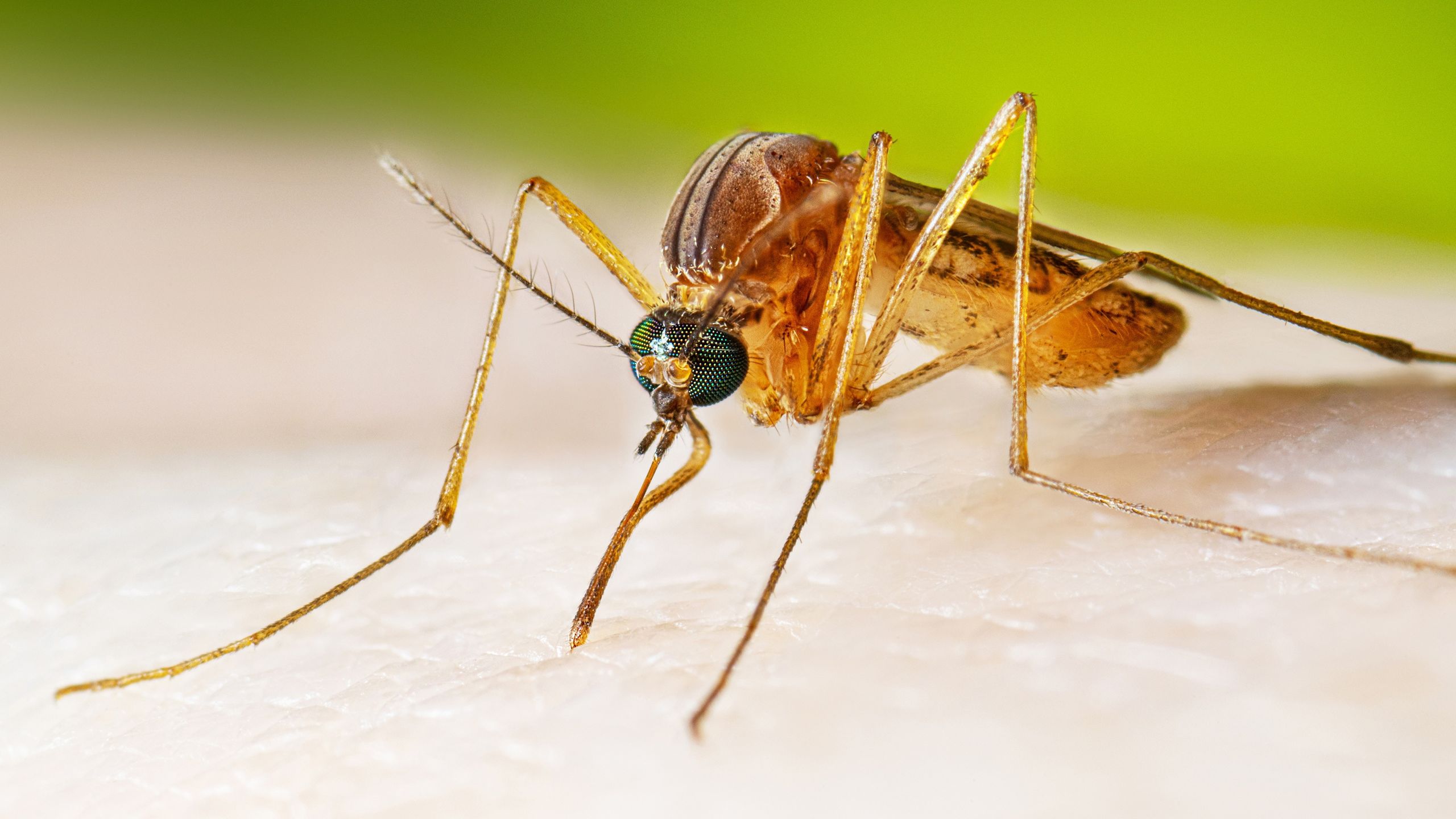
Wolbachia pipientis can stop southern house mosquitoes from producing viable offspring. The mosquitoes are pictured here in the pupal stage of their life cycle.
(Image credit: Smith Collection/Gado/Getty Images)
In males, Wolbachia modifies the sperm genome in a way that kills embryos produced with that sperm. However, if a female also has Wolbachia and it’s in the embryo, then the sperm genome impairment doesn’t do any harm. This interaction means that if you release millions of infected males into a population, then the uninfected females will mate with them en masse and be unable to produce viable young.
“If a [female] mosquito has Wolbachia, that mosquito can mate and reproduce successfully with both infected and uninfected males,” Caragata said. “All of her progeny will then have Wolbachia. However, if you have an uninfected female mosquito and she mates with a Wolbachia-infected male, none of her progeny will hatch.”
Google is building machines to autonomously rear millions of infected mosquitoes, and then using artificial intelligence (AI) algorithms, sensors and other engineering to separate the males from the females.
Researchers have been using sterilized male mosquitoes to reduce populations for decades. Female mosquitoes bite humans because they need the protein and other nutrients found in blood to produce their eggs, but males get all their nutrition from flower nectar and fruit and not humans. So, releasing male mosquitoes theoretically poses no threat to people.
Most of the previous bacteria-based attempts have focused on Aedes aegypti mosquitoes, which carry diseases like Zika and dengue. In Singapore, where Google is also working, researchers have been using Wolbachia-infected males to fight dengue. Trials have found that the approach reduces the disease-carrying mosquito population by up to 90% and the subsequent risk of a person contracting dengue by 70%. However, Google’s large-scale targeting of southern house mosquitoes is new.
More upsides than downsides
While there are some unknowns, neither Caragata nor Chandrasegaran expect any major ecosystem disruptions. Lots of animals feed on mosquitoes, but a sudden drop in southern house mosquitoes shouldn’t result in lots of animals starving.
“Most predators that consume mosquitoes are generalists and feed on a broad range of aquatic and terrestrial insects,” Chandrasegaran said. “Consequently, there is little evidence to suggest that local suppression of Culex quinquefasciatus would trigger substantial ecological cascades.”
Chandrasegaran noted that ecosystems are complex, and so any large-scale intervention should be monitored. One potential consequence could be that reducing one mosquito species creates space for another, but Chandrasegaran thinks there will likely be more upsides than downsides.
“From a public health perspective, reducing Culex quinquefasciatus populations could yield meaningful benefits, as this species is an important vector of West Nile virus and several other pathogens,” Chandrasegaran said. “If suppression can be achieved safely and sustainably, the public health benefits are likely to outweigh the ecological risks based on our current understanding.”
In the U.S., West Nile virus is the leading cause of mosquito-borne disease. Around 2,000 people are diagnosed with the virus each year, with likely more infected but undiagnosed, according to the CDC. Most people don’t develop symptoms and some experience mild flu-like symptoms; however, in some cases, it can result in severe illness and death. In California, there have been more than 8,000 human cases of the virus and more than 400 deaths since 2003 — none so far this year.
Internationally, C. quinquefasciatus and other Culex mosquitoes also play a major role in spreading Japanese encephalitis virus, which is a problem in Asia. There are an estimated 100,000 annual cases of Japanese encephalitis, for which the fatality rate can be as high as 30%, according to the World Health Organization (WHO).
Live Science reached out to Google for comment and was directed to a public statement about the Debug project.