




Republicans are pouring campaign money into Senate battleground states as new polls show them struggling in red territory — with warning lights flashing in both the House and Senate.
The National Republican Senatorial Committee is hoping its latest $46 million spend — including $9 million in Iowa, $11 million in Ohio, $2 million in Alaska, and $8 million in North Carolina — can hold back a potential Democratic tsunami.
“You’ve got Republicans scrambling everywhere,” Sen. Jim Justice (R-W.Va.) fretted to The Post. “When – my lord of living, all we had to do was really be in touch with the people four or five months ago … We’ve done all kinds of great stuff. You know, but we’re tone deaf in a lot of ways.”
The Senate Leadership Fund, affiliated with Senate Majority Leader John Thune (R-SD), has put $100 million behind Republican state AG Ken Paxton in Texas, a source told The Post, with plans to keep spending until Election Day. “It’s red wall kind of thing … We only spend money where we think we can make a difference.”
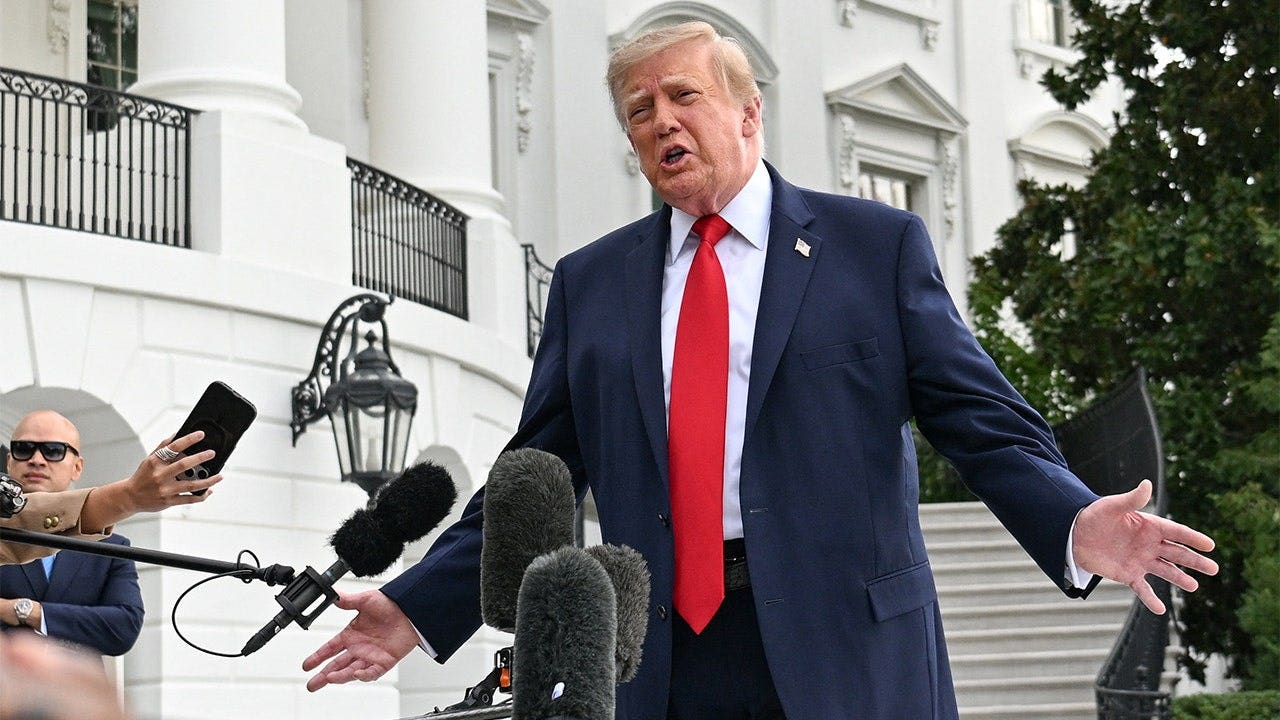
The party’s vulnerability is on display in red state polling – plus some eye-catching policy shifts by vulnerable Republicans who usually stay close to President Trump, whose own popularity rating is underwater.
The latest polls out of Iowa show Democrat Josh Turek tied with Rep. Ashley Hinson (R-Iowa), who Republicans have long considered a top-tier candidate in a state Trump won with 56% of the vote. Republicans control the Senate 53-47, meaning a loss of four seats would make Sen. Chuck Schumer (D-NY) majority leader.
Former Sen. Sherrod Brown (D-Ohio) has grabbed a 4-point lead over appointed Republican Sen. Jon Husted (R-Ohio) in a state Trump carried by 13 percentage points over former VP Kamala Harris in 2024.
Hinson and Michigan Republican candidate former Rep. Mike Rogers (R-Mich.), who is battling radical leftist Democrat Abdul El-Sayed, both put out statements this week critical of the Iran war, seeking political distance. Husted said the war “needs to come to an end as quickly as possible,” but didn’t vote for a War Powers resolution Thursday seeking to halt military action.
At a meeting with Republicans Wednesday, NRSC Chair Sen. Tim Scott “was very direct,” saying Republican candidates in “red states need to be aggressive and run like they’re behind because the fight for the Senate has a record number of tossup races,” said one Republican source.
Prognosticator Larry Sabato moved Iowa to the “toss-up” category and Kansas to “leans Republican.”
Ohio and Iowa “look especially dire for Republicans” due to high fuel prices and tariffs said Erin Covey of the Cook political report, which on Friday moved 15 House seats in the direction of Democrats. She now considers incumbent Rep. Tom Kean’s (R-NJ) seat – the lawmaker had a mysterious absence while battling depression – to “lean Democrat.”
“What’s worse environmentally for them compared to 2018 is the economy,” she said, mentioning a cycle when Dems lost 40 seats and gained control of the House, although there may be fewer House seats in play this year.
Sen. Roger Marshall (R-Kans.) cautioned Thursday that “when ICE operates in Kansas, it needs to coordinate with our local law enforcement” as agents carried out a series of immigration sweeps in the southwest part of the state, in a brushback on a signature White House issue. He’s clinging to a narrow polling lead in a state where Republicans haven’t lost a Senate race in 100 years.
The economy is now Trump’s “anvil” wrote Amy Walter of the Cook political report. The weight makes it harder for Trump to appear in competitive states, where he might drive up Democratic turnout. Next week he has plans to hold rallies in deep red Oklahoma and Alabama – not exactly tossup territory.
An Economist / YouGov tracking poll has Trump underwater in every state save three: Idaho, Wyoming, and West Virginia.
The Republican source was optimistic, in part because the big money and TV ads have yet to hit, and in part because the election is so fluid – plus fractures among Democrats over socialism.
“A lot of our races are being nationalized,” the source admitted. “But Iowa, New Hampshire, Maine – those places are still very siloed” with unique circumstances, providing protection.