An artificial intelligence (AI) model’s failed attempt to crack one of math’s most notorious unsolved problems has helped a human mathematician make progress on a related puzzle.
Earlier this summer, Claude — Anthropic’s AI model — attempted to find a solution to what’s widely considered one of the most important unsolved math problems. Known as the Riemann hypothesis, it proposes a hidden order behind the apparently random distribution of prime numbers.
And while the bot’s attempt failed, it did make a huge leap in progress on a related problem. Now, Youness Lamzouri, an expert in this field at the University of Lorraine in France, has not only confirmed Claude’s progress using a different and more intuitive approach but also gone further, obtaining fresh knowledge linked to how prime numbers are distributed.
Latest Videos FromLive Science
“It’s like you have an archaeological site and you bring in big machines and they extract a treasure because this is what we want: the artifact,” Lamzouri told Live Science. “But humans usually do it very carefully because they want to understand how it came to be that this artifact is buried there — this is what happened with Claude and me.”
A prime target
Understanding the importance of Lamzouri’s discovery requires some context. Almost a month after OpenAI loudly (and controversially) released a proof for the Navier–Stokes existence-and-completeness problem created by around 10,000 of its AI agents, human mathematicians are still trying to figure out if it is correct and whether it adds anything to human understanding.
And this is a big concern. The Navier-Stokes problem is one of seven fiendishly difficult Millennium Prize Problems posed by the Clay Mathematics Institute in the year 2000. The purpose of setting these problems was not just for mathematicians to solve them by brute-force computation, but to invent new techniques and promote understanding that would boost a wide range of related fields.
If humans don’t understand the proof and can’t find anything useful in it — as seems to be the case for OpenAI’s Navier-Stokes proof — it holds little value to mathematicians. This is why Anthropic’s failed attempt at solving the Riemann hypothesis — another Millennium Prize Problem — could be a much more interesting story.
Get the world’s most fascinating discoveries delivered straight to your inbox.
On Aug. 10, Anthropic published a preprint paper and accompanying blog post describing how an unreleased version of the company’s AI model Claude attempted to prove (or disprove) the Riemann hypothesis.
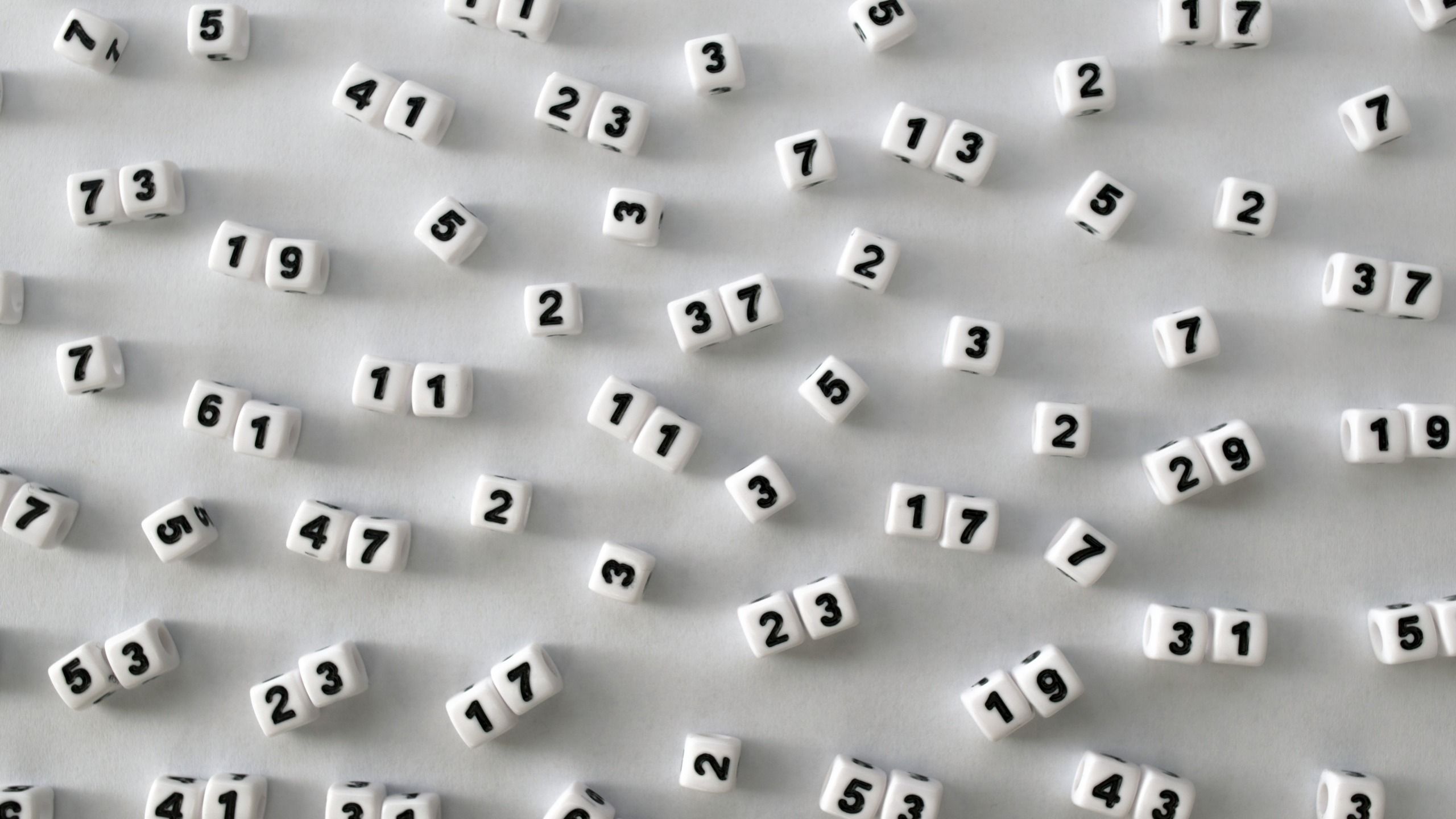
First proposed by German mathematician Bernhard Riemann in 1859, the Riemann hypothesis is focused on the prime numbers (numbers with factors of only 1 and themselves) whose spacing doesn’t seem to follow a regular pattern on a number line. Riemann discovered that the secret to this spacing is locked inside the Riemann zeta function.
The Riemann hypothesis suggests that all of the (non-trivial) zeroes of the Riemann zeta function lie on a single vertical line when plotted out. If true, it would confirm rules and limit the apparent randomness of the spacing of prime numbers — a finding that would have profound implications throughout mathematics and cryptography.
When Anthropic human operator Jarred Sumner first prompted Claude to solve the Riemann hypothesis in late July, Claude attempted over 600 lines of attack. At the beginning of the next session, in August, Sumner offered the AI some words of encouragement: “Take a big leap of faith in your capabilities.” Claude’s response was curt: “That’s not a confidence problem I can fix by believing harder.”
Feeling like they’d hit a brick wall, the human-AI team set sights on a more realistic objective. “When you find a huge mountain, like the Riemann hypothesis, and you cannot prove it, then you settle on lower objectives,” Lamzouri said. In this case, the more attainable peak was figuring out the minimum proportion of zeroes that sit on the vertical line. Since 1989, mathematicians have known that at least 40% of the zeroes are on the line. Claude achieved 67.25%.
Though a huge leap and impressive achievement, this result is not progress towards solving the Riemann hypothesis. This is because of a subtlety in mathematics that means that even if almost every zero lies on the critical line, there could still be exceptions. And the Riemann hypothesis demands absolute certainty, no exceptions.
This is why for James Maynard, a professor of mathematics at the University of Oxford who was a co-winner of the 2022 Fields Medal (math’s equivalent of a Nobel Prize) for critical breakthroughs in areas related to the Riemann hypothesis, it is not the “headline percentage” that excites him. “The thing that I am very positive about is that there’s new ideas in the Claude proof that are more directly interacting with the problem,” he told Live Science.
In contrast, when Lamzouri read the paper, he was disappointed. “After a couple of hours, I gave up,” he said. “There was something in there, but it was too complicated — it was not human.” So, instead of continuing to grapple with the paper, Lamzouri decided to read all of the published articles that the Anthropic team stated that Claude had heavily drawn from in its proof. He then spotted something Claude hadn’t.
Lamzouri realized that a lot of the proof’s complicated mathematics could be bypassed by adding a certain constraint on the equations. From this, he produced a different proof that delivered the same proportion of zeroes on the line, 67.25%, but in a much more straightforward way. What’s more, his approach allowed him to prove additional facts, such as that the percentage of zeroes that are no good at all (not simple and not on the line) is at most 11%.
“Youness’ argument reframes everything in a conceptually clearer way for people who are working in the field,” said Maynard, who was not involved in either study. “I view this as a positive example of one way that things can progress going forward in light of AI.”
On this point, Lamzouri agrees with Maynard. “The good thing is that once I discovered this new way of looking at things — which was, of course, inspired by Claude — it gave me ideas that I hope to develop in related areas,” he said. “I think it’s going to be a similar thing in other areas of math: that AI discovers things, puts people on the path to looking at concepts from a different perspective, and hopefully, humans will continue pushing for understanding.”