




NEWYou can now listen to Fox News articles!
Supreme Court Justice Elena Kagan made the case that recent rulings from the conservative-majority high court are destabilizing democracy, suggesting that it isn’t working “as well as it should.”
The remarks from the liberal justice came during a closed discussion before faculty and students at Catholic University’s law school in Washington, D.C.
The discussion between Kagan and law professor Joel Alicea Alicia, who previously clerked for Justice Samuel Alito, comes just weeks after the Supreme Court began its new term, during which it’s expected to rule in major cases that will determine the scope of gun rights and state election integrity laws, among other issues.
The conversation also comes less than two weeks before the midterm elections as President Donald Trump and Republican state lawmakers have pushed for new congressional maps drawn to favor Republicans and bolster their chances of maintaining control of the House. Democratic-led states have responded by redrawing their own maps, fueling ongoing lawsuits and court battles.
SUPREME COURT KICKS OFF NEW TERM WITH FRESH QUESTIONS OVER ITS LEGITIMACY AND ITS FUTURE
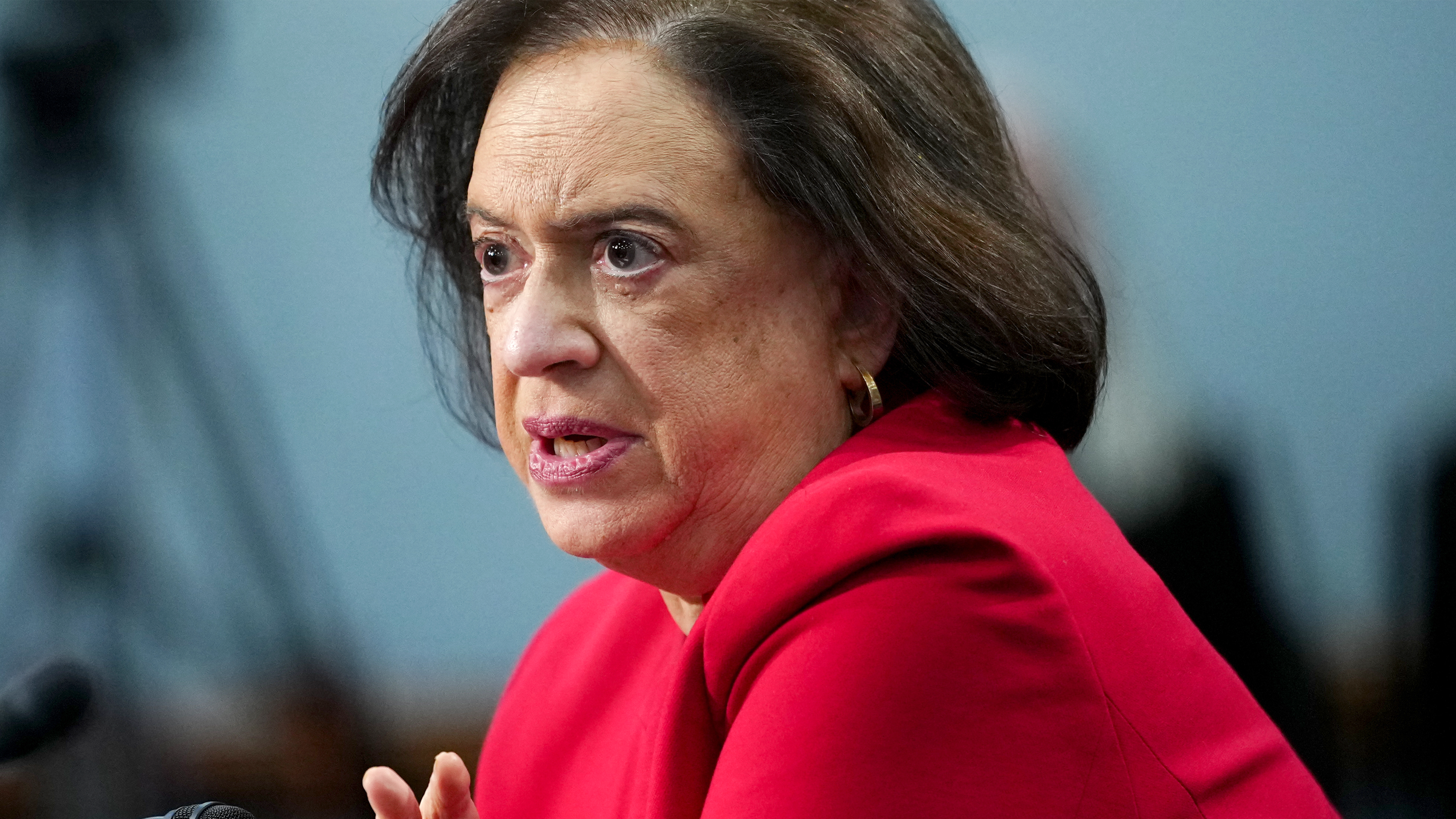
Elena Kagan, associate justice of the U.S. Supreme Court, during a House Appropriations Subcommittee on Financial Services and General Government hearing in Washington, D.C., July 14, 2026. (Aaron Schwartz/Bloomberg via Getty Images)
Kagan pointed to the Supreme Court’s 2019 ruling in Rucho v. Common Cause, in which she dissented, as the beginning of a “race to the bottom.” She argued that the decision, which barred federal courts from invalidating maps solely because they unfairly favor one political party, deprived “masses of citizens” of their “rights to voting equality.”
Kagan suggested that the influx of gerrymandered maps is “driving people away from the center toward the wings, toward the extremes.
“Making what I think is, unfortunately, a too polarized country even more so,” Kagan said.
Kagan also criticized rulings from the previous term, including the court’s decision limiting campaign finance restrictions and its ruling that made it more difficult to draw majority-minority congressional districts under the Voting Rights Act.
“Part of the reason why the court got it wrong was a kind of lack of the appropriate concern or understanding of the consequences of their decisions,” Kagan said.
“I do think in all these areas the court has blinded itself to the very deleterious effects of their rulings on how the political system works and has created a democracy that doesn’t work as well as it should.”
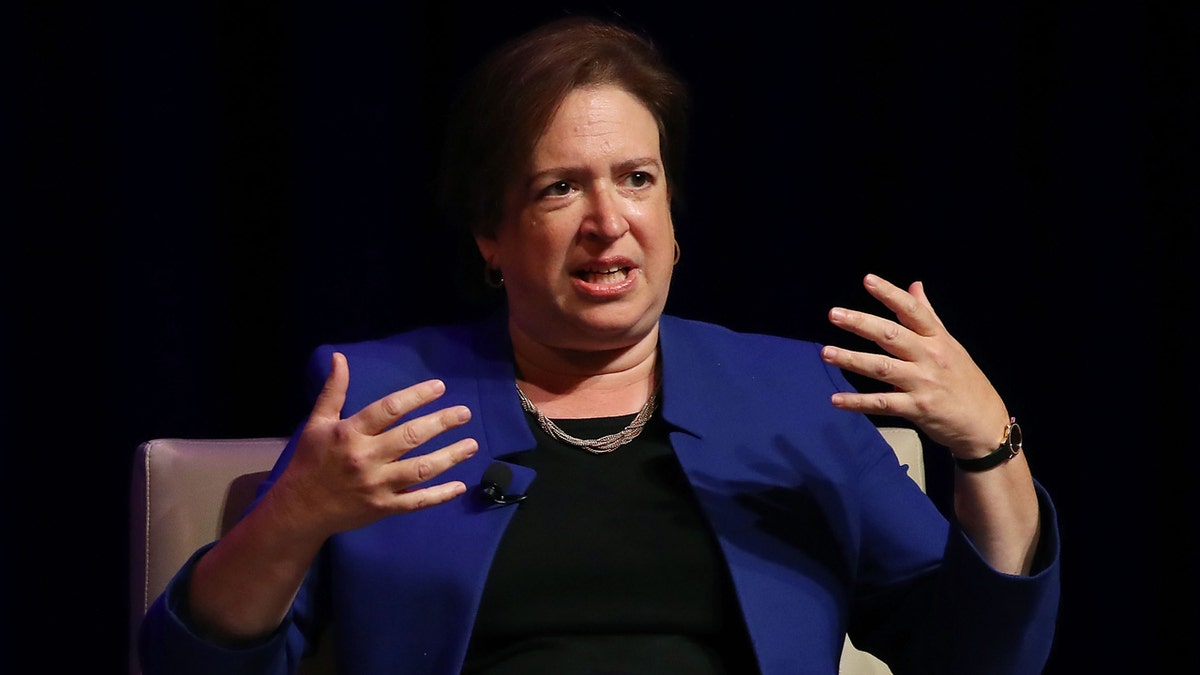
U.S. Supreme Court Associate Justice Elena Kagan participates in a discussion at the George Washington University Law School Sept. 13, 2016 in Washington, D.C. (Mark Wilson/Getty Images)
DESANTIS SIGNS FLORIDA REDISTRICTING MAP TO POTENTIALLY FLIP 4 HOUSE SEATS RED
Last term, the Supreme Court struck down federal limits on how much state and national political parties could spend in coordination with their candidates.
Meanwhile, Kagan argued in dissent that the limits were necessary to prevent wealthy donors from working around direct contribution caps and that striking them down effectively allowed a political party to become an “alternative checking account” for a candidate.
“The people of America look around this political system and think that all this money chasing all these political candidates is a nightmare,” Kagan said. “And they’re right.”
Kagan, who was appointed to the court by President Barack Obama in 2010, argued that it was in a much better position when there was greater ideological balance.
“There was a period of time where the court was in a better place, and the country was in a better place because the court was more balanced, and it was unclear whether the court could push through anybody’s program.”
SIGN UP TO GET THE POLITICS NEWSLETTER

The United States Supreme Court (front row L-R) Associate Justice Sonia Sotomayor, Associate Justice Clarence Thomas, Chief Justice of the United States John Roberts, Associate Justice Samuel Alito and Associate Justice Elena Kagan. (Back row L-R) Associate Justice Amy Coney Barrett, Associate Justice Neil Gorsuch, Associate Justice Brett Kavanaugh and Associate Justice Ketanji Brown Jackson. (Alex Wong/Getty Images)
“Nobody in America thought that the court was in the pocket of any one group or any one party,” she said. “And the court had a kind of legitimacy. When the court has a legitimacy of that kind, it helps to create a stable country.”
However, Kagan pushed back against the characterization that the conservative-leaning court simply rubber-stamped Trump’s entire agenda. She pointed to previous rulings by the high court rejecting birthright citizenship restrictions, tariffs and Trump’s restrictions on mail-in voting.
CLICK HERE TO DOWNLOAD THE FOX NEWS APP
“It’s why the president sometimes really has not very nice things to say about the court’s decisions and some of my colleagues,” Kagan said.