


A deadly Ebola disease epidemic is rapidly unfolding in the Democratic Republic of the Congo (DRC) and Uganda. In May, the World Health Organization (WHO) declared the epidemic a public health emergency of international concern, citing a high risk of further international spread.
As of June 6, there have been 515 confirmed cases and 91 confirmed deaths in the DRC, according to the WHO, and 19 confirmed cases including two confirmed deaths in Uganda.
The outbreak is being caused by the Bundibugyo virus, one of three ebolaviruses known to cause large outbreaks. Unlike the Zaire ebolavirus, which caused the largest Ebola epidemic to date, the Bundibugyo virus does not have a licensed vaccine or medicines.
To get a better understanding of the outbreak and its global implications, Live Science spoke with Dr. Ali S. Khan, professor of epidemiology at the College of Public Health, University of Nebraska and former assistant surgeon general of the U.S. Public Health Service.
Khan has been involved in 25 international and domestic disease outbreak responses, including muliple Ebola outbreaks, during which he worked in the DRC and Uganda. He was director of the Office of Public Health Preparedness and Response at the Centers for Disease Control and Prevention from 2010 to 2014 and currently serves on the WHO Steering Committee for Global Outbreak Alert and Response Network.
Here’s what he had to say about the Ebola epidemic and the future of public health threats.
Sophie Berdugo: This year’s outbreak currently stands as the third-largest Ebola outbreak ever recorded, spreading faster in its early stages than the largest outbreak in 2014. What factors have made it so big?
Get the world’s most fascinating discoveries delivered straight to your inbox.
Ali S. Khan: This outbreak is occurring in the midst of a political and humanitarian emergency that’s going on in the Democratic Republic of the Congo, in an area with significant ongoing political violence, and fighting that is ongoing. That makes it very difficult. It’s a remote area, it’s an impoverished area. There’s little to anything in the way of government services for health care or public health. So, it’s not surprising that we see an outbreak there. This is the 17th outbreak in the Democratic Republic of the Congo.
But given the nature of where it is, it was identified late and so there have been multiple chains of transmission that have occurred before it was identified. It was late enough that now we’re seeing what many would characterize as “community transmission.” So that’s why it’s big.
Dr. Ali S. Khan is currently serving as is dean of the College of Public Health at the University of Nebraska Medical Center.
(Image credit: University of Nebraska Medical Center)
Whether it’s spreading faster is up for debate because they’re still trying to understand where it is. It may just be spreading faster because they’re identifying where all the cases are. So it may have already spread. Not that it’s not going to spread further, but the early stages of the outbreak is just trying to get a handle on how many cases, who’s infected, and where they’re infected.
Fever, headache, muscle aches as an initial set of symptoms is not unusual in a country with a whole lot of malaria. So it can look like almost anything. Sick healthcare workers, dead healthcare workers act as a signal for a disease like Ebola.
And in this specific case, there was one final factor which is when they suspected the outbreak: the initial set of diagnostic testing they did, the tool they used, does not test for Bundibugyo. It only tests for Ebola Zaire. So the initial diagnostic testing to them suggested that this is just some other severe tropical febrile disease, and it’s not Ebola.
Then when the right set of samples eventually went to the Ministry of Health where they had more sophisticated testing they could go “Wait, it is Ebola; it’s just a different strain of Ebola.”
SB: Will we need to control this Bundibugyo outbreak differently from previous Ebola epidemics?
AK: A response to an Ebola outbreak is the same as a response to any Ebola outbreak. It’s all about excellent monitoring to identify cases, get them into a health care facility so they can no longer infect people within their community, and make sure they have great care. And then make sure there’s good infection control so that you don’t infect other healthcare workers. So that’s step one.
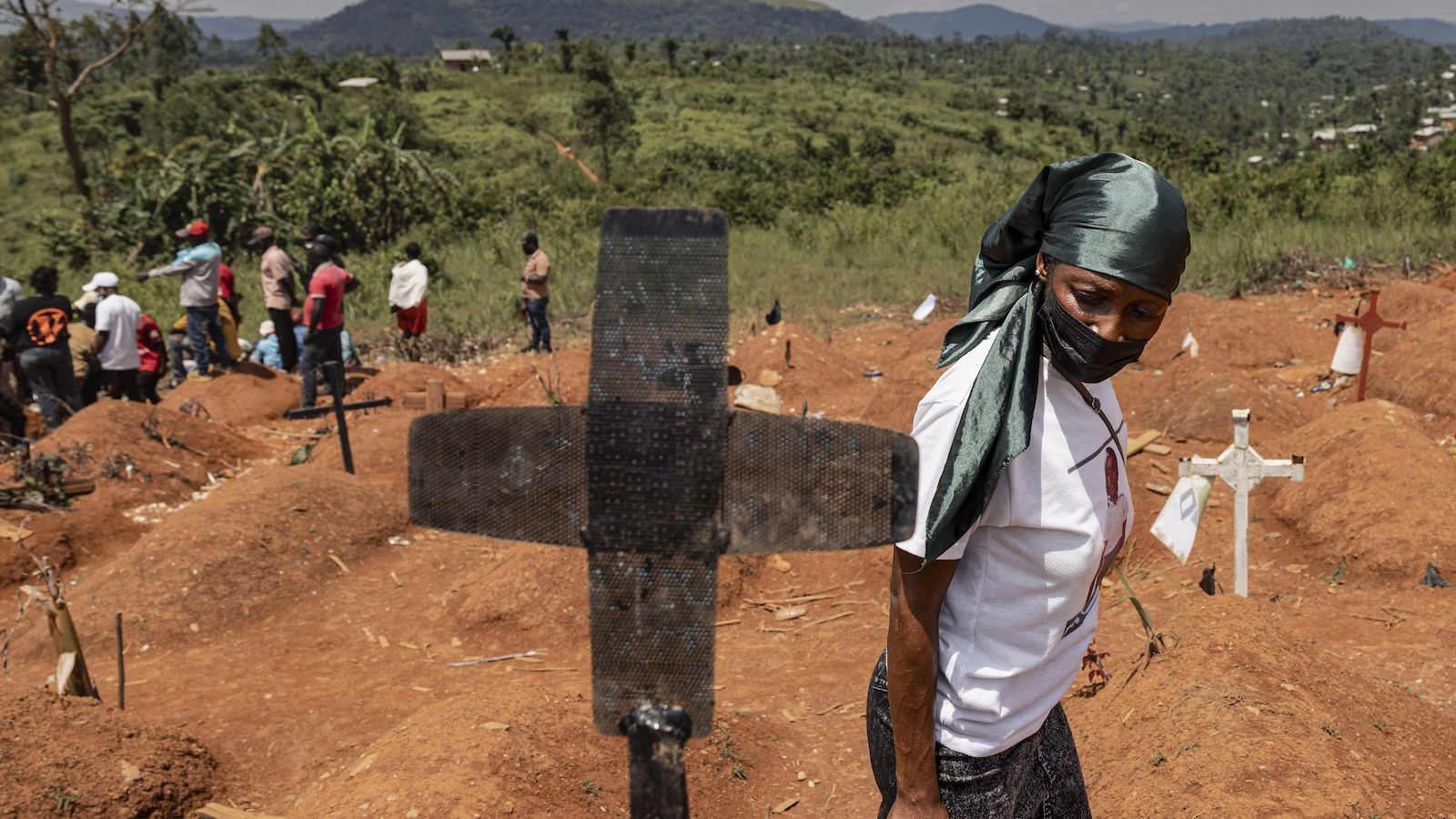
The second step is [an] excellent follow-up of the contacts of infected people [to] find them and then make sure that they’re quarantined in a humane way. And the third piece is safe burials. You want to ensure that if people die in the community that you have safe, dignified burial practices.
So those are the three critical components. Every [response to an] Ebola outbreak will do that.

Safe and dignified burials are an essential element of Ebola outbreak response.
(Image credit: Michel Lunanga / Stringer via Getty images)
This outbreak is challenging for two reasons. One is with Zaire, we now have drugs that can help a patient. We do not have similar drugs [for Bundibugyo]. So that makes it more difficult within the health care setting to save people’s lives.
The other thing from the prevention standpoint is that we don’t have vaccines. So for Zaire, you can vaccinate people. For example, you can vaccinate healthcare workers, we can vaccinate people who are contacts to decrease the likelihood of them getting infected.
So you really are completely relying on good old-fashioned, boots-on-the-ground public health. And that’s difficult in a humanitarian crisis. And it’s exacerbated by the lack of trust that there is for the government, which isn’t there anyway, [and an] additional lack of trust for international partners.
Let’s remember these people are dying every day of preventable diseases like malaria and nobody shows up, and the moment they have an “exotic disease” for the West, hundreds of millions of dollars and thousands of [medical] responders are showing up. It’s very easy to see why there may be mistrust in this situation.
At the end of the day, the biggest factor in every outbreak is risk communications and community engagement. You can get an outbreak under control very fast if the community really is engaged and you communicate it well with them and they want to help make this happen.
SB: Do you have any concerns about the current approach the U.S. is taking to this outbreak? How may have cuts to the U.S. Agency for International Development (USAID) exacerbated it?
AK: I think it’s fair to say that USAID has always been a critical partner in these outbreaks for logistics, for provision of personal protective equipment, PPE. So there’s no doubt that we have lost that connection on the ground that the U.S. government used to have with these outbreaks.
That said, we do know that the U.S. is supporting the response from a financial standpoint. CDC and other partners have been engaged with WHO to help coordinate their actions and understand what’s going on and how they can potentially help.
Global health security is also domestic health security.
It’s easier to say in the abstract than in the concrete because there’s hundreds of partners during an outbreak. To say “this is not happening because this partner is missing” is difficult, but there’s no doubt that the lack of USAID is going to impact any outbreak where in the past USAID has been such a critical partner on the ground.
People have asked in the past, “If USAID was there, would we not have heard about this outbreak earlier?” In the abstract, yes, but there’s no concrete evidence of that. I mean, the truth is this outbreak occurred in the midst of a humanitarian crisis and the initial diagnostic testing didn’t trigger an appropriate response. And there’s always outbreaks in DRC of unexplained severe febrile illness.
I’m not sure if we can say the USAID and other cuts led to this outbreak. These outbreaks are going to happen: It’s in the right part of the world for them to happen. For the animals being infected then infecting humans. [Humans can become infected when exposed to the bodily fluids of infected animals, such as fruit bats and chimpanzees.] There is little to no infection control in the healthcare setting, so the outbreaks are going to spread regardless.
SB: On that point, you said in a 2020 interview that a “disease anywhere is a disease everywhere,” emphasizing the need for a global effort given diseases can be spread anywhere.
AK: Absolutely. We worry about these transboundary diseases for lots of reasons. One is the local impact in communities. We worry about large national and regional spread as we saw in Ebola in 2014. And then as with SARS-CoV-2 [the virus behind COVID-19] or the next influenza virus, we worry about global spread.
The best approach for all of us as global citizens is to rapidly identify a disease where it is and address it there so that it doesn’t spread. And that takes multiple partners in communities, in partnerships with governments, to make that happen. And that remains more critical today than ever because of the speed at which diseases can travel.
So yes, a disease anywhere is a disease everywhere, but a disease anywhere can be a disease everywhere tomorrow morning.
Nowadays, I could get infected in Bunia [the capital city of Ituri Province in the DRC] today, and tomorrow evening, I could be sitting in New York City. I’ve got the virus inside of me but I’m not going to be sick for another week or so, but there’s no way to know about that hidden infection because of the incubation period. Our speed of travel has become faster than this incubation period, and that has proven to be a downfall in terms of our ability to protect ourselves.
The old strategies of “lock down borders, keep ships from coming to your ports” — that doesn’t work because it’s probably already there by the time you decide that’s what you need to do.
SB: This Ebola outbreak was reported within weeks of a cluster of hantavirus cases aboard a cruise ship. Are we heading into a world where the threats of epidemics, and possible pandemics, become more likely?
AK: Yes, without a doubt. They’re becoming more likely for lots of reasons. One is, as humans move out into the environment, there’s an increased opportunity for this human-animal intersection and then spillover into humans. So that risk remains and is probably increasing.

In May, the WHO were alerted to a cluster of hantavirus cases aboard a cruise ship.
(Image credit: Jorge Guerrero/AFP via Getty Images)
Climate change is also having its own impact as vectors — mosquitoes, ticks and rodents, etc. — move into new areas where they weren’t previously. That puts people at risk. So that also helps exacerbate what’s going on. Travel exacerbates what’s going on because you could be infected and get somewhere faster than you ever could before.
And it’s not just the U.S. that is cutting global funding. International development aid has been falling from Germany and other European countries also. So it’s not just the U.S. But when you do that then it makes it more difficult for low- and middle-income countries to develop the systems they need to quickly identify these diseases and alert [local people and organizations about] these diseases so that either they take care of it themselves or they get international assistance to help take care of it.
SB: It doesn’t look like any vaccines will arrive for nine months, according to the WHO. Is there any way to speed that up, now or in the future?
AK: Yes: Embrace mRNA technology and stop demonizing mRNA technology. Nothing’s faster in getting a vaccine than mRNA technology. Nothing comes close. Think about how fast we got this COVID vaccine through FDA [Food and Drug Administration] approval in the United States: less than nine months. And a licensed vaccine with hundreds of millions of doses right off the bat.
We need to embrace new technology to make vaccines so that the moment you have a new pathogen you can spin up the vaccine production and have these vaccines available for people. In the United States, unfortunately we have been demonizing mRNA technology, which is unfortunate because that truly will be the technology that will help us get to a rapid vaccine for the next pandemic.
And I believe CEPI [Coalition for Epidemic Preparedness Innovations] in Europe has made a $10 million investment in mRNA technology for this new Bundibugyo strain. And then the two other vaccines that are being worked on are more classical methods. Those are established technologies that are being modified.
SB: What does the U.S.’s response to this outbreak tell us about its preparedness to face others?
AK: Globally, the fact that we left WHO — even though we are still talking to WHO — puts the U.S. government outside of the typical information loop and coordination loop of what’s going on with pandemics. It’s not as if we’re not talking to WHO, I know that from all my CDC friends that we’re talking to WHO.
The U.S. has been a leader over decades — we actually helped establish WHO — for pandemic preparedness, and that lack of global leadership will have an impact on our ability to rapidly recognize and respond to these diseases, which puts not just us but other countries at greater risk of transboundary diseases.
And that message is not just to the U.S., I think that [is a] message to every country in the world which has all of a sudden been up in arms about a dozen hantavirus cases which we knew, those of us in the field knew, posed no threat of a global pandemic.
Communities are understandably fearful when they hear about these sort of “exotic diseases” that are spread from person to person. It makes sense then for governments to help protect them by recognizing that global health security is also domestic health security.
They [disease outbreaks] don’t always have to start in Africa and Asia; they could start potentially right here in the United States. And there’s no doubt that we’ve eroded public health authorities since the COVID pandemic here in the United States. Eroding those public health authorities and the continued disinformation that we see weakens our ability to respond to the next pandemic.
Editor’s note: This interview has been edited and condensed for clarity.