




Six years after COVID-19 first made headlines, an antiviral pill has finally been shown to stop users from developing the disease after being exposed to the virus.
The drug, called ensitrelvir, was originally approved for use in Japan as a treatment for COVID-19, and it has now been approved as a preventative treatment, too. Now, promising late-stage trial results have been published as regulators in the U.S. and Europe consider whether to follow suit, Nature reported.
Now, ensitrelvir, developed by Japanese pharmaceutical company Shionogi, has been shown to significantly reduce the risk of developing the disease, according to research published Wednesday (May 13) in The New England Journal of Medicine.
The trial specifically focused on exposures from household contacts, a common source of SARS-CoV-2 spread. So if your roommate got sick, you could take ensitrelvir in addition to distancing yourself from them at home.
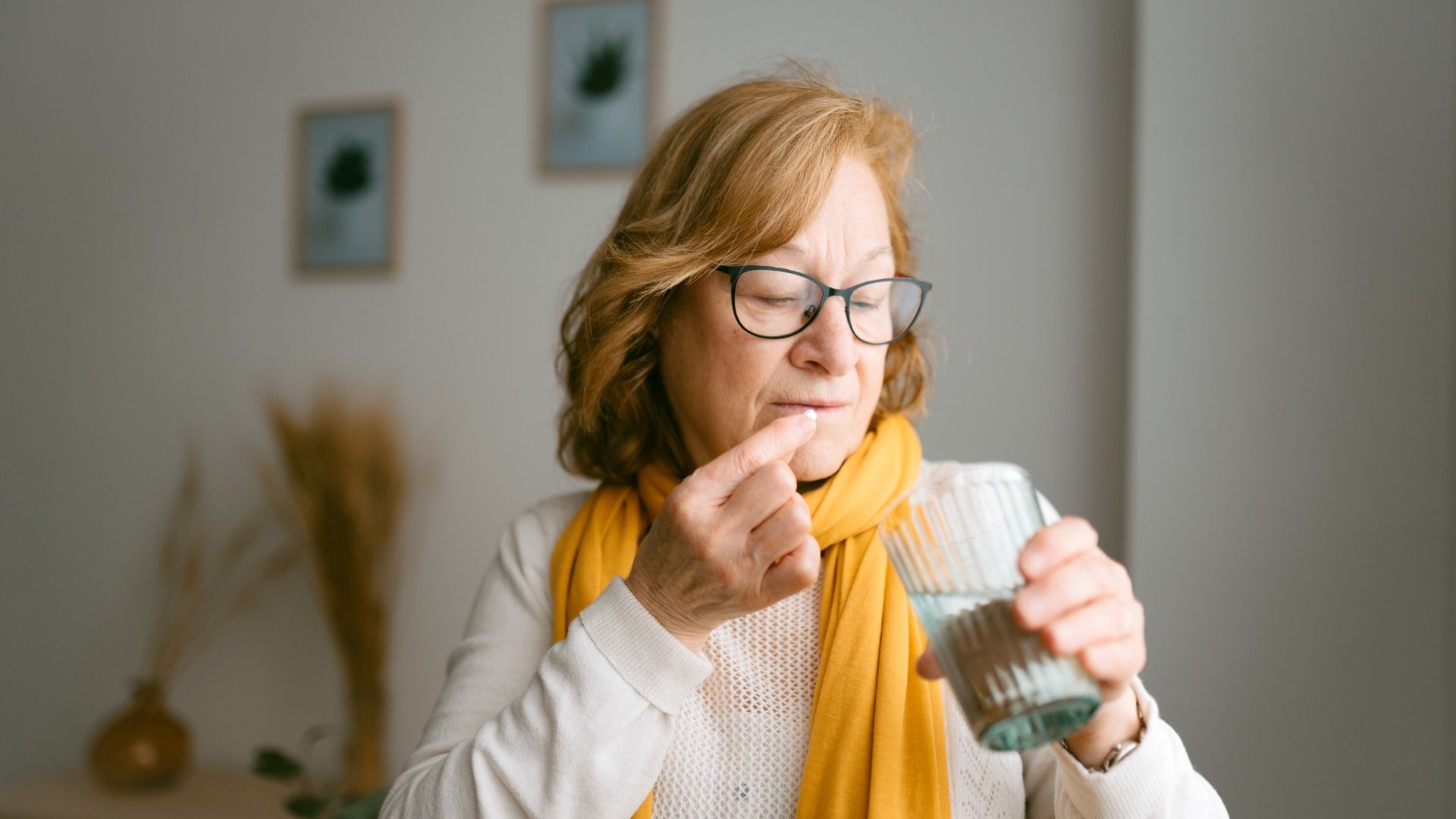
Ensitrelvir works by blocking a key enzyme that the virus relies on to make new copies of itself. This enzyme is also targeted by Paxlovid. But unlike Paxlovid, ensitrelvir was shown to significantly reduce the risk of developing COVID-19 symptoms compared to a placebo among those who had been exposed to the virus.
The newly published trial looked at more than 2,000 people who lived with people who got infected with SARS-CoV-2 between June 2023 and September 2024. Roughly half of the participants were given a five-day course of ensitrelvir while the other half were given a placebo. Neither the participants nor the researchers knew who had been given which pill, making the trial “double-blinded.”
While 9% of those given the placebo within 72 hours of exposure developed COVID-19 symptoms, only 2.9% of those who took ensitrelvir became symptomatic.
The trial runners also tested participants for SARS-CoV-2 up to the tenth day out from exposure: Only 14% of those who received the drug tested positive — with or without symptoms — compared to 21.5% of those who received the placebo.
There was no real difference in side effects between the ensitrelvir and placebo groups; in fact, slightly fewer people in the ensitrelvir group reported adverse events (15.1% compared to 15.5%). Reported adverse effects included temporary and reversible reductions in “good” cholesterol and higher levels of fat in the blood.
The researchers note that their trial did not consider factors that might influence the degree of household transmissions, such as the size of the household and whether or not participants were social distancing. The medication was also not tested on pregnant women or those taking medications that could interact with the drug.
“This is really the first clear demonstration in a well-performed phase III placebo-controlled, double-blind trial that we actually have an agent that is easily administered orally and effective if taken in a timely fashion for protecting individuals who are exposed to COVID-19 in the household setting,” first study author Frederick Hayden, a professor of medicine and pathology at the University of Virginia, told MedPage Today.
Beyond households, he said that the drug would likely also protect patients in the case of COVID-19 outbreaks at nursing homes and long-term care facilities. It’s just that those uses weren’t expressly included in the trial.
Ensitrelvir, known by the brand name Xocova, was approved by Japan’s health ministry for treatment of mild-to-moderate COVID-19 infections in March 2024 and as a means of preventing the disease in March 2026. It has also been approved in Singapore.
Shionogi submitted the drug for U.S. Food and Drug Administration approval in September 2025. A decision by the U.S. regulator is expected in June, according to Medpage Today.
This article is for informational purposes only and is not meant to offer medical advice.
Hayden, F. G., Shinkai, M., Clark, T. W., Luetkemeyer, A. F., Sax, P. E., Hanage, W. P., Gebo, K. A., Ikematsu, H., Izumikawa, K., Fukushi, A., Kezbor, S., Sakaguchi, H., Lacey, S., Ichihashi, G., Ohmagari, N., & Uehara, T. (2026). Ensitrelvir for covid-19 postexposure prophylaxis in household contacts. New England Journal of Medicine, 394(19), 1905–1915. https://doi.org/10.1056/nejmoa2509306