



Meriah DeJoseph grew up below the poverty line, so she was intrigued in college when she started reading what researchers had to say about people from low-income backgrounds. But there was something eating away at her. Although well-intentioned, the early research mainly focused on the risks of growing up in poverty.
As she progressed through her education, studying how poverty affects children, she’d go home and describe research in the field to her mom and her friends. The looks on their faces seemed to be saying “Is that really everything? Is that all it says? Is that what you think?”
She realized the research was missing the strengths people she grew up with exhibited, such as creative problem-solving skills and abilities to navigate social hierarchies and read people.
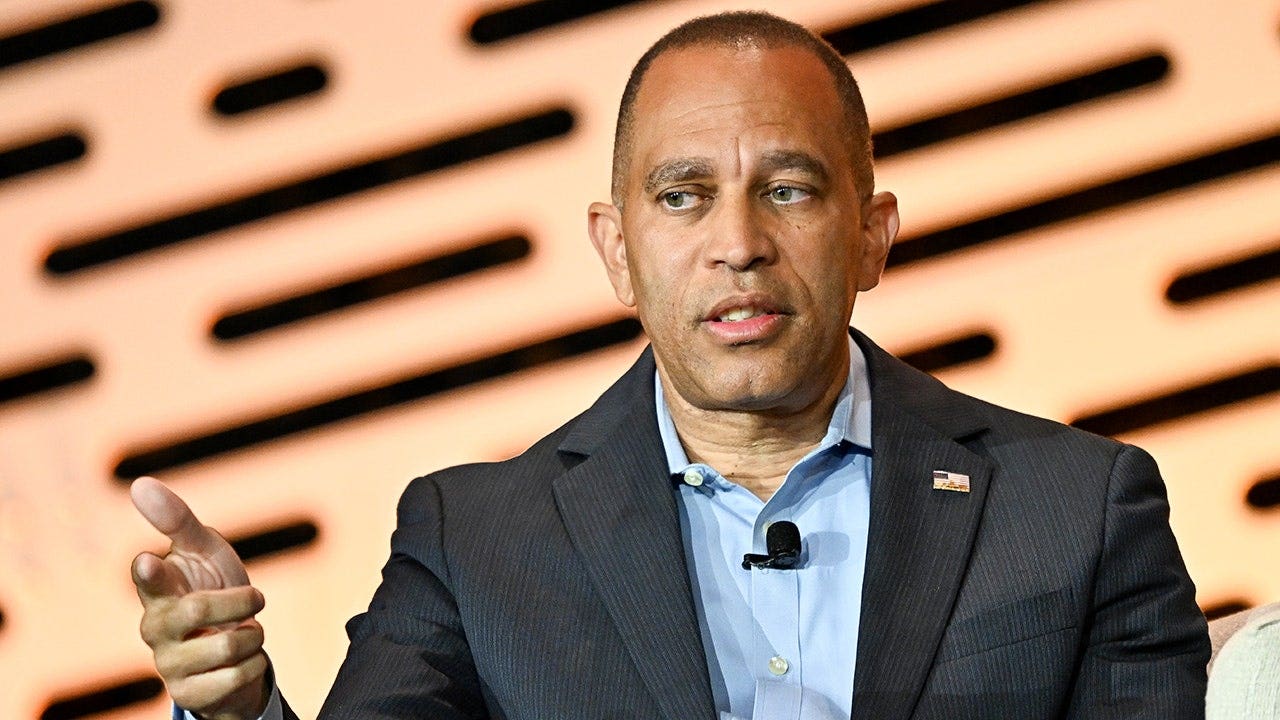
Meriah DeJoseph researches the specialized strengths that may develop in people who grew up in adversity.
(Image credit: Meriah DeJoseph)
This helped motivate DeJoseph, who is now a developmental psychologist at University of Denver, to try to tell the other side of the story. “I felt like there was more to say about children and family strengths in those contexts that just wasn’t being told yet.”
Now, along with a handful of other researchers, DeJoseph aims to understand the full spectrum of changes that come with growing up in dangerous, deprived or unpredictable environments.
That is not to say that growing up in poverty is all flowers and roses, DeJoseph stressed. “Growing up in poverty is very hard and does cause a lot of challenges and does increase risk for things that we don’t want,” she said. But “the other side of it was missing.” It’s about capturing the full picture, not romanticizing hardship, she added.
Indeed, this balanced perspective does not deny that growing up in adversity — a catchall term that encompasses, for example, neglect, exposure to household or community violence, and household instability — can be damaging or even traumatizing. Rather, the approach acknowledges that individuals raised in such environments may also develop specialized skills that have previously been overlooked or discounted by researchers.
They hope that an understanding of these skills can eventually lead to changes in the educational system that will help narrow achievement gaps between those who grew up facing adversity and those who didn’t.
An impoverished view of childhood adversity
Research has repeatedly shown extensive mental health disparities between individuals who faced adversity in childhood and those who do not. For example, children who experience multiple forms of adversity — such as lacking access to basic necessities or enduring aggression or neglect — in early childhood are more likely to be anxious and depressed at age 15. This affects a significant fraction of the population: 16.3% of U.S. children live in poverty, according to a 2022 report by the U.S. Census Bureau, and around 15% experienced neglect or abuse, according to a 2015 estimate.
However, under the prevailing “deficit model” of childhood adversity, experiencing multiple stressors as a young child does nothing but harm brain development. The fact that children from disadvantaged backgrounds score lower, on average, on standardized tests of various cognitive abilities has been used to support this view.
Instead of doing well despite adversity, it’s showing a potentially adaptive outcome because of adversity.
Meriah DeJoseph, developmental psychologist at University of Denver
The deficit model is “really stigmatizing and really disrespectful” to people from disadvantaged backgrounds, Bruce Ellis, a professor of psychology and anthropology, heads the Developmental Adaptation, Stress, and Health (DASH) Lab at the University of Utah, told Live Science.
What’s more, it “doesn’t make any sense from an evolutionary perspective,” he said. “Stress should not so much impair development as direct or regulate it towards strategies that are adaptive under stressful conditions.”
Even the slightly more hopeful “resilience model,” which looks at why some people can overcome adversity to become healthy and successful, focuses on why some people flourish despite experiencing early hardships.
Instead, Ellis and his colleagues have developed what they call an evolutionary developmental perspective. Unlike the resilience or deficit models, both of which frame adversity as solely negative, their framework looks at adversity as a selective pressure that pushes people to develop specialized abilities so they are better equipped to thrive in the environments they grew up in.
“Instead of doing well despite adversity, it’s showing a potentially adaptive outcome because of adversity,” DeJoseph said.
Humans evolved to be adaptable
From birth, an infant’s biology, psychology and behavior are fine-tuned to suit the environment in which they are raised. This adaptability is partly due to genes being switched on differently depending on the environment the individual grows up in during sensitive periods of development, like in early childhood. As a result, people become specialized to their particular setting.
Stress, violence, chaos, hunger and scarcity have been a part of the human experience at many points throughout evolutionary history, so the ability to adapt and thrive when faced with such challenges has likely played a huge role in what it means to be human across time.
In principle, that means that individuals who face adversity early in life are “stress-adapted,” meaning they’ve developed skills and traits that allow them to survive in their harsh and unpredictable settings, such as facing housing instability or living with an abusive caregiver.

A boy collects food from a food pantry. Researchers are just starting to understand the full spectrum of changes that come with growing up in dangerous, deprived or unpredictable environments.
(Image credit: grandriver via Getty Images)
In this view, social and cognitive skills that improve the individual’s chances of surviving in harsh and unpredictable environments are likely to be more common in people who come from such environments.
The strengths-based approach
But what are these skills? Research has shown a handful of abilities that seem to be enhanced in people who were raised in stressful or chaotic environments. Psychologists initially called these “hidden talents.”
Researchers hypothesize that these skills, such as heightened memory for faces and the ability to shift attention quickly, are useful in such environments.
For example, the ability to shift attention quickly may be important when you don’t know when or where the next danger could be. “The assumption is, when you’re in an unpredictable world where, again, threat can come without warning, where things can change unpredictably, that it’s really important to be able to kind of fluidly unstick your attention from one thing and shift to something else, as opposed to being really good at sustaining attention,” Ellis said.
In contrast, the ability to focus one’s attention on a single task for long periods may be adaptive for someone who can rely on feeling safe; they have learned that they can tune out the outside world without worrying about something bad happening.
Suppressing impulses and resisting temptations based on the promise of future benefits might not be helpful in changeable environments, where rewards are fleeting and may not come around often, DeJoseph said.
Nowadays, to avoid the implication that people who faced childhood adversity have no need of support, researchers tend to call these “stress-adapted skills” rather than “hidden talents,” DeJoseph said.
In fact, many of these adaptations that enable children to survive or thrive in stressful or unpredictable settings may still have downsides. For instance, being very attuned to threats may increase your chance of surviving in dangerous environments, but hypervigilance can lead to heightened anxiety in safe environments.
“It might help a child function in one context but create a challenge in another,” DeJoseph said.
Uncovering stress-adapted skills
This budding field is “still very broad,” and researchers are still mapping out the repertoire of skills that emerge from adversity, DeJoseph said. But a flurry of research has begun to home in on some of those skills.
For example, memory for who has more power in a given situation may be enhanced because understanding who sits where in the social pecking order, including who is more likely to win in a physical fight, is critical for surviving in harsh or dangerous environments. And being quicker to identify patterns in the environment could mean individuals are able to anticipate and spot threats or opportunities in changeable circumstances.
However, it is now clear that some stress-adapted skills require a bit of coaxing to reveal themselves. That’s because these skills are specific to the contexts in which they developed, Ellis said, meaning they are more likely to appear in threatening or uncertain situations.
For example, the capacity to update information you are holding in your mind — known as “working memory updating” — is key for tracking incoming information and ensuring it is up-to-date. In a study involving 372 adults, individuals were randomly assigned to read a fake news article that either highlighted economic uncertainty or discussed computer technology. After reading these news clips, the participants completed working-memory-updating tasks.
Participants who reported having more unpredictable childhoods and read about economic uncertainty tended to be better at updating their working memory than children with more stable upbringings. But the results flipped for those who had unpredictable childhoods and read about computer technology. This suggests the ability to detect and quickly process information in a changeable environment can shine in situations that may call for it, the researchers suggested.
Context is key, but so is the content of the testing. For instance, almost all early studies used standardized tests that relied heavily on abstract questions, which may have missed some of the nuances of stress-adapted skills, Tochukwu Nweze, a developmental cognitive psychologist and co-director of the DASH Lab at the University of Utah, told Live Science. Now, some studies are using familiar, real-life stimuli rather than abstract stimuli, like numbers, shapes or colors, he said.
A 2022 study found that teenagers who had been exposed to high levels of violence and poverty in the past scored lower when generic shapes, like squares and triangles, were used, but almost caught up to peers who experienced relatively lower adversity when more relevant shapes, like buses, dollar bills and faces were used.
In fact, a recently published study found that children in the Scampia neighborhood of Naples, Italy — which faces high crime rates, toxic waste pollution, economic marginalization and institutional neglect — showed enhanced working memory and short-term memory compared with kids from a relatively higher socioeconomic neighborhood, but only when the tasks involved remembering faces.

People displaced after a balcony collapse at the “Via Celeste” building, in the Scampia district of Italy. Scampia faces poverty, high crime and institutional neglect, yet in one study, people who lived there showed better working memory and short-term memory than those who came from more affluent neighborhoods.
(Image credit: Marco Cantile via Getty Images)
Mixed results and known unknowns
Because this is a young field, mixed results are cropping up everywhere. For example, research on 800 Dutch adults found inconsistent links between current adverse environments and performance on working-memory tasks. Other research from the same team also revealed that exposure to threats in childhood and adulthood was associated with slower information processing across a range of tasks but was not linked with the ability to suppress impulsive actions or quickly shift attention.
These mixed findings highlight the essential need to replicate some of the core findings of the field. No studies in this area have been conducted on older adults, so researchers have no idea how stable these skills are throughout someone’s life, Ellis said.
Moreover, as with a lot of other psychological research, the studies into stress-adapted skills have been conducted predominantly in “WEIRD” populations — that is, with people from Western, educated, industrialized, rich and democratic societies. People from non-WEIRD populations have been “grossly understudied,” Nweze said, and there must be a concerted effort to correct this imbalance. “There is a need to understand whether there is cultural generalizability of these findings,” he said.
In an attempt to do so, Nweze has investigated some of these ideas in his home country of Nigeria. For example, in a 2020 study, he and his colleagues compared 53 children in orphanages or foster homes with 51 children being raised by their biological parents. The team used standard psychological tests to assess these children’s abilities to hold information in their mind and suppress impulses.
The children living in orphanages or foster homes performed either just as well as or better than the children living with their biological parents. These results were surprising because they bucked the trend of prior studies finding that institutionalized children were worse at inhibiting their impulses, Nweze said.
Similar results have recently been found in Mozambique, with children from a high-stress community outperforming kids from a relatively lower-stress town on social memory tasks.
What’s not clear is how a dangerous, deprived or highly changeable childhood mediates these changes in the brain.
Early life adversity shapes brain development
One researcher who is trying to map out those brain differences is Christopher Monk, a professor of psychology, psychiatry and neuroscience at the University of Michigan.
Monk and his team have found that 15-year-olds who had been exposed to relatively high levels of adversity throughout childhood had different neural connectivity than teens with comparatively low or medium exposure. Adversity in this context included experiences such as exposure to emotional and physical abuse, and to neighborhood and parental violence.
MRI brain scans revealed that kids who had been exposed to cumulatively higher levels of adversity had denser connectivity in the default mode network, which is most active when the brain is not focused on external stimuli, such as during daydreaming. They also had denser connectivity in the frontoparietal network, which is involved in problem-solving and planning.
The salience network — which includes the amygdala, the region involved in processing danger and emotions — was less densely connected.
Although the environment “truly does sculpt the brain,” these brain changes are not necessarily good or bad, Monk told Live Science. “They just are what they are. The brain is just always adapting to the environment.”
Because it is impossible — and unethical — to randomly allocate children to high- and low-adversity settings, these studies can’t show that adversity causes these brain differences. “We’re not able to talk about causation,” Monk said. “We’re talking about one point in time correlating with another point in time.”
Also, it’s still not clear how differences seen in brain scans translate to stress-adapted skills and abilities. Partly, that’s because most neuroscience research has not been focused on these hidden strengths. Instead, it has focused on how childhood adversity harms brain structure and function, often with the goal of explaining the higher incidence of depression, anxiety, impulsiveness and aggression in those who had stressful childhoods.
“New studies could incorporate appropriate measures to specifically test for the neural bases of hidden talents and their development,” Ellis and his colleagues wrote in a book on hidden talents.
The $64,000 question
Although some of these stress-adapted skills may emerge when kids navigate changeable, stressful environments, many of these children will wind up leaving those environments later in life. So how can society leverage the skills of stress-adapted people to help them thrive in an environment that may be very different from the one they grew up in?

Translating research on hidden strengths into education policy that improves outcomes is the $64 billion question.
(Image credit: Edmund D. Fountain for The Washington Post /Getty Images)
Although the research is intriguing, experts acknowledged that it isn’t robust enough yet to show exactly which skills stress brings out — let alone to inform policy or educational recommendations. “I feel like we need to get the science a bit more solid before it makes sense to put those in real-world settings,” DeJoseph said.
But experts agreed that schools are the easiest places to start based on what is already known. The hope is for researchers to work with school curriculum development staff and teaching experts to replace abstract concepts with more meaningful materials. “That’s where one policy could potentially have manifestable impacts,” Nweze said.
Ellis said the discovery that some skills can be equalized or enhanced when the right materials or contexts are employed could be the answer to “the $64,000 question, or more like the $64 billion question: how do you address the disparity in educational success and career success among people from rich versus poor backgrounds?”
Exclusive to Live Science Pro
Still, simply moving away from assumptions that individuals from lower socioeconomic backgrounds are “broken” could have a positive impact.
When researchers ran a series of sessions for educators at two U.S. universities in which they described the strengths of kids who had faced economic hardship, they found that educators had more positive beliefs about their more marginalized undergraduate students.
“Perhaps most strikingly, economically marginalized students earned grades that were more than a quarter of a grade point higher, on average, in courses taught by educators who participated in the strength-based learning group compared to those in the control group,” the study authors wrote in the paper. This translated to a difference between a C+ and a B-, which was achieved not by changing curriculum but simply helping teachers better understand their students’ identities and strengths.
“This perspective change seems so simple,” DeJoseph said, “but it seems to have a real impact.”
Help us improve Live Science Pro: We’re always trying to make our content better. Leave us feedback about Pro here.