




NEWYou can now listen to Fox News articles!
FIRST ON FOX: The U.S. Army is teaming up with an artificial intelligence (AI) company to build an AI “brain” for military robots that can think, understand their surroundings and continue missions even after losing contact with human operators as the race for AI dominance intensifies.
Working with the Army Research Laboratory, defense AI company EdgeRunner AI has developed an onboard AI system that allows military robots to function in the battlefield without relying on cloud computing or an internet connection in environments where connectivity is lost.
“We like to think of robots as the next frontier of AI,” EdgeRunner AI founder and CEO Tyler Saltsman told Fox News Digital.
“Think of them as a very far-out edge device, kind of like a cell phone, a tablet or a laptop. But now what we can do is we can put a brain, or a neural network, right on that robot so that robots can have context when they’re on a mission helping the warfighter.”
CHINA IS BUILDING AN AI WAR MACHINE. WASHINGTON MUST WAKE UP BEFORE IT’S TOO LATE
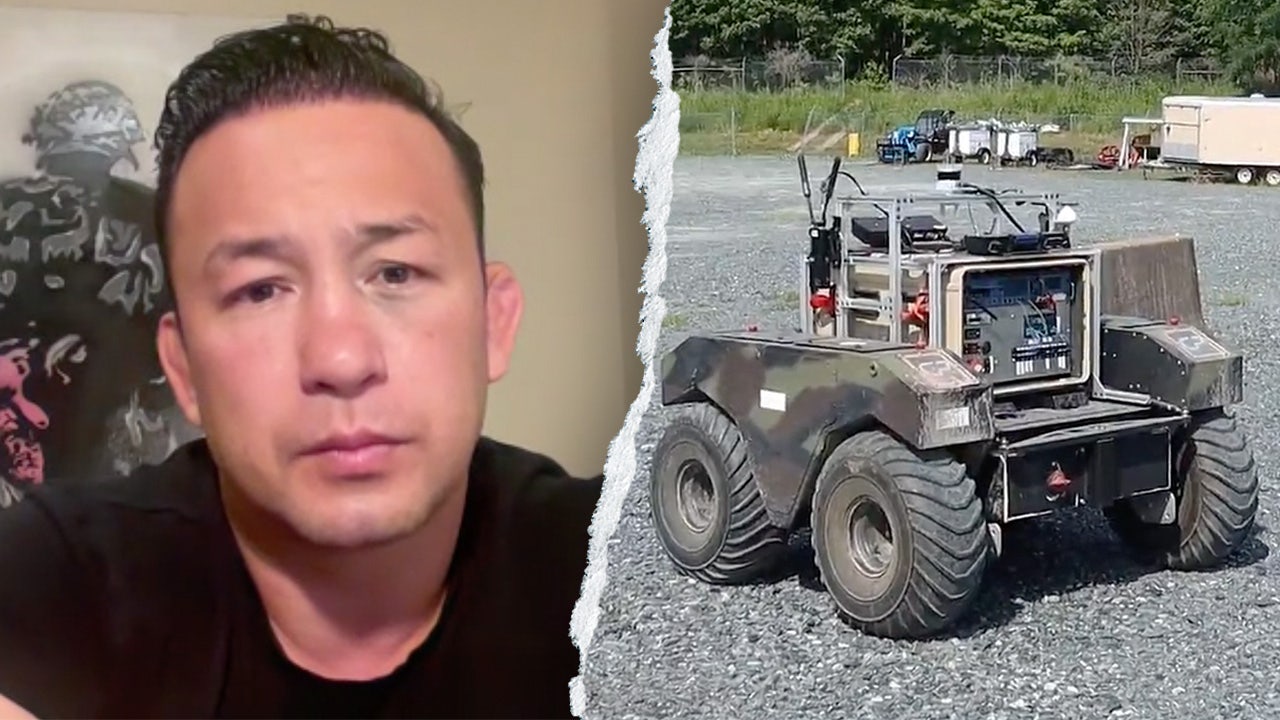
EdgeRunner AI founder and CEO Tyler Saltsman told Fox News Digital about the company’s work with the U.S. Army to develop an AI “brain” for the next generation of military robots. (Fox News Digital/EdgeRunner AI)
The partnership comes as the U.S. and China race to integrate AI into their militaries, with both countries viewing AI as critical to maintaining a technological edge in future conflicts.
Saltsman said it’s important for the U.S. to stay ahead in the global AI race, calling China’s dominance in drone manufacturing “problematic.”
“Whether or not China’s ahead of us is debatable, but if China is, it’s not by much,” he said.
Saltsman said today’s AI is “too generalized,” which is why his company is developing technology built for specific military missions.
“Warfighters don’t need 19th-century poetry,” he said. “They need specific intelligence to his or her occupation in order to make better decisions in the heat of battle and that can increase the probability of winning the fight.”
Working alongside aerial drones, the AI is designed to help robots “problem solve through different routes” while detecting explosives, carrying ammunition, scouting routes and reporting enemy activity.
UKRAINE’S BATTLEFIELD IS TRANSFORMING THE FUTURE OF NATO
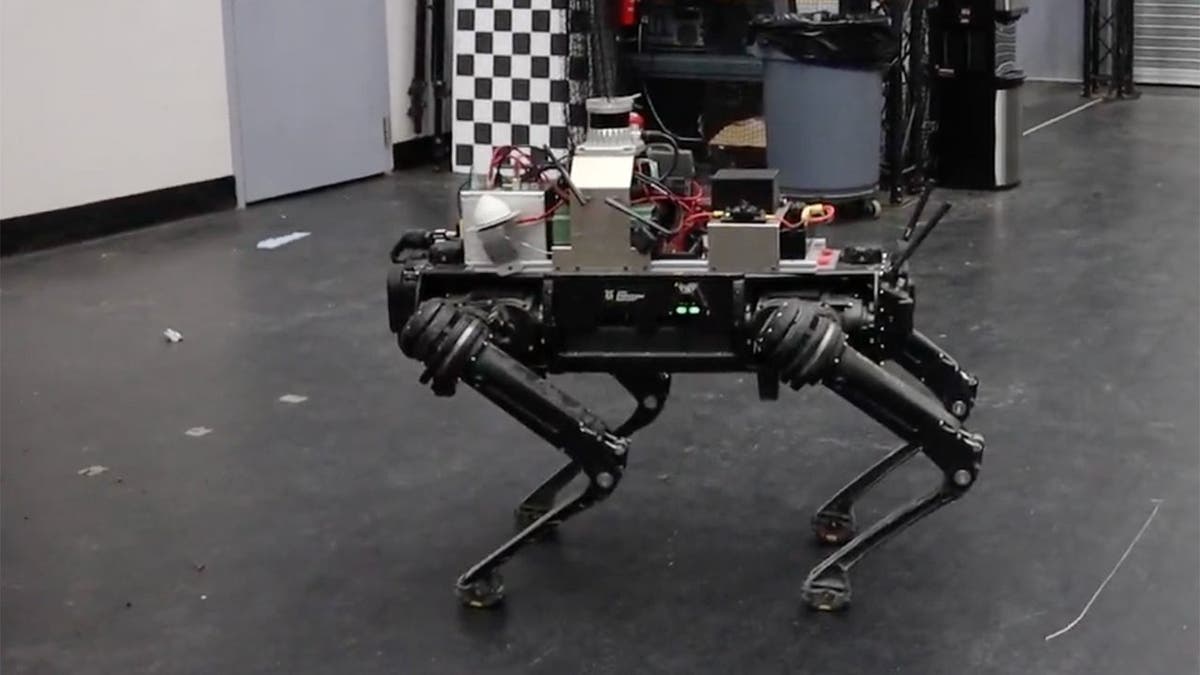
Saltsman said the technology remains in the “development phase” and gives military robots the ability to understand what they see, not just detect it. (EdgeRunner AI)
“As you combine them together, you get a much better clarity of the battlefield and increased situational awareness,” he said.
When communications are cut off, Saltsman said the military will need autonomous systems that can continue making decisions on their own.
“You can have a human pilot that controls the ground robot or the drone in the air,” he said. “But then if they were to be jammed by a radar jammer and lose connectivity, then the neural network on that robot can still continue the mission and still aid the warfighter.”
Saltsman argued the military “can’t rely on internet access in war,” warning that depending on systems like SpaceX’s Starlink could add a “risk” to missions.
“The problem with Starlink is if you use it, you’re effectively showing the enemy where you are, so you might as well be wearing a beacon on you saying, ‘Hey, here’s where I’m located,'” he said.
INSIDE CHINA’S AI ‘WOLF PACK’ DRONES BUILT WITH TAIWAN CONFLICT IN MIND
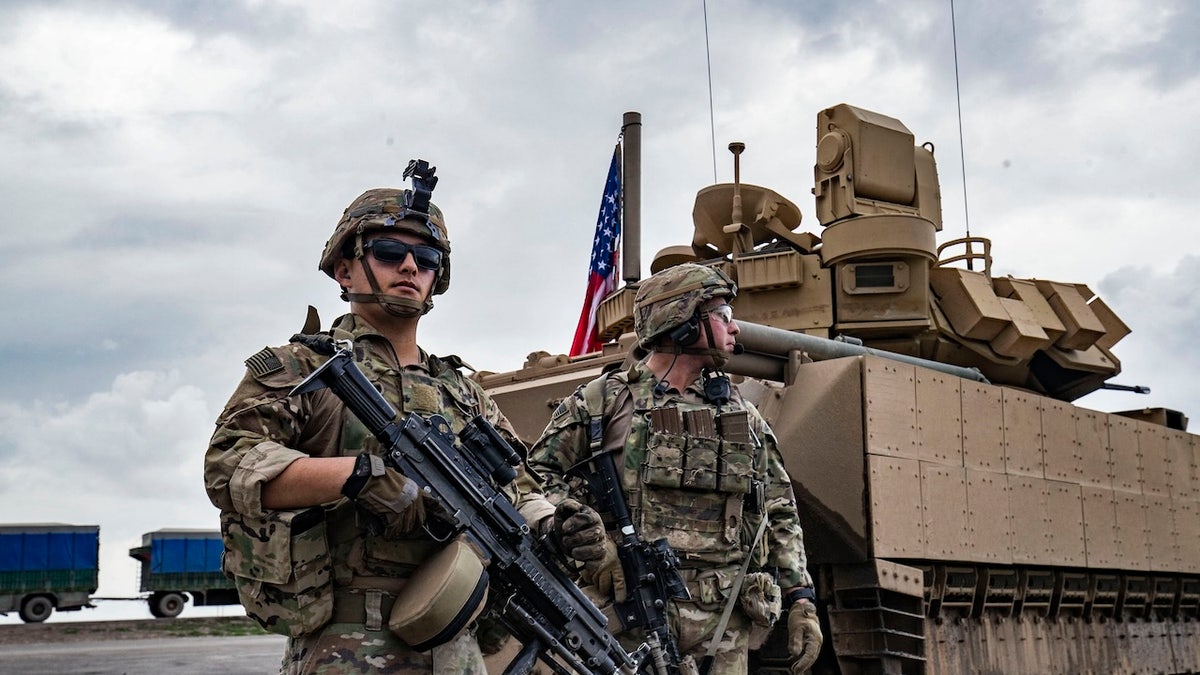
U.S. Army soldiers stand near an armored military vehicle on the outskirts of Rumaylan in Syria’s northeastern Hasakeh province, bordering Turkey, on March 27, 2023. (Delil Souleiman/AFP via Getty Images)
Pointing to the Russia-Ukraine war, Saltsman said the success of drones has sparked a new push for autonomous ground robots.
“As drones have become ubiquitous, now ground robots are like the next thing and then eventually humanoid robots so robots that move and look like humans,” he said.
Despite the push to advance military AI, Saltsman said safety can’t take a back seat and that the technology is built using “transparent” datasets to “understand the biases” of the AI.
“That’s another thing that differentiates us,” he said. “One of the problems is how to use AI safely, how to put guardrails around it and how to understand it.”
CLICK HERE TO DOWNLOAD THE FOX NEWS APP
While the technology remains in the “development phase,” Saltsman said the breakthrough gives robots the ability to understand what they see, not just detect it.
“You can put computer vision models on robots so they can see, but if they don’t understand the context of what they’re seeing, they’re not useful and that’s what we’re solving for.”