






NEWYou can now listen to Fox News articles!
The Supreme Court temporarily cleared the Trump administration to continue its third-country deportation policy this week, as DHS’ top lawyer mounts a public defense of an immigration authority the administration says previous presidents largely left dormant.
DHS has increasingly used so-called “third-country” removals when a removable alien cannot be returned to their home country or that country refuses to take them back — part of what agency General Counsel James Percival describes as a broader Trump strategy of reviving immigration authorities already on the books.
“Imagine going to a country and saying, hey, we’ve got a guy, he’s not your guy, and he’s a rapist, but can he please live there?” Percival told Fox News Digital.
“That’s not an easy ask. It requires significant diplomatic energy… Norway is not taking a rapist from Cuba.”
TRUMP’S SPECIAL STRATEGY TO DEPORT ILLEGALS GIVES HIM ANOTHER TOOL FOR ENFORCEMENT
Homeland Security General Counsel James Percival. (DHS official portrait)
The justices on Tuesday stayed a lower-court judgment restricting DHS’s policy, allowing the administration’s guidance to remain in effect while the Court considers the case on the merits. Arguments are set for December over whether agency procedures comply with federal immigration law, due process and safeguards against torture.
The case does not squarely challenge DHS’s underlying authority to conduct third-country removals, but rather the procedures it must follow beforehand.
“It’s in the statute expressly that we can do this,” he said. “If you go back and read most of the immigration laws, there’s a lot of really good tools in there that people just haven’t used.”
The third-country provision was included in a major immigration reform package passed by Congress and signed by President Bill Clinton in 1996: the Illegal Immigration Reform and Immigrant Responsibility Act (IIRIRA).
“A lot of people in government sort of treat their authority like fine china,” Percival remarked.
“They’re afraid if they ever actually use it, someone will take it away. And if you’ve ever owned fine china, it’s like you can find yourself at the end of your life and you were so afraid you would break it you never used it.”
TRUMP’S FIGHT OVER RARELY USED 18TH-CENTURY DEPORTATION LAW LIVES ON IN LATEST COURT CLASH
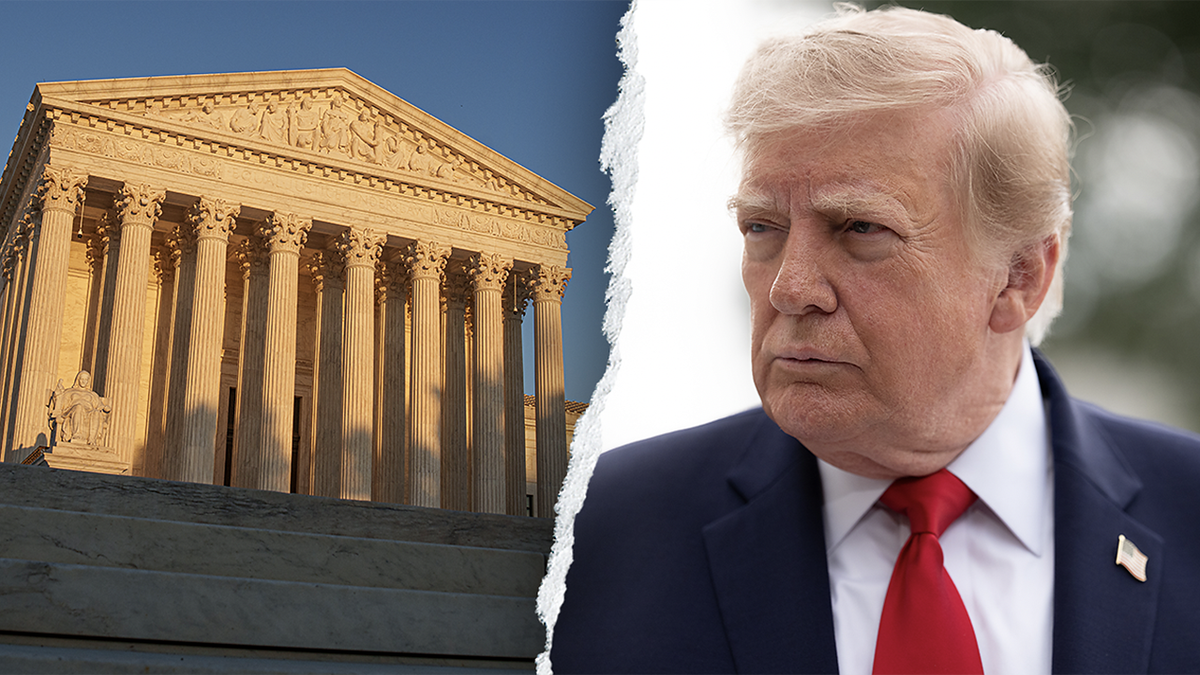
The Supreme Court has granted a stay against the lower court order blocking Trump admin deportations to third-party countries without more significant due process. (Getty Images)
But Percival’s strategy has not come without blowback from human rights advocates, who pointed most recently to allegations that deportees were beaten by authorities in Equatorial Guinea, a tiny nation on Africa’s Atlantic coast that has been under the control of President Teodoro Obiang since 1979.
Obiang’s government received $7.5 million from Washington as part of an agreement with Malabo to accept third-country deportations.
“I’d rather live in the United States than Equatorial Guinea too, but I’m an American citizen and I haven’t killed anybody,” Percival said.
The detention issue traces in part to the Supreme Court’s 2001 decision in a case involving a stateless legal resident whom the government ordered deported due to his criminal record. Kestutis Zadvydas was born to Lithuanian parents in a German displaced- persons camp, but neither Lithuania nor Germany would accept him.
The court held that six months of post-removal detention is presumptively reasonable, after which continued detention can be challenged if removal is not reasonably foreseeable.
Percival is making that case publicly through his “Daily Deportee” series on X, highlighting criminal deportees whose home countries will not accept them.
SIGN UP TO GET THE POLITICS NEWSLETTER
“If the person is a child rapist and serves 20 years, we have two choices: Find a third country — or let the child rapist go live in an American community,” he said, adding that the effort is intended to shape public understanding of the issue and highlight its stakes.
Percival cited Burmese national Kyaw Mya, whose home country won’t take him back.
CLICK HERE TO DOWNLOAD THE FOX NEWS APP
Percival said another case he plans to feature involves a migrant who committed a violent crime, was not removed by the Bush administration after serving time and then allegedly reoffended after his release:
“[He] tried to kill somebody, the gun misfired, so he pistol-whipped them instead. He served time for that. He got out,” Percival explained.
As DHS continues seeking to use underutilized tools in the IIRIRA and other laws, Percival pointed illegal immigrants and criminal resident aliens to another oft-repeated option that Homeland Security Secretary Markwayne Mullin continues to keep on the table:
“It’s not too late to get $3,000 and a flight home.”