




The patient: A 23-year-old woman in Florida
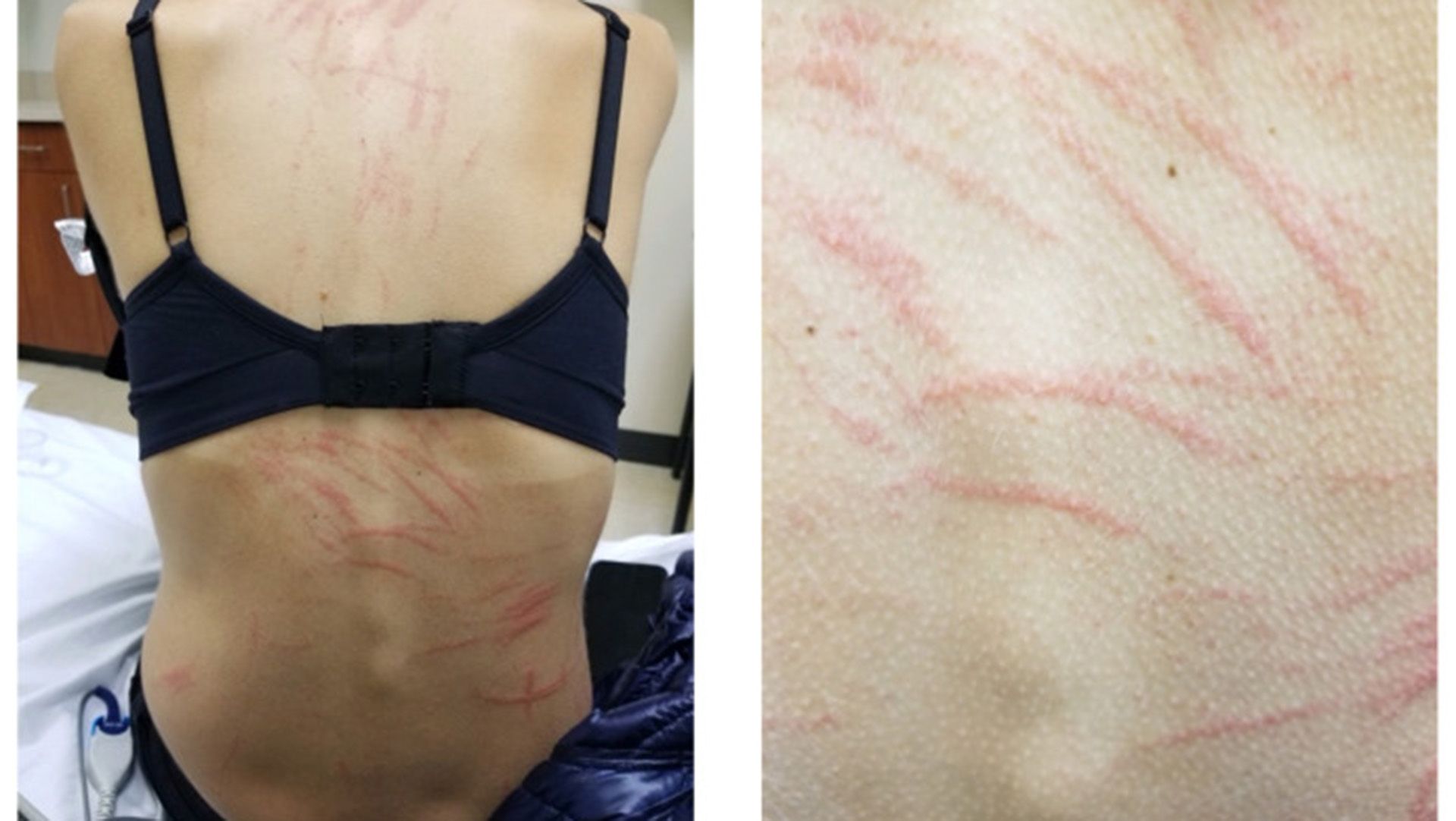
The symptoms: The woman went to the emergency room with an itchy rash on her back that had lasted two days. The rash first appeared as isolated, inflamed regions on her upper back, which initially led her to seek treatment at an urgent care center. Despite treatment with steroids and antihistamines, however, the rash spread to the woman’s lower back in grouped patterns of irregular stripes, which resembled lash marks made by a whip.
What happened next: When doctors examined the woman, they found “multiple streaked lesions on her back,” according to a report of the case. The lesions were not blistered or peeling, and no other part of her body was affected.
The woman didn’t report any other symptoms that are typically associated with an allergic reaction, such as difficulty breathing, throat irritation or swelling, or gastrointestinal distress. Nor was she experiencing body aches, joint swelling or any neurological symptoms. Her blood pressure, heart rate and respiratory rate were in the normal ranges, although her temperature was slightly elevated, at 99.1 degrees Fahrenheit (37.3 degrees Celsius).
In accordance with standard emergency-room procedures for patients with rashes, the doctors considered and eliminated possible causes for the lesions. The woman said the marks were not self-inflicted or made by someone else. She was not taking any medications besides those prescribed by the urgent care. She had not recently introduced potential skin irritants, such as new cosmetics, fragrances or detergents. She had not been bitten by insects and did not have a history of autoimmune disease or symptoms associated with meningitis, a disease that can cause rashes in addition to symptoms like neck stiffness and fever.
When the doctors asked the woman about foods she had eaten recently, she mentioned that the day before her symptoms appeared, she had eaten shiitake mushrooms.
The diagnosis: Although the woman had eaten shiitakes before and never had an adverse reaction, these mushrooms are known to occasionally cause a condition called shiitake dermatitis, a rash with a distinctive pattern that resembles whip marks.
Get the world’s most fascinating discoveries delivered straight to your inbox.
Japanese researcher Takehiko Nakamura first described the condition in 1977, calling the lesions “flagellate dermatitis” after the flagellants, “a medieval religious sect whose members would whip themselves as a demonstration of their faith,” according to the report of the woman’s case.
The allergic response is thought to result from a compound in the mushroom called lentinan; in some people, lentinan causes the secretion of interleukin-1 and other cytokines, proteins that regulate inflammation as part of an immune response and can cause rashes. Researchers previously associated the rash with eating raw or undercooked shiitakes.
However, how the mushrooms are grown also may play a part, with log-grown shiitakes being more likely to cause a reaction than those grown on a substrate, the doctors noted.
The treatment: Doctors told the patient to continue using the medication that she received at urgent care: a topical cream containing hydrocortisone, a steroid to reduce inflammation; clotrimazole, which relieves fungal skin infections; and oral doses of diphenhydramine (an antihistamine) and methylprednisolone (a corticosteroid).
The woman was breastfeeding at the time, and she was worried that the cause of the rash might affect her breastmilk. However, the doctors reassured her that she could safely continue breastfeeding.
The medications provided some relief from her symptoms, which disappeared after about three weeks, she later reported at a follow-up visit. She also mentioned that she continued to regularly consume shiitake mushrooms and the whiplike rash did not reappear. (The authors of the report did not investigate or explain why she was not affected by shiitakes before or after this isolated incident.)
What makes the case unique: Shiitake dermatitis is rare, with approximately 100 reported incidents described in the scientific literature, according to the case report. Most of the reported cases occurred in Asia, and “although there have now been several cases in Europe and the Americas, it is still a relatively extraordinary occurrence in Western countries and the United States,” the doctors wrote.
This article is for informational purposes only and is not meant to offer medical advice.
Can you guess the diagnosis in these strange medical cases? Find out with our diagnostic dilemma quiz!
TOPICS