


Long before dinosaurs roamed the land, Earth looked very different from the planet we know today. Around 500 million years ago, most of Earth’s surface was bare rock and dry soil. There were no trees, no grass and no flowers. Life existed almost entirely in the oceans.
Then something amazing happened: Plants began to grow on land.
This moment was one of the most important events in Earth’s history because it changed the planet forever. As a geoscientist, I am interested in changes in the diversity of flora and fauna — that’s plants and animals — over time.
Article continues below
Predecessors of plants lived in water
The story of plants begins in the water. The earliest plantlike organisms were simple, tiny green life-forms such as algae. You can still see algae today as seaweed along beaches or as green slime on rocks in ponds.
Algae have lived in Earth’s oceans and lakes for over 1 billion years. They can make their own food, using sunlight, water and carbon dioxide to create sugars. This process is called photosynthesis; it releases oxygen — the gas we need to breathe — as a byproduct.
At first, Earth’s atmosphere had very little oxygen. Over millions of years, photosynthesizing organisms like algae and some bacteria slowly released oxygen into the air. This change, sometimes called the Great Oxygenation Event, made it possible for larger and more complex life to evolve. Without oxygen-producing organisms, animals, including humans, could never have existed.
Scientists believe the first true plants evolved from green algae around 470 million years ago. These early plants lived in shallow water near shorelines, where conditions changed often. Sometimes they were underwater, and sometimes they were exposed to air. This habitat helped them slowly adapt to life on land.
Moving onto land was not easy. Water plants are supported by water and can absorb nutrients easily, but land plants faced new challenges. How would they avoid drying out? How could they stand upright without floating? How would they get water and nutrients from dry ground?
To survive, early plants evolved important new features. One key adaptation was a waxy coating, called a cuticle, which helped keep water inside the plant. Plants also developed stronger cell walls that allowed them to stand upright against gravity. Simple rootlike structures, called rhizoids, helped anchor plants to the ground and absorb water and minerals from the soil.
The earliest land plants were very small and simple. They looked similar to modern mosses, liverworts and hornworts, which still grow today in damp places like forest floors and stream edges. These plants did not have true roots or stems, and they stayed close to the ground. Fossils of early land plants, such as Cooksonia, date back to about 430 million years ago and show small branching stems only an inch or two tall.
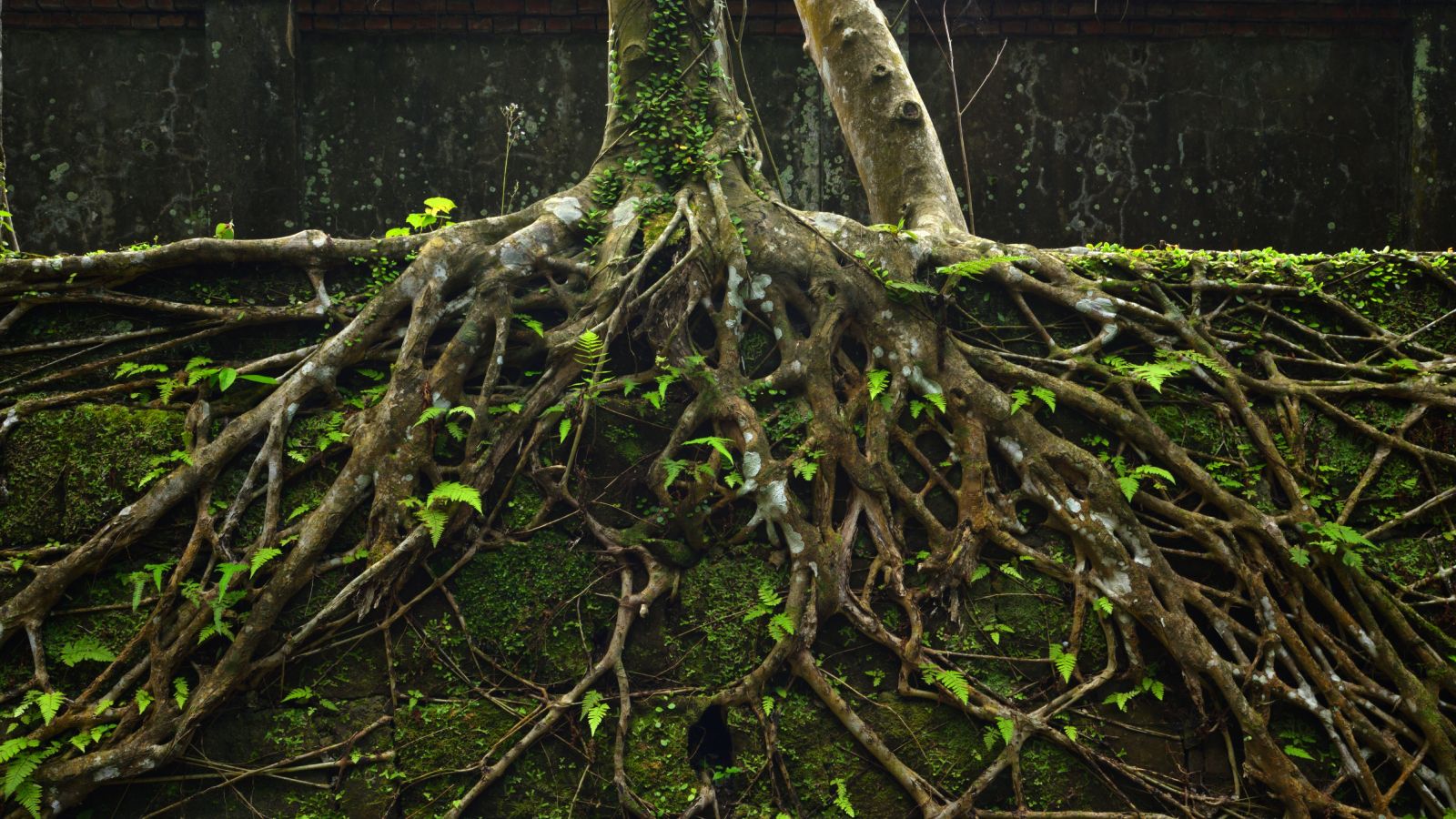
Even though these plants were tiny, they had a huge impact on Earth. As plants spread across land, their roots helped break down rocks into soil, a process called weathering. This created richer soil that could support more life.
Plants also released more oxygen into the atmosphere, improving air quality and helping animals breathe. Plants created new habitats and food sources, allowing insects and other animals to move from water onto land.
Increasing complexity across millions of years
Once plants became established on land, evolution continued. Around 420 million years ago, plants evolved vascular tissue: tiny tubes that transport water and nutrients throughout the plant. This adaptation allowed plants to grow taller and stronger because water could be moved upward from the roots to the leaves. These vascular plants included early relatives of ferns and club mosses.
With vascular tissue, plant life really started to flourish. By about 360 million years ago, vast forests covered much of Earth. Giant ferns and treelike plants, some over 100 feet (30 meters) tall, dominated the landscape. Over time, dead plant material from these forests was buried and compressed, eventually forming coal, which people still use as an energy source today.
Another major step in plant evolution was the development of seeds, around 380 million years ago, found in seed ferns. Other seed plants, such as early conifers — a group that includes modern pine trees — could reproduce without needing water for fertilization. Seeds protected plant embryos and allowed plants to survive harsh conditions like drought or cold.
The most recent major plant evolution happened around 140 million years ago, when flowering plants, what scientists call angiosperms, appeared. Flowers helped plants attract animals like insects and birds, which spread pollen and seeds. Fruits developed to protect seeds and help them travel. Today, flowering plants make up most of the plants we see, including trees, grasses, fruits and vegetables.
The first plants didn’t just survive; they transformed Earth. They changed the atmosphere, built soil, and created ecosystems that allowed animals to thrive on land. Thanks to plant evolution, Earth became a green, living planet full of diverse life.
This edited article is republished from The Conversation under a Creative Commons license. Read the original article.
Fruits and vegetables quiz: Do you know where pumpkins, blueberries and broccoli come from?