






Follow us
Add us as a preferred source on Google
Subscribe to our newsletter
An experimental medical implant that removes excess sugar from the blood has shown promise in treating diabetes and obesity in tests with lab mice.
Coupled with a continuous glucose monitor, which tracks blood sugar levels in real time, the tiny device is designed to adjust blood sugar levels according to a patient’s needs. It does so using a chemical reaction powered by electricity. In the mouse experiments, it prevented sudden insulin spikes and promoted fat loss.
The implant, described Oct. 22 in the journal Science, could offer a completely new way to treat diabetes and obesity, study co-author Martin Fussenegger, a professor of biotechnology and bioengineering at ETH Zurich, told Live Science in an email. His team is now working toward testing the device in additional lab animals, and eventually, humans.
Latest Videos FromLive Science
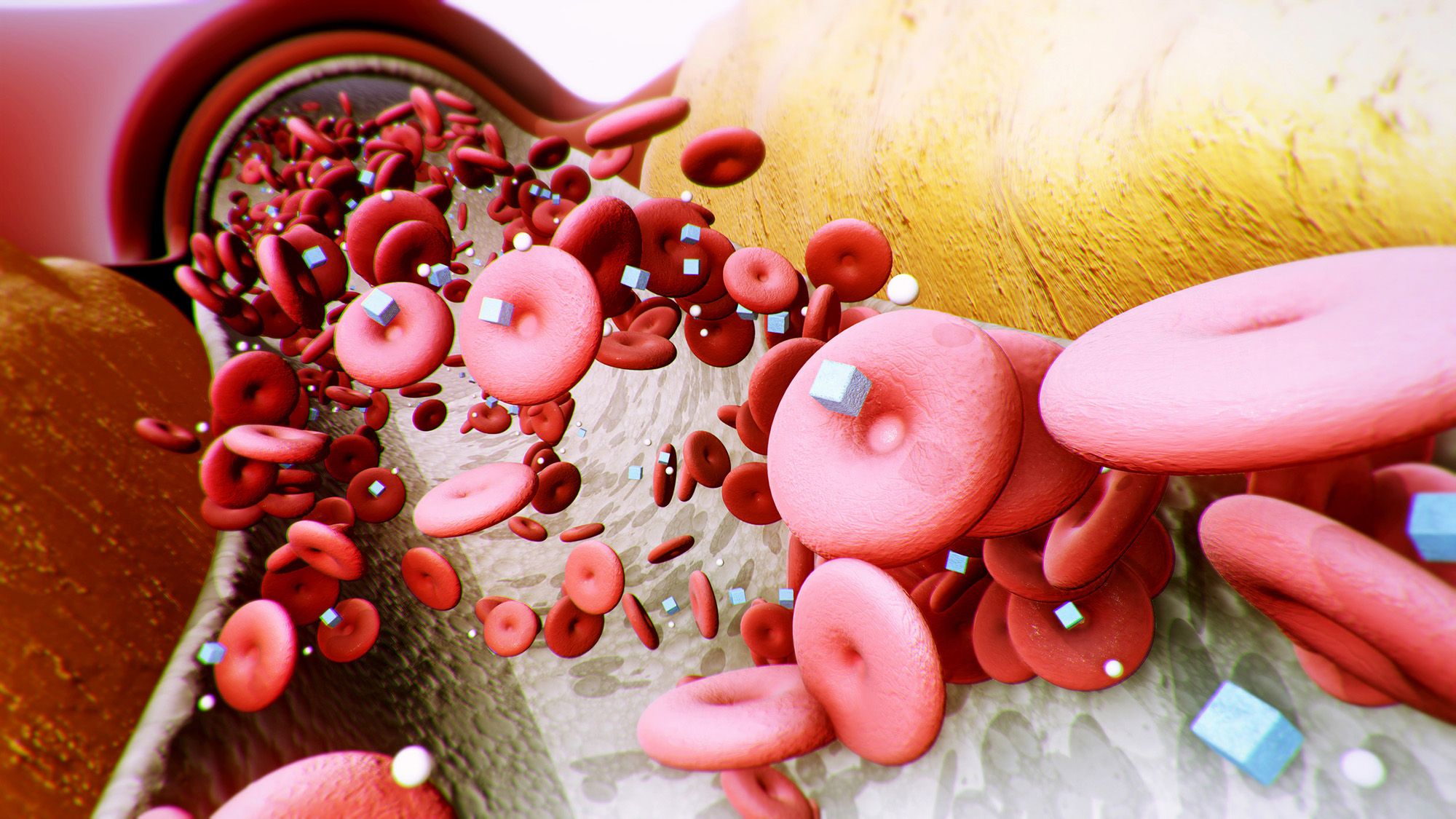
About 790 million people have type 2 diabetes globally, and over 1 billion have obesity. People with obesity often have insulin resistance, in which cells don’t respond to insulin well and can’t take in the sugar they need from the blood. At first, the body makes more insulin to compensate, but eventually, it can’t keep up; this sets the stage for prediabetes and type 2 diabetes. About 90% of people with type 2 diabetes also have obesity or are overweight.
At the same time, chemical reactions in the liver convert the extra glucose in the blood into fat stores, contributing to further weight gain.
Current treatments for these conditions focus on either lifestyle changes, such as diet and exercise, or long-term medications such as metformin, which lowers blood sugar, and GLP-1s, which reduce appetite to promote weight loss. But Fussenegger and colleagues wondered if they could target the glucose directly.
They designed an inch-long reactor that converts glucose into a harmless byproduct, called gluconate, through a controlled chemical reaction triggered by tiny amounts of electricity. This transformation takes place at an electrode coated with gold and platinum nanoparticles embedded within a graphite felt.
Get the world’s most fascinating discoveries delivered straight to your inbox.
Crucially, the reaction occurs only when the device receives sufficient electricity, so the glucose removal can be switched on and off by controlling how much power is supplied to the implant.
The device is wireless and is both powered and controlled from an ordinary smartphone. The phone emits low-level radio frequency energy, which the implant’s electronics then convert to a stable DC current to activate the reaction. Combined with a glucose monitor, the device detects high blood sugar and then sends feedback to the smartphone, which then adjusts the amount of power transferred to the implant.
“In principle, this enables the device to remove more glucose when [blood sugar] levels are elevated and reduce its activity when glucose returns towards the desired range,” Fussenegger said. “The objective is to create an autonomous system that continuously adapts to the patient’s metabolic needs.”
In the mouse study, the implant was combined with a continuous glucose monitor, which provided updates on blood sugar levels to a phone that controlled the device.
(Image credit: Halfpoint Images via Getty Images)
The team tested this self-regulating medical device in mice with both diabetes and obesity. Over six weeks, the mice fitted with the implant had much more stable blood sugar levels than the untreated mice did. They also lost an average of 10% of their body weight.
Because the mice’s glucose was consistently maintained within normal levels, the body’s metabolic chemistry shifted toward fat burning, while the on-off regulation of the glucose-removal reaction prevented the mice’s sugar levels from falling below safe limits.
It’s an exciting proof of concept, Fussenegger thinks. However, “one important challenge is demonstrating that the device can convert sufficient quantities of glucose in a human while maintaining long-term safety and catalytic efficiency,” he said. In other words, they still need to show that the chemical reaction works at the larger scale required to treat a human patient.
In a separate test, the team introduced the device to a large beaker filled with a sugary solution, to see if it could cope with larger volumes of glucose. The amount, about 1.3 gallons (5 liters), was similar to a person’s total blood volume. The device still effectively controlled sugar levels in this larger system.
The test is not a substitute for research in larger animals and human patients, though, Fussenegger said. Those studies are the team’s next priority.
Importantly, “our device is not intended to replace healthy nutrition, physical activity, or preventative medicine” for the treatment of diabetes and obesity, Fussenegger said.
“Obesity and type 2 diabetes are complex conditions involving much more than elevated glucose levels,” he added. “We see it as a potentially powerful addition to the therapeutic toolbox, one that could eventually be combined with established treatments and lifestyle interventions.”
This article is for informational purposes only and is not meant to offer medical advice.
Maity, D., Ray, P. G., Buchmann, P., Hamri, G. C., & Fussenegger, M. (2026). Wireless electrocatalytic closed-loop system for drug-free management of diabesity. Science, 394(6822), eady8560. https://doi.org/10.1126/science.ady8560