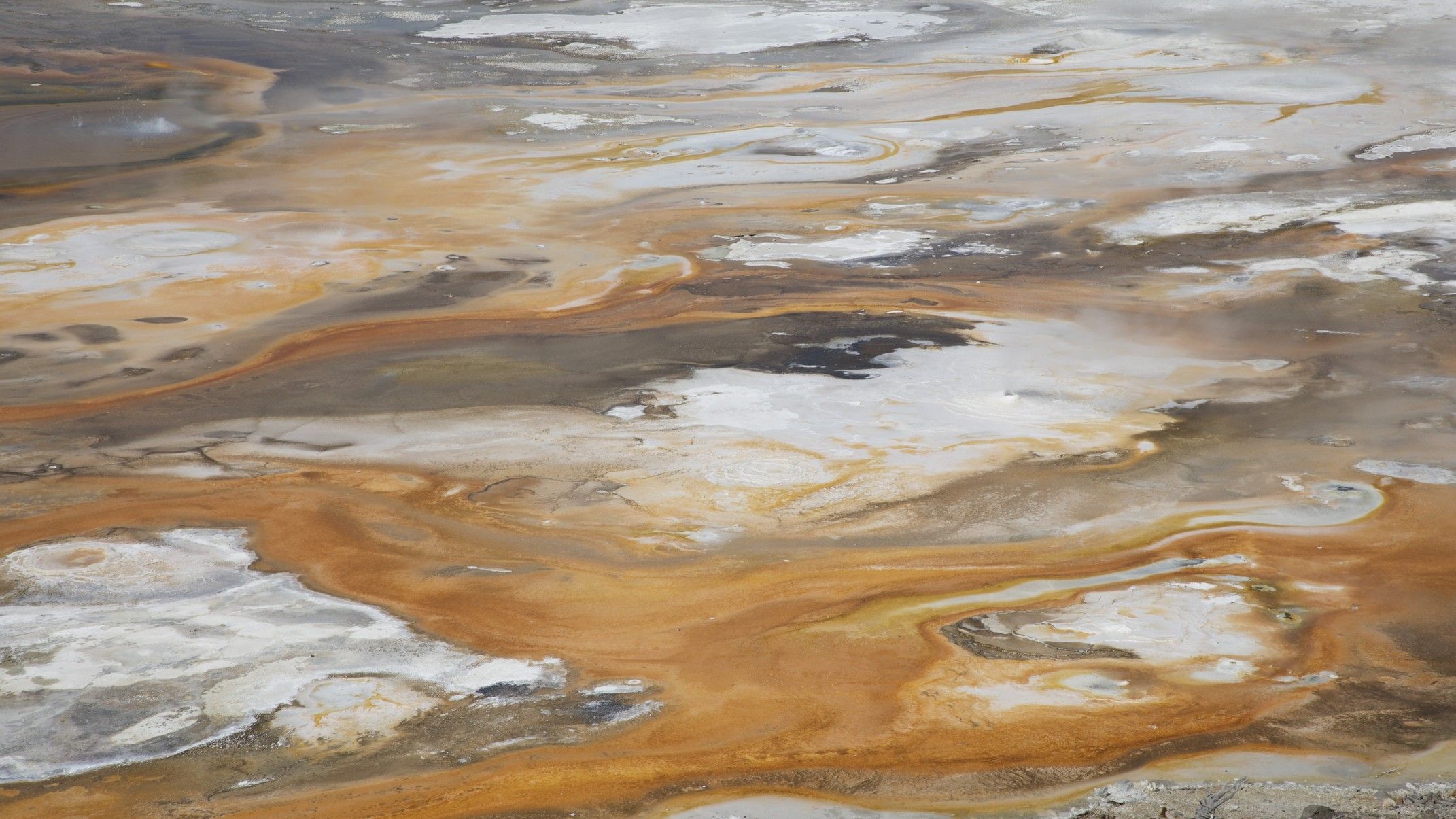



Researchers found the record-breaking Incendiamoeba cascadensis amoeba in Lassen Volcanic National Park, California.
(Image credit: Felix Mikus)
A newly-discovered amoeba has set the record for the hottest temperature at which complex life can thrive.
The amoeba, found in Lassen Volcanic National Park in California, grows and divides at temperatures up to 145 degrees Fahrenheit (63 degrees Celsius) and can survive brief stints in up to 158 F (70 C) environments, a new study finds. Prior to the discovery, no complex cells were known to replicate at temperatures above 140 F (60 C).
“I was very surprised,” study first author Beryl Rappaport, a microbiologist at Syracuse University in New York, told Live Science. “We definitely had to go back and check to make sure that our incubators were calibrated correctly … It really was amazing.”
Latest Videos FromLive Science
Amoebas are single-celled organisms that move by pulling themselves forward with tendrils of cellular fluid. They are eukaryotes, which means they store their DNA inside a membrane-bound nucleus. Amoebas are neither plants, animals nor fungi, but they are more complex than prokaryotic organisms such as bacteria and archaea, which have no nucleus.

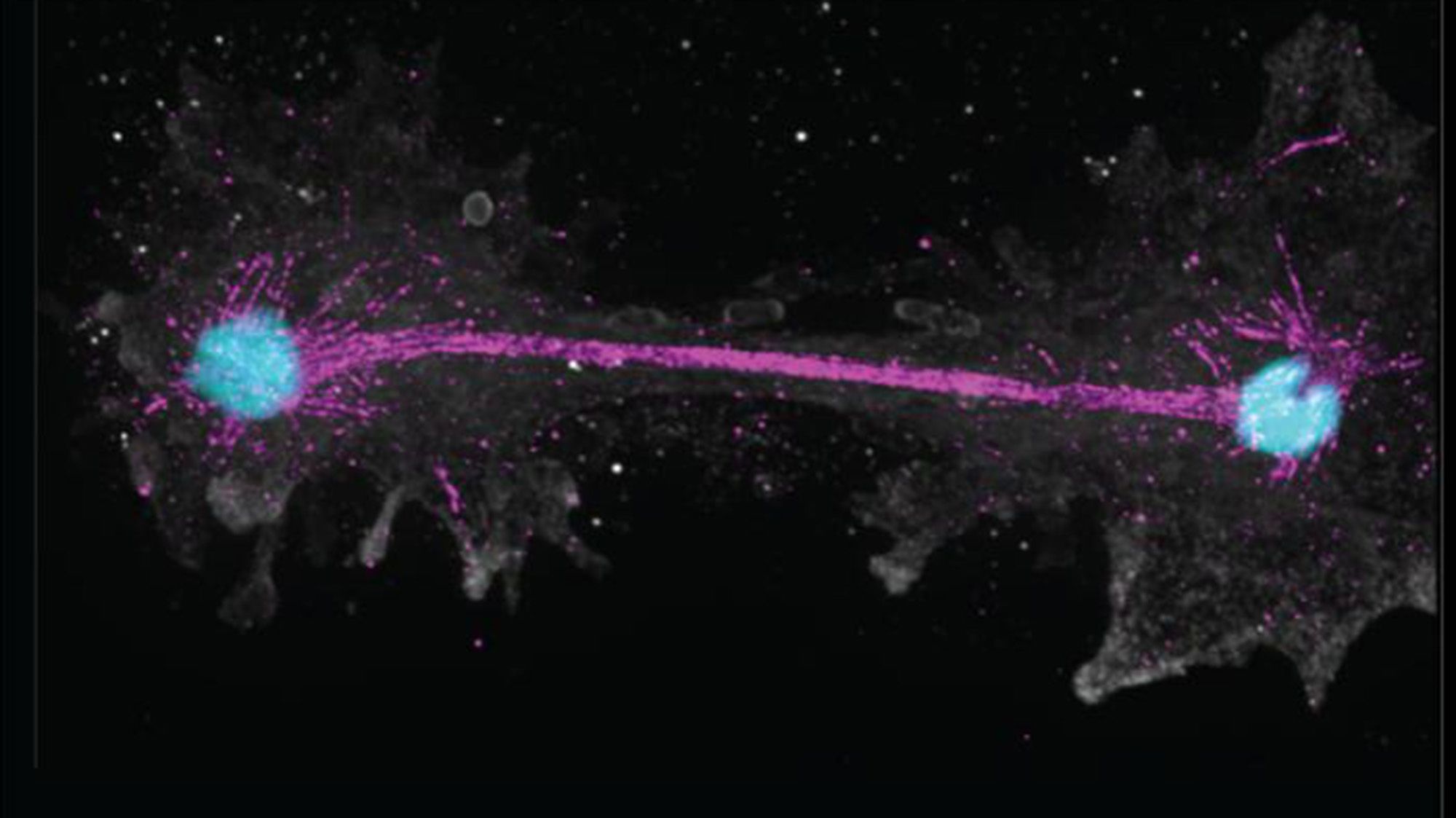
The newly discovered Incendiamoeba cascadensis, shown in this microscopy image, sets a new record for the highest temperatures complex life can tolerate.
(Image credit: Felix Mikus)
Past research had suggested that amoebas could thrive in warm geothermal springs, Rappaport said, but few of these organisms have been studied in laboratories. To investigate, Rappaport and her colleagues travelled to Lassen Volcanic National Park to collect and study these heat-loving creatures.

Beryl Rappaport collects samples from a tributary of Hot Springs Creek in Lassen Volcanic National Park.
(Image credit: Kristen Skruber)
The team discovered the newfound amoeba in samples collected along a tributary of Hot Springs Creek inside the park. Dubbed Incendiamoeba cascadensis, or “fire amoeba from the Cascades,” the species thrive at temperatures between 131 and 135 F (55 and 57 C). In fact, they stopped growing below 108 F (42 C), indicating that the amoebas need high temperatures to flourish.
Using a heated microscope that kept the amoebas toasty, the scientists watched the cells divide and replicate at temperatures as high as 145 F (63 C) — the highest temperatures known for eukaryotic cells (although prokaryotes have been known to survive temperatures as high as 250 F, or 122 C).
Get the world’s most fascinating discoveries delivered straight to your inbox.
At 158 F (70 C), the amoebas created protective shells around themselves and went dormant. The cells recovered when the researchers left them at 158 F for five minutes, then brought the temperature back down to 140 F. But the amoebas didn’t survive heating to 176 F (80 C).
I. cascadensis proteins also have positively charged amino acids, or protein building blocks, on their surface, the team found. Other heat-loving prokaryotes share the same feature. This adaptation may help keep proteins stable at high temperatures, the researchers noted.
The researchers reported their findings on Tuesday (Sept. 22) in the journal Cell.
This is not the first time we have seen specialized eukaryotic life-forms survive in extreme temperatures. For example, some fungi can tolerate temperatures up to 140 F in deserts. However, these figures still pale in comparison to the scorching temperatures that some bacteria can survive, and it’s not yet clear what factors prevent eukaryotes from tolerating these higher temperatures, Rappaport told Live Science.
Part of the difference in heat tolerance between heat-loving prokaryotes and eukaryotes comes from their differing ability to genetically adapt to heat stress.
“When you’re a bacterium … you can reshuffle your genome” by scooping up DNA from other prokaryotes, Debashish Bhattacharya, an evolutionary biologist at Rutgers University in New Jersey who was not involved in the study, told Live Science. That ability helps prokaryotes adapt relatively quickly to stressful environments.
But because DNA in eukaryotic cells is confined in the nucleus, “eukaryotes are not able to simply grab a bunch of genes and switch their lifestyle,” at the same rates as prokaryotes, Bhattacharya said. “It takes far, far more evolutionary change to turn a eukaryote into an extremophile.”
In future research, Rappaport plans to study Incendiamoeba’s closest relatives to learn how they evolved to tolerate heat. Understanding these adaptations could help scientists grasp the limits of life on Earth as well as where else complex life could exist in the universe, she said.