




Russia is increasingly open to granting Ukraine “NATO-like” security guarantees in exchange for keeping at least some of the territory it captured from Kyiv during the war, a US official told The Post Friday.
Any future settlement to end the almost five-year-old conflict would have to ensure that Ukraine is “sovereign, secure, prosperous and free,” the official said, and Moscow has signaled it is “OK” with Kyiv receiving considerations similar to Article 4 and 5 of the North Atlantic Treaty.
Article 5 notably states that the alliance considers an armed attack against one or more of its members to be an attack on all members. It has only been invoked once, after the 9/11 terror attacks on the US.
Giving Ukraine that privilege, however, is almost certain to require Kyiv to agree to freeze the current battle lines.
“Through history, borders have moved,” the official added. “We don’t see any other way to get this done.”
The goal of any peace settlement, the person continued, would be to get Ukraine “as close to NATO as possible without the brand.”
The path to negotiating an end to the Russia-Ukraine war comes after US special envoys Jared Kushner and Steve Witkoff met this week with Ukrainian leader Volodymyr Zelensky and European leaders making up the so-called “Coalition of the Willing” in Berlin.
Nearly 40 European leaders were involved in the discussions, with President Trump joining the conversation while en route back to Washington from China, where he held trilateral talks with Chinese President Xi Jinping and Russian President Vladimir Putin.
Zelensky expressed hopes that the separate discussions would eventually lead to a multilateral engagement involving European leaders, Putin, and Zelensky himself.
Kushner and Witkoff are in the midst of their second major attempt to broker peace between Russia and Ukraine after an initial effort was brought to an end by the onset of the war with Iran.
Putin and Zelensky have both launched strikes on the other’s energy and transportation infrastructure in recent weeks, and the official described the leaders as “difficult in different ways.”
Putin’s hesitancy in winding down the war is due to fears of NATO’s offensive potential, the source said, adding that the Russian leader wants clarity on the future of post-war Europe before laying down his arms.
Ukraine has been inching closer to at the very least European Union membership, so long as it addresses long-standing corruption issues, according to the official, who noted that the World Bank and BlackRock have been called in to draft an economic plan for that possibility.
But the EU won’t be necessary for Ukraine’s defense in the future, as US officials hope that security guarantees will be enforced via sanctions that will be relaxed if Russia accepts peace but snap back within 24 hours of any violation.
“I think we’ve gotten the Russians comfortable with that concept where any security guarantee for Ukraine would be based on Article 5,” Kushner told reporters Thursday.
“And I think that that comes with at least what the Russians are saying,” he added, “which is their intention is when this war is over to not have another war in the future.”
Before the dueling summits, Ukraine had launched its most sustained drone attacks on a bridge connecting Russia with occupied Crimea, destroying the road but leaving a nearby railroad unscathed.
Putin vowed a “much more painful” response for Ukraine during a news conference in Shenzhen.
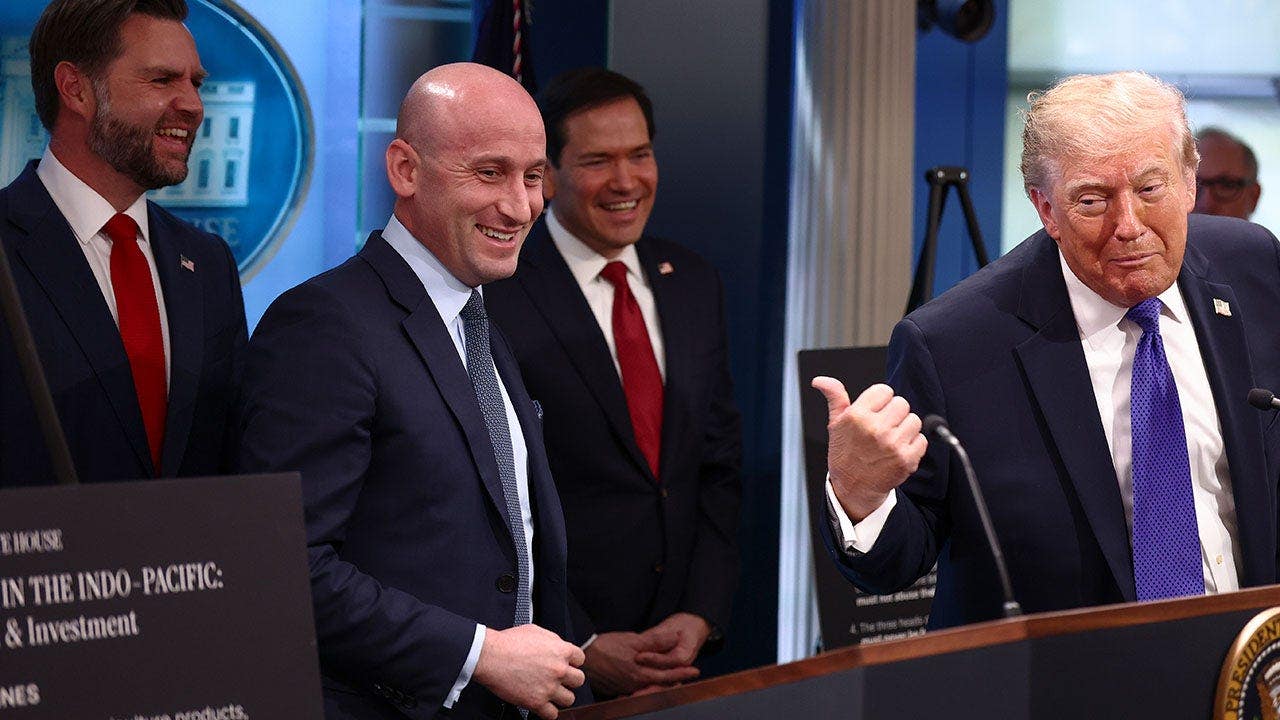
“The problem is President Zelensky and President Putin have tremendous hatred, and that’s never easy,” Trump told reporters at the White House. “It’s a level of hatred that you don’t often see.”
“Putin said that last night, he said, ‘Would have never happened,’” Trump added. “Actually, I asked him, I said, ‘Would you have gone in if I was president?’ He said, ‘No.’”