




NEWYou can now listen to Fox News articles!
The Supreme Court handed President Donald Trump two major immigration victories on Thursday morning, both having to do with his administration’s efforts to reduce asylum claims.
In the first case, Mullin v. Al Otro Lado, the court held that migrants who are turned away at the border before entering the United States are not entitled to apply for asylum. In the second case, Mullin v. Doe, the court ruled that Haitian and Syrian nationals in the United States with Temporary Protected Status (TPS) could not receive judicial relief postponing the revocation of their status while they challenge the Trump administration’s efforts to revoke it in court.
Writing the opinion in Mullin v. Al Otro Lado, Justice Samuel Alito argued that a migrant who reaches the southern border but is turned away before entering has not, for legal purposes, “arrive[d] in” the United States. The holding is significant because current law provides that anyone who “arrives in the United States” has the right to apply for asylum.
SUPREME COURT DIVIDED ON TRUMP EFFORT TO TERMINATE TEMPORARY PROTECTIONS FOR HAITIAN, SYRIAN MIGRANTS
Demonstrators outside the Supreme Court in Washington, D.C., on Wednesday, April 1, 2026. ((Graeme Sloan/Bloomberg via Getty Images))
“This case presents a straightforward question: whether an alien who seeks to enter the United States from Mexico ‘arrives in the United States’ when he or she is still in Mexico,” Alito wrote. “In the decision below, the United States Court of Appeals for the Ninth Circuit answered ‘yes.’ That is wrong. In ordinary speech, no one would say that a person ‘arrives in’ a place — for example, a house, a city, or a country — before the person enters that place.”
Also writing the opinion in Mullin v. Doe, Alito held that the law establishing TPS explicitly blocks recipients from legal relief unless their claims have a constitutional basis.
ALITO BLASTS LAWYER’S WORD-SALAD BLURRING ASYLUM LAW
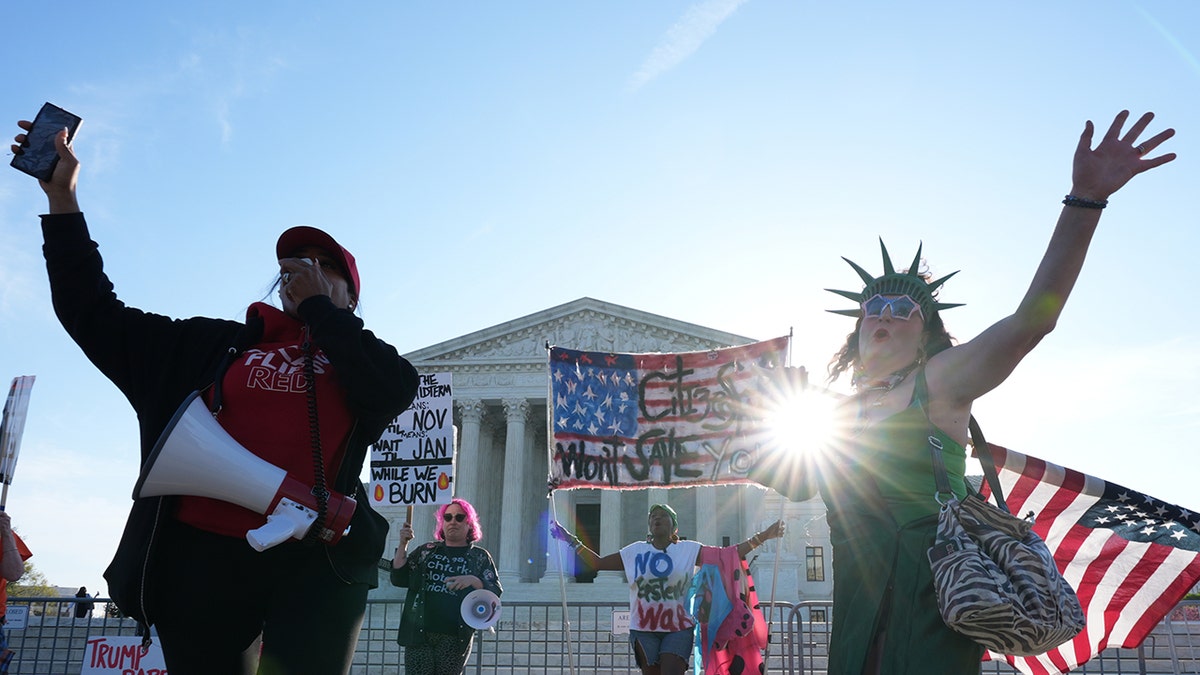
Pro and anti-Trump demonstrators rally outside the U.S. Supreme Court in Washington, D.C., on April 1, 2026, before justices hear oral arguments on whether President Donald Trump can deny citizenship to children born to parents who are in the United States illegally or temporarily. (J. Scott Applewhite/Associated Press)
“In these cases, we consider whether respondents, who challenge the termination of Temporary Protected Status (TPS) for aliens from Syria and Haiti, are entitled to orders postponing the terminations during litigation,” Alito wrote. “We hold that they are not.”
SCOTUS TO REVIEW TRUMP EXECUTIVE ORDER ON BIRTHRIGHT CITIZENSHIP
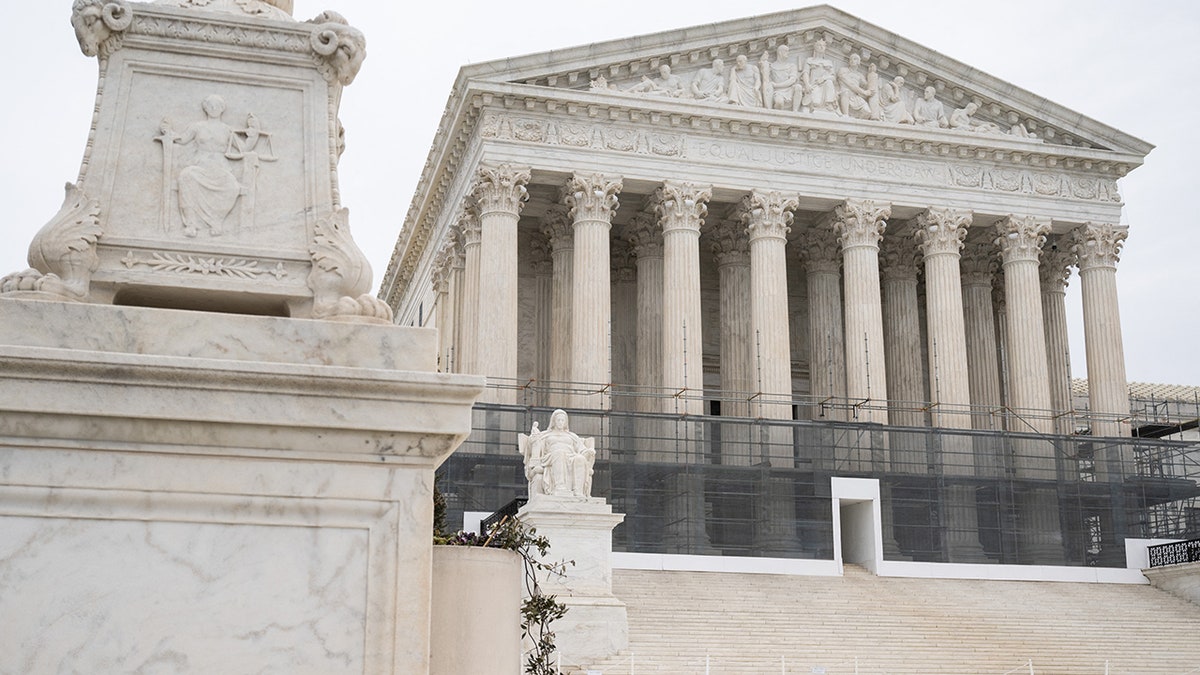
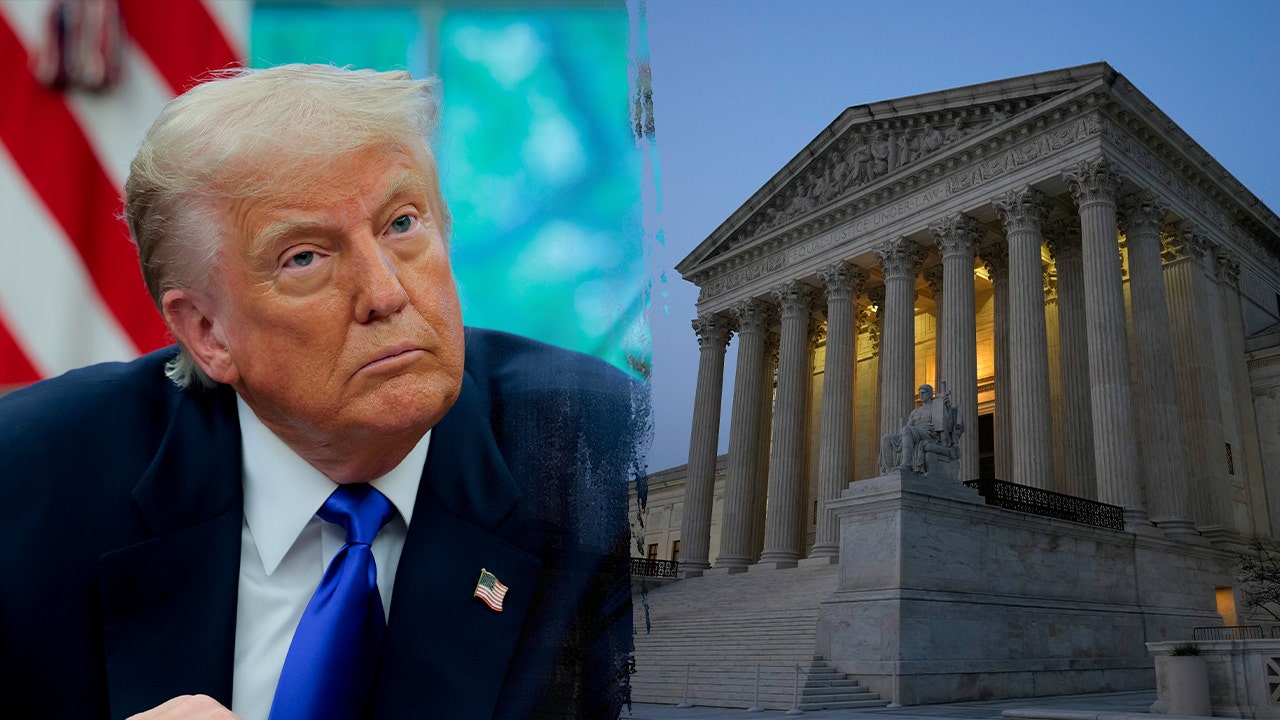
The U.S. Supreme Court building is shown in Washington, D.C., on Jan. 9, 2026. The court did not issue a ruling on President Donald Trump’s global tariffs on that day. (Saul Loeb/AFP via Getty Images)
“The TPS statute plainly bars consideration of respondents’ non-constitutional claims. It allows ‘no judicial review of any determination . . . with respect to the . . . termination’ of a TPS designation,” the justice continued.
CLICK HERE TO DOWNLOAD THE FOX NEWS APP
Both TPS and court rulings recognizing asylum-processing rights for migrants stopped just outside U.S. ports of entry had become flashpoints for conservatives, with immigration hawks arguing they facilitated abuse.
By making asylum applications more difficult and green-lighting the termination of Temporary Protected Status for some people already in the country, the Supreme Court’s decisions give the Trump administration an advantage in its effort to reduce asylum claims.
This is a developing story. Check back for updates.