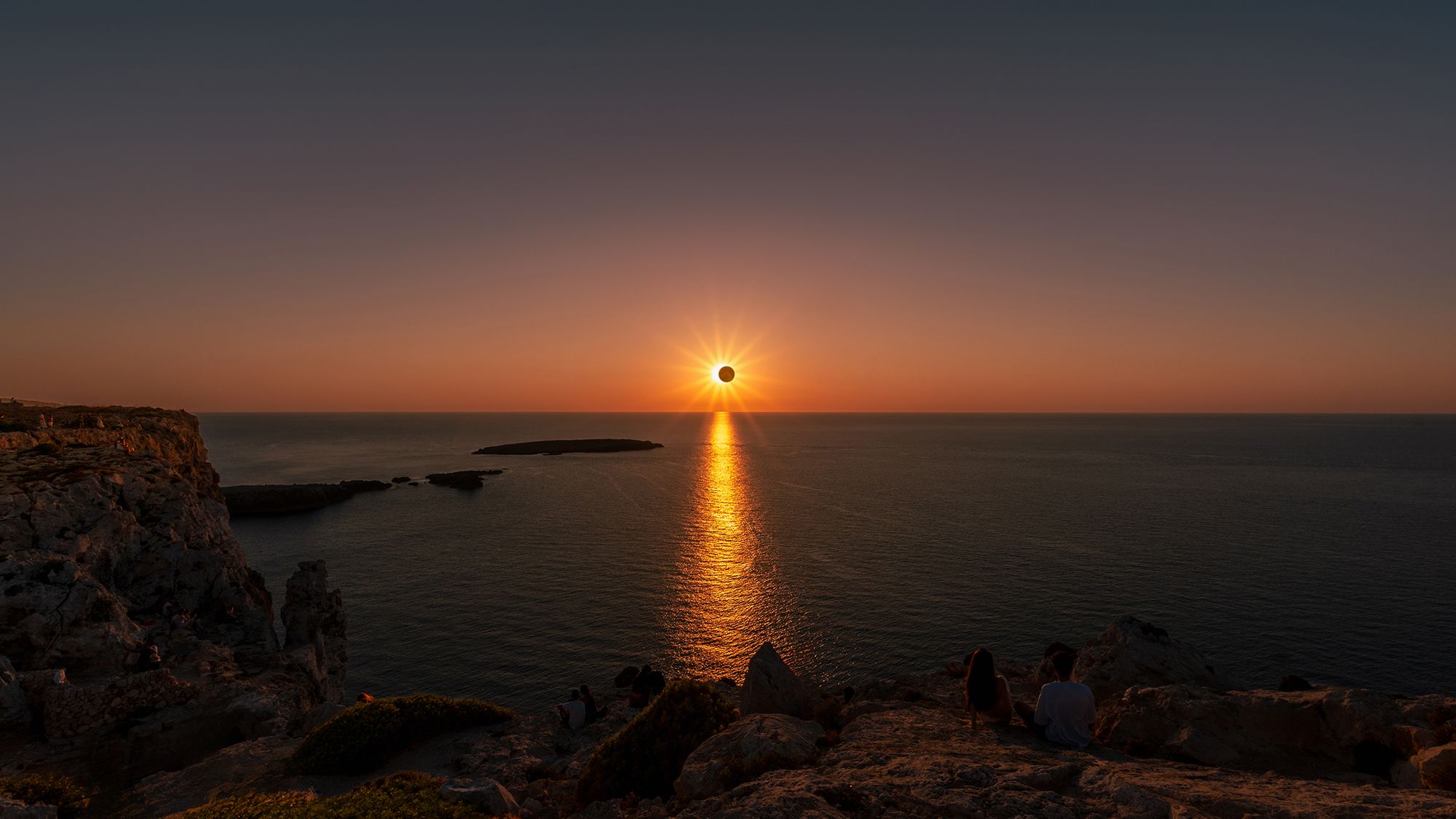






The first photos from today’s total solar eclipse are here, and they’re spectacular.
Captured Wednesday (Aug. 12) by NASA scientists during a special eclipse livestream from Spain, the images show the moon completely blocking the visible surface of the sun, plunging the daytime sky into twilight for roughly 90 seconds and allowing our star’s elusive corona (its wispy outer atmosphere) to shine through.
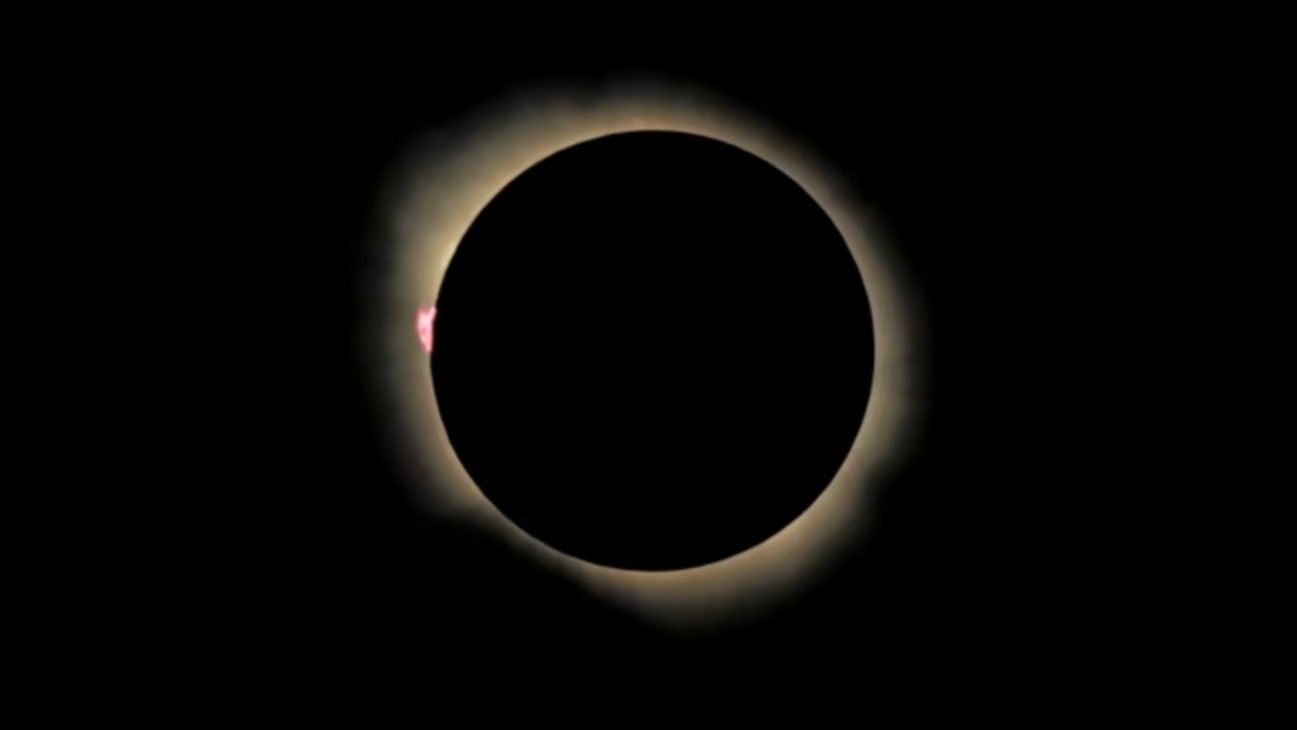
In this incredible image taken with a solar-filtered telescope, the moon appears as a black circle, cloaking the sun. The white spikes of light encircling the moon are the corona, a mysterious part of the sun that is rarely visible to the naked eye. (Why is it so mysterious? For one thing, the corona is millions of degrees hotter than the sun’s surface, and scientists aren’t sure why.)
On the left side of the image, a bright-pink blob shoots off of the solar surface. This is not a solar flare, but a prominence — a towering structure of plasma held in place above the sun by powerful magnetic fields. Prominences often measure many times taller than Earth is wide, making them clearly visible from 93 million miles (150 million kilometers) away.
Another image, taken just before totality, shows “Baily’s Beads” shining in the small gap between the sun and the moon. This effect occurs when the last vestiges of sunlight shine through the uneven mountains on the moon, creating a bright and bumpy spectacle.
Latest Videos FromLive Science

As is always the case, today’s solar eclipse will be paired with a lunar eclipse. Two weeks from now, on Aug. 27-28, a deep partial lunar eclipse will be visible across most of North and South America starting around midnight EDT. Almost completely engulfed in Earth’s shadow, the moon will take on a faint reddish hue.