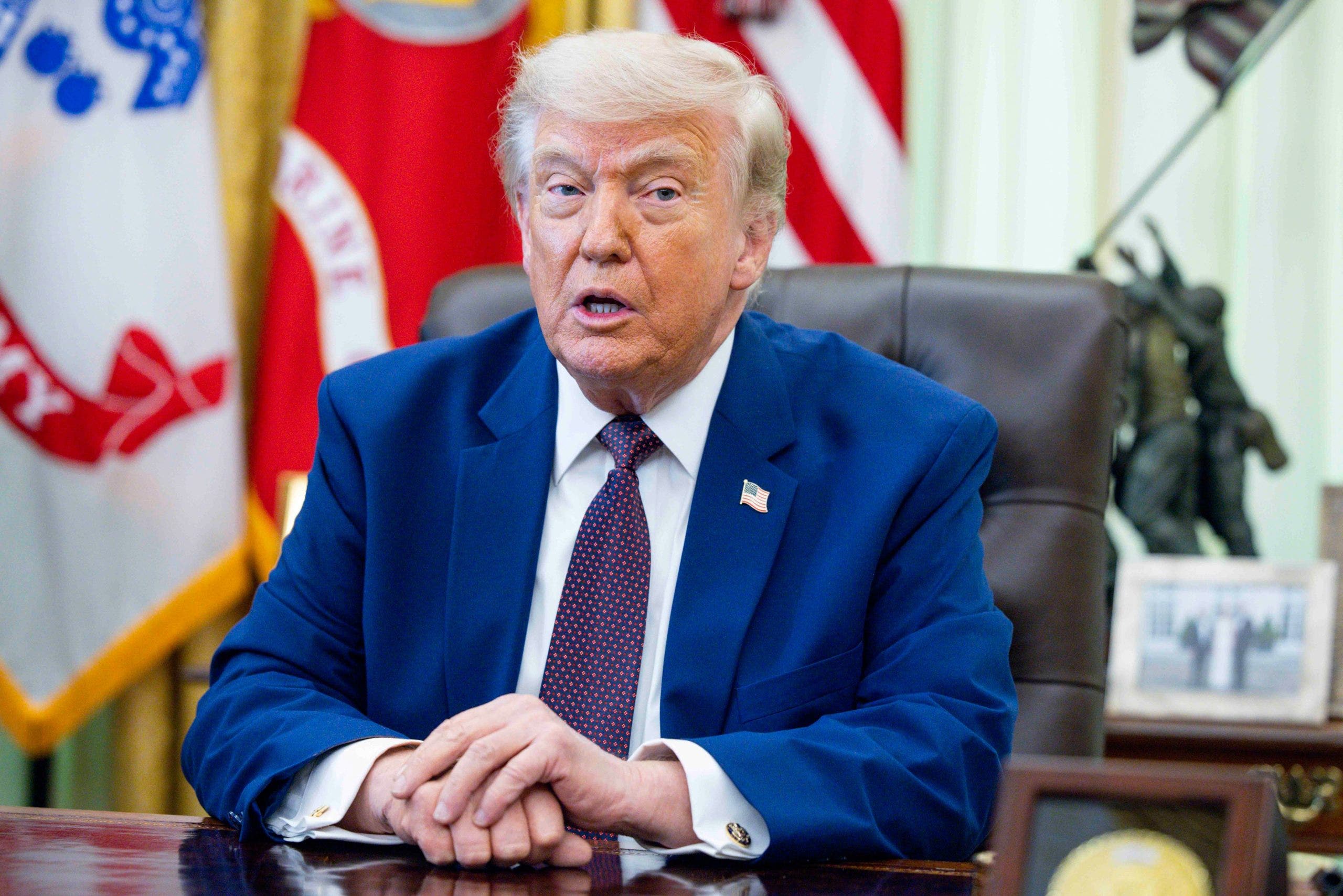




WASHINGTON — President Trump insisted Monday that the US is being “very careful” about the ongoing hantavirus outbreak after the deadly illness spread among passengers from multiple countries on a South Atlantic cruise.
Trump said during an Oval Office event that the Andes hantavirus strain is “much harder to catch” than COVID-19.
“It’s been around for a long time. People are very familiar with it. So, you know, I hope it’s fine. All I can do is everything that a president can do, which is actually somewhat limited, but it seems like it is not easy to spread,” the president told reporters.
“It’s in certain ways very hard to spread … We’ve lived with it for years, many years, and we think we’re in very good shape. We’re very careful, and Nebraska has done a fantastic job [isolating returning US cruise ship passengers].”
Hantavirus, which is commonly found in rodents, can lead to brutal symptoms such as vomiting, diarrhea, fever, and lung issues. A considerable 38% of those who develop respiratory symptoms die from the disease, per the Centers for Disease Control and Prevention (CDC).
The Trump administration has faced criticism over the handling of the outbreak, but has been adamant that it has followed protocol for the disease.
Health and Human Services Secretary Robert F. Kennedy Jr., appearing alongside Trump, said: “We have this under control and we’re not worried about it.”
On Sunday, officials began evacuating the hantavirus-stricken MV Hondius cruise ship as it was anchored by Spain’s Canary Islands.
Among those taken off the boat were the 17 Americans left among the ship’s 147 passengers for nearly a month since the first known case emerged.
Kennedy and Centers for Medicare & Medicaid Services (CMS) Administrator Dr. Mehmet Oz also fended off concerns from a reporter that the CDC was slow to respond to the outbreak.
“We’ve had CDC teams on it from day one,” Kennedy countered.
“We had airplanes ready to take the patients, the 17 patients, off the vessel and transport — two of them went to Atlanta. One of those was symptomatic. They’re in a biocontainment lab in Atlanta,” Kennedy added. “The other 16 are now in Nebraska.”
Here’s the latest on the deadly hantavirus outbreak on the Dutch cruise ship:
Fueling some of those criticisms is concerns that Trump’s withdrawal from the World Health Organization (WHO) kneecapped the US response, but the president and his team rejected that. The president underscored the WHO’s handling of the COVID-19 pandemic in justifying his decision to pull out.
“No, I’m glad,” Trump said of his decision to withdraw from the WHO. “We were paying the World Health Organization $500 million a year … and we weren’t being treated well, and they were making the wrong diagnoses.”
A passenger on board the MV Hondius began showing symptoms of the disease around April 6 and died roughly five days later. Seven American passengers flew back to the US after that case caused a panic.
Acting CDC Director Dr. Jay Bhattacharya, who also helms the National Institutes of Health (NIH), has been publicly adamant that “this is not COVID” and “is not going to lead to the [same] kind of outbreak” that brought the world to a halt six years ago.
“I don’t want to cause a public panic,” Bhattacharya told CNN’s “State of the Union” on Sunday. “We want to treat it with our hantavirus protocols that were successful at containing outbreaks in the past.”
Bhattacharya pointed to the CDC’s use of those protocols during a 2018 outbreak in Epuyén, Argentina, which caused 11 deaths.
Currently, the confirmed death toll is at three, and there are about 10 suspected cases.
There is no cure for hantavirus, but it is far less contagious than COVID-19, as it requires very close and prolonged contact to spread.