





QUICK FACTS
Name: Uberaba Geopark (also known as “Terra dos Gigantes,” or “Land of the Giants”)
Location: Minas Gerais, Brazil
Coordinates: -19.71, -47.96
Why it’s incredible: The park hosts prehistoric-fossil-bearing rock formations and overlies one of the world’s biggest aquifers.
Nestled within Brazil’s Cerrado tropical savanna — the second-largest biome in South America, after the Amazon rainforest — Uberaba Geopark is a time capsule from the Late Cretaceous period (100.5 million to 66 million years ago).
The geopark boasts abundant, well-preserved fossils from the last chapters of the nonavian-dinosaur era, according to UNESCO, earning it the nickname the “Land of the Giants,” or “Terra dos Gigantes” in Portuguese. Paleontologists have discovered more than 10,000 fossils belonging to dinosaurs, prehistoric crocodyliforms (a group encompassing living crocodiles, alligators, caimans and gharials, as well as their extinct relatives), turtles and other ancient creatures within the park’s boundaries.
One of the best-known discoveries is the fossil of Uberabatitan ribeiroi, a titanosaur measuring 89 feet (27 meters) long and 33 feet (10 m) tall, according to UNESCO.
Latest Videos FromLive Science
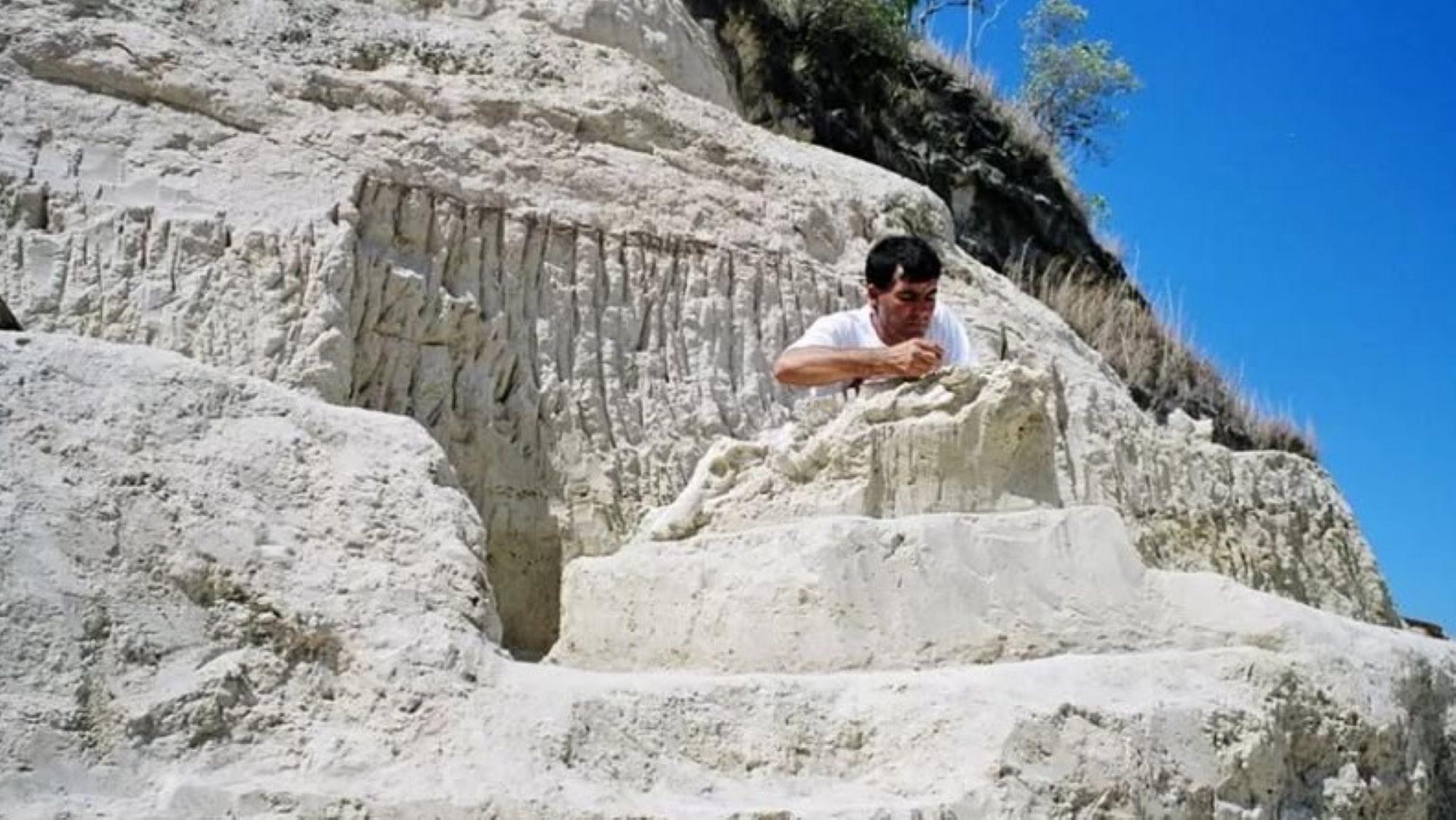
The finds were clustered in impressive geological features, including the Serra da Galga formation and Serra Geral mountain range. These structures formed from ancient basalt flows, which came from giant volcanic eruptions that predate the breakup of the Gondwana supercontinent 180 million years ago.
The park has the ideal conditions to preserve fossils because it alternated between shallow lagoons and river systems when the dinosaurs roamed the region, meaning the animals’ remains were conserved in mud when they died.
Uberaba Geopark preserved extinct crocodile relatives among other fossils.
(Image credit: Pulsar Imagens via Alamy)
Serra da Galga and Serra Geral also overlie one of the world’s largest freshwater reservoirs, the Guarani aquifer, which supplies drinking water for more than 100 cities in Brazil, Argentina, Paraguay and Uruguay.
The Cerrado savanna, which houses the entire park, is a critical-yet-underprotected carbon sink that hosts more than 12,000 plant species and diverse animal life.
Get the world’s most fascinating discoveries delivered straight to your inbox.
The “Land of the Giants” was added to UNESCO’s list of geoparks in 2024 in recognition of the region’s geological and natural heritage.
What is now the Uberaba Geopark was the birthplace of Brazil’s modern livestock market, which is one of the biggest in the world. Farmers in the 19th century introduced zebu (Bos indicus) cattle from India because they are better suited to the climate in Brazil and require less food than common domesticated cattle (Bos taurus). Zebu cattle also produce lower greenhouse gas emissions than common domesticated cattle do, according to UNESCO.
Uberaba Geopark is open to visitors. There are several museums and trails to explore, including one that leads to the Vale Encantado, or “Enchanted Valley,” which contains forests, waterfalls and prehistoric rock formations, according to the BBC.
Discover more incredible places, where we highlight the fantastic history and science behind some of the most dramatic landscapes on Earth.