




The US military unleashed a wave of “self-defense” strikes on an Iranian port Thursday after Tehran launched an “unprovoked” attack targeting US Navy ships transiting the Strait of Hormuz, officials said.
US Central Command said the retaliatory attack was carried out after US forces intercepted multiple missiles, drones and small boats targeting three guided-missile destroyers traveling through the vital waterway to the Gulf of Oman.
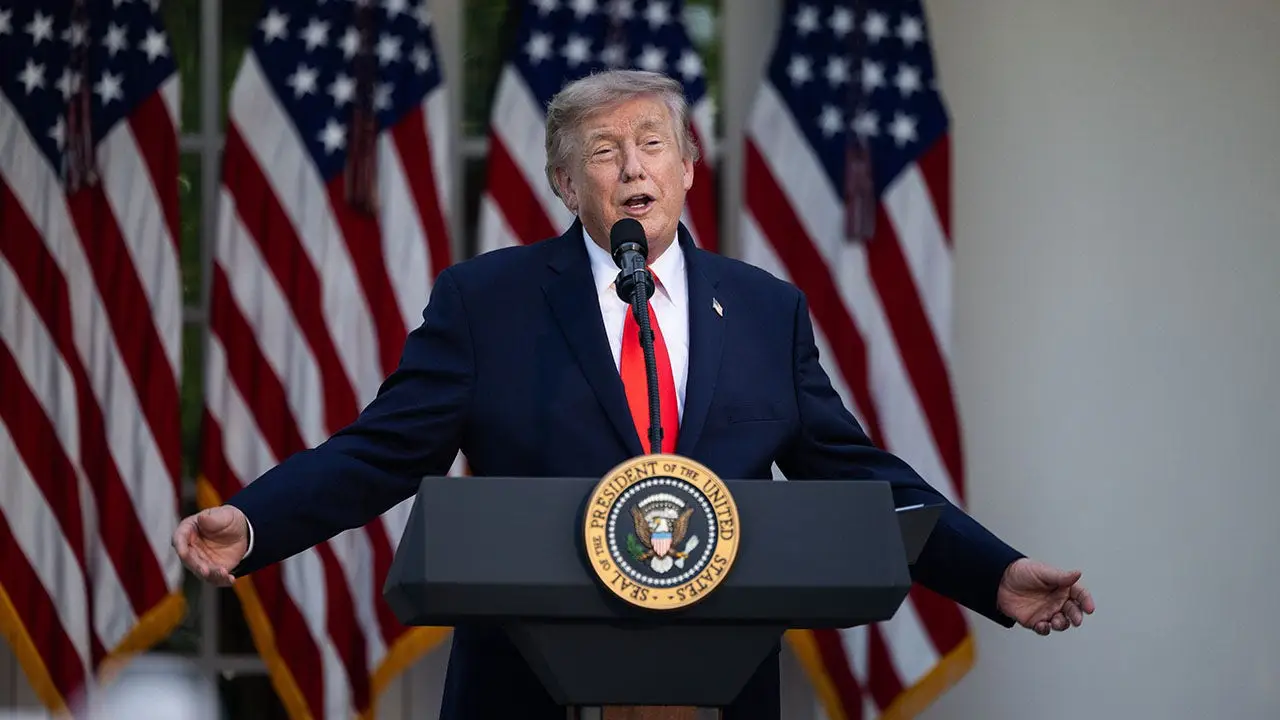
President Trump said the destroyers – USS Truxtun, USS Rafael Peralta, and USS Mason – were not damaged.
But Trump said the “Iranian attackers” were “completely destroyed along with numerous small boats, which are being used to take the place of their fully decapitated Navy.”
The retaliatory strikes hit Iran’s Qeshm port and Bandar Abbas as the US waited for Tehran’s response to a proposal aimed at halting the months-long conflict, Fox News reporter Jennifer Griffin posted on X, citing a senior US official.
Trump described the US strikes as just a “love tap” in an interview with ABC News.
“U.S. Central Command (CENTCOM) eliminated inbound threats and targeted Iranian military facilities responsible for attacking U.S. forces including missile and drone launch sites; command and control locations; and intelligence, surveillance and reconnaissance nodes,” officials said on X.
“CENTCOM does not seek escalation but remains positioned and ready to protect American forces.”
Trump threatened additional attacks if Iran doesn’t sign a peace agreement.
Follow The Post’s coverage on the latest in the war with Iran:
“They are led by LUNATICS, and if they had the chance to use a Nuclear Weapon, they would do it, without question,” he said of Iran.
“But they’ll never have that opportunity and, just like we knocked them out again today, we’ll knock them out a lot harder, and a lot more violently, in the future, if they don’t get their Deal signed, FAST!” Trump continued.
Hostilities raged Thursday as the US waited for Tehran’s response to a proposal aimed at halting the months-long conflict, Fox News reporter Jennifer Griffin posted on X, citing a senior US official.
The official told Griffin the strikes do not signal a restart of the war — which erupted on Feb. 28 when Israel and the US launched joint strikes on Iran — or an end ot the cease-fire announced on April 7.
The attack came two days after Iran fired 19 missiles and drones at a key oil facility in the United Arab Emirates.
Follow The Post’s live coverage of President Trump and national politics for the latest news and analysis
The UAE said it had come under attack for the first time since the US-Israel cease-fire with Iran was secured last month, with Tehran accused of hitting the Fujairah Oil Industry Zone, the country’s largest port and oil storage area.
The blast left three Indian nationals injured, Abu Dhabi said, slamming the attack as a form of “dangerous escalation” as Iran and the US traded fire along the Strait of Hormuz on Monday.
The Fujairah Oil Industry Zone, which opened in 1983, serves as the largest commercial storage hub for refined crude in the region strategically located along the Gulf of Oman beyond the Strait of Hormuz.
The plant has been repeatedly attacked by Iran during the war, with a large fire breaking out in March during the Islamic republic’s large-scale attacks across the region.