


Although May hasn’t quite got as much going on as the excitement of April, there’s still a lot to look at in the night sky — if you have the right gear.
We’re looking at the stargazing events for the month ahead to give you specific product recommendations for binoculars, telescopes and cameras to help you get the best possible views of each celestial spectacle. With two full moons, a meteor shower and a pretty cool solar alignment at the end of the month, there’s plenty of action to observe and photograph throughout May 2026.
May 01: Full flower moon
Now that the whole world is utterly obsessed with the moon after Artemis II, we’ll all be gazing skyward at the full Flower Moon on May 1. Although the craters and shadows look more detailed during the waxing and waning phases, the full moon will never cease to amaze stargazers new and old. You can certainly view it with just your eyes, but a pair of binoculars or a telescope will allow a closer look, and an astrophotography camera with a long lens will capture beautiful images.
Best seen with:
Binoculars: You can see the moon with pretty much any pair of binoculars, so there are a lot of options here. The view from a pair of 8x25s is surprisingly good (we loved the Hawke Endurance ED 8×25), and they’re compact enough to carry around in your pocket for convenience. For a more detailed view, get a pair with at least 12x magnification and 50mm objective lenses and mount them onto a tripod for longer moonjoy sessions.
Telescope: Again, pretty much any telescope will give you some type of moon view, but that doesn’t mean all of them give you a good view. You don’t necessarily need a massive telescope — we got some pretty great views when we tested the Celestron StarSense Explorer LT 70AZ, which is a great telescope for kids and beginners. What matters more is the power and quality of the eyepieces.
Camera and telephoto lens: The trick to getting a dramatic and impactful photo of the full moon is to zoom in as far as you can — think a super telephoto lens of around 600mm and thereabouts. You want to plan and capture your shot at moonrise, and it makes for an especially great shot if you can line it up with some type of building, bridge or natural object for scale. We tested the Sony FE 200-600mm f/5.6-6.3 G OSS recently and were impressed by how sharp it was at the 600mm end.
May 5-6: Eta Aquariids Meteor shower peak

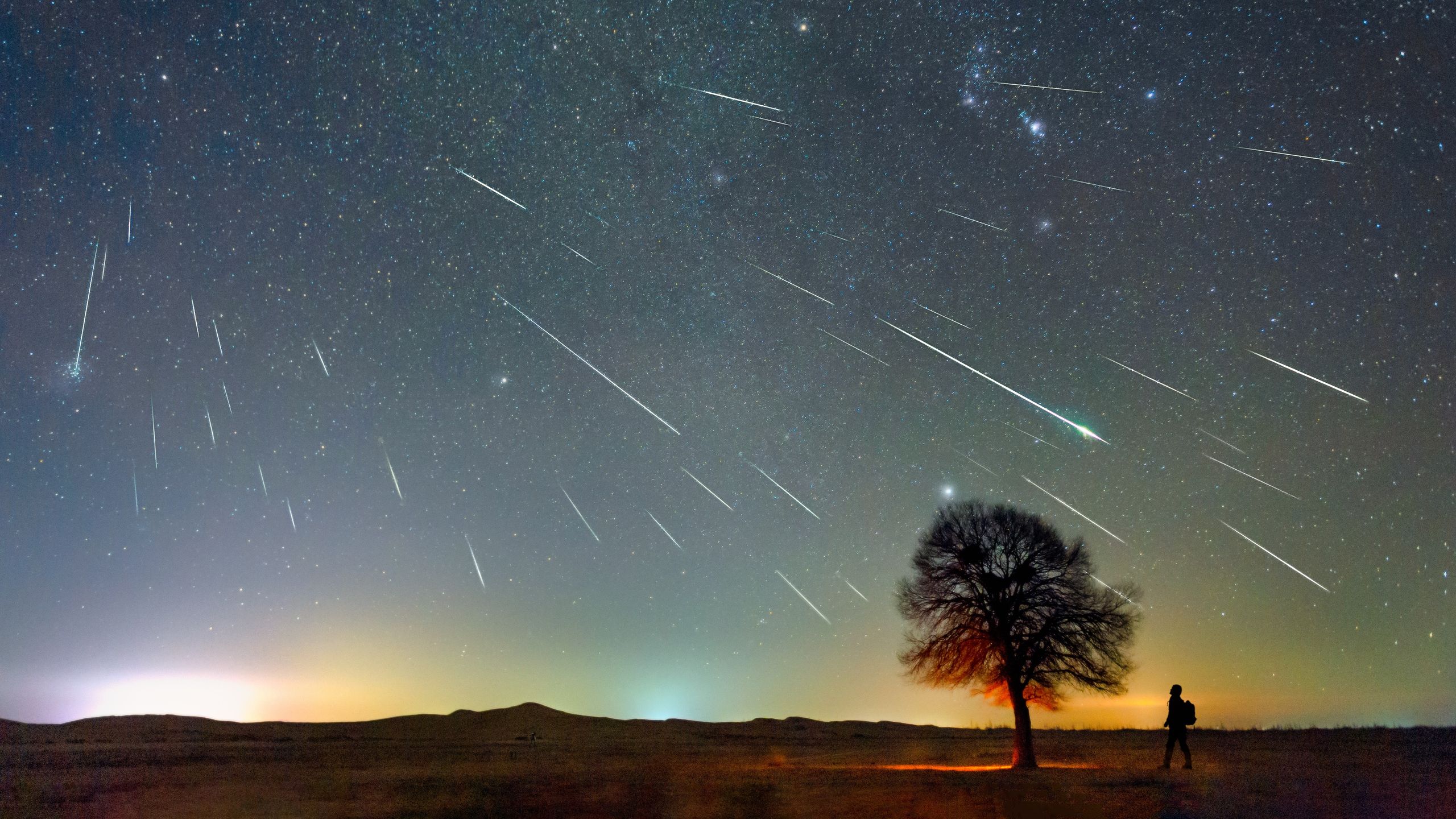
This meteor shower runs from April 19 until May 28, with the peak — and best night for photographing it — occurring on the night of May 5-6, with up to 50 meteors per hour. However, the 75.5% full moon might throw a spanner in the works, depending on your location and the moonset time where you are.
It’s best seen with the naked eye, but meteor showers are a great target for photographers. You’ll want a camera with good ISO handling and a wide-angle prime lens, like the SIGMA 14mm f/1.4 DG DN ART lens, to get as much of the sky in the frame as possible.
May 13 to 15: Crescent moon close to Saturn and Mars

One for early risers here. In the dawn hours, just before sunrise on May 13, you’ll see a slim crescent moon to the right of Saturn. The next morning, the moon sits between Saturn and Mars, before moving to the left of Mars on the morning of the 15th. You don’t typically get much detail on Mars, but you might be able to get a decent look at Saturn through a telescope. But keep in mind, the low altitude and nearly rising sun will make for more challenging views. For quick views, a pair of 10x50s will give a nice view of the crescent moon.
May 16: New moon

The new moon takes place on May 16, so this week is the perfect time for Milky Way astrophotography and deep-sky stargazing without any moonlight. A pair of 10×50 binoculars will give you a beautiful glimpse at stars you can’t see with the naked eye, and a large telescope is ideal for deep-sky stargazing. Plus, now that we’re at the start of peak Milky Way season, it’s the ideal time to invest in a wide-angle prime lens.
May 18-21: Crescent moon close to Venus, Jupiter and Beehive Cluster

Across four nights, from the 18th to the 21st, you’ll be able to see the slim crescent moon close to Venus, Jupiter and the Beehive Cluster in the early evening just after sunset. If you want a closer look at the Beehive Cluster or you want to pick out Jupiter’s moons, a big pair of astronomy binoculars like the Celestron SkyMaster 15×70 is an affordable favorite of ours, but if you want to see the bands on Jupiter itself, you’ll need a telescope. Even a small telescope will do the job — we got great views of Jupiter with the Celestron AstroMaster 70AZ, which is perfect for beginners. To resolve even more detail, investing in something like the Celestron NexStar 8SE (known as the world’s most beloved telescope) will last you for years to come.
May 30: Manhattanhenge

Not technically a night sky event, but it’s still a pretty cool thing to photograph. Manhattanhenge occurs when the setting sun lines up with the grid of the streets of Manhattan, New York, on May 30. (You can also see it the day before, on the 29th, but the 30th is when it’ll be perfectly aligned).
The best viewpoints are “14th Street, 34th Street (where the Empire State Building is located), 42nd Street (where the Chrysler Building and Tudor City Bridge are located), 57th Street and 79th Street”, according to PhotoPills.
Like moonrise images, you’ll need a long telephoto or super telephoto lens to zoom in for a more dramatic perspective and sense of scale. Plus, it’ll give you some practice ahead of the total solar eclipse in Europe in August — provided you can get your hands on some of the best solar viewing equipment.
May 31: Full blue moon

The second of May’s full moons, and a nice bookend to the initial Flower Moon on the first day of the month, the full blue moon takes place on May 31. If you’re looking to invest in the very best equipment for moon-gazing, we can recommend the Swarovski NL Pure 8×32 for just about everything, a smart telescope like the Vaonis Vespera II for effortless stacked images of the moon, and a super telephoto prime lens for the sharpest and most detailed images with your astro camera.