



Although it might be difficult to believe in our hyper-connected lives, there are thousands of people across the planet who remain almost completely disconnected from the rest of the world.
It’s estimated that there are at least 196 “uncontacted” Indigenous groups worldwide, living mainly in 10 countries in South America, Asia and the Pacific, including Brazil, Indonesia and India. They live in diverse environments, from islands, to deserts, and the forest-dense borderlands of the Amazon basin. These groups have had varying levels of contact with the outside world; while some have only sporadic encounters with neighboring Indigenous peoples, others more regularly encounter outsiders, sometimes against their will due to the presence of oil, logging, agriculture and mining industries that increasingly encroach on their lands.
But who among them are the most isolated people on Earth?
Latest Videos FromLive Science
While this question is difficult to answer, there are some candidates for the “least contacted” groups, experts told Live Science.
There aren’t strict definitions of what makes a group “uncontacted.” The United Nations even notes that the description of such groups can vary from “free, uncontacted, hidden or invisible peoples, peoples in voluntary isolation, etc.” Hal Russell, Asia and Pacific research and advocacy officer with the nongovernmental organization, Survival International, said, “We define ‘uncontacted peoples’ as Indigenous peoples who generally avoid contact with outsiders and have no permanent relationship with them, even while being aware of the outside world.”
“Certainly there is a spectrum between permanent contact, initial contact, sporadic contact and none at all,” he told Live Science.
Generally what unites these groups is that they have actively avoided or tried to limit contact with other cultures, even with other uncontacted peoples, to maintain their unique way of life.
“They do not want to be disturbed”
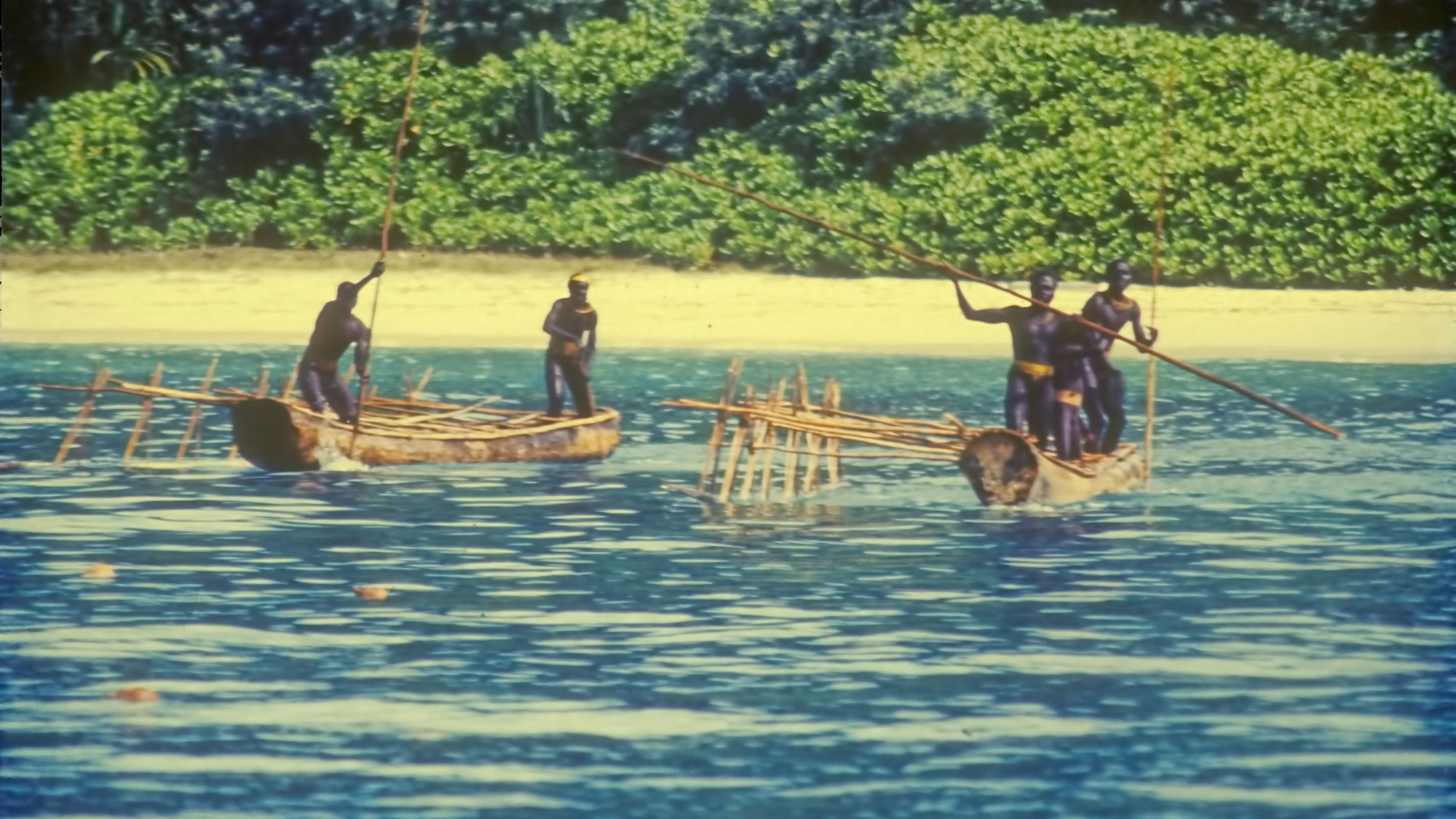
One such candidate is a small group of Indigenous islanders known as the Sentinelese, who live on North Sentinel Island within India’s Andaman and Nicobar Islands in the Bay of Bengal. This group is so little known that anthropologists aren’t even sure what they call themselves; their name is based on the roughly 23-square-mile (60 square kilometers) island where they live.
According to Survival International, it’s believed that the Sentinelese have lived in the Andaman Islands for up to 55,000 years and are direct descendants of the first humans to migrate out of Africa. Today, the Sentinelese follow a hunter-gatherer lifestyle and fish along the coastline, using sleek, hand-carved canoes. Survival International estimates that the group includes between 50 and 150 people, although lack of access to the group makes them near impossible to count, and the government has not attempted to include them in the Indian census. Their official numbers remain unknown.
Sign up for our newsletter
(Image credit: Marilyn Perkins / Future)
Sign up for our weekly Life’s Little Mysteries newsletter to get the latest mysteries before they appear online.
Aside from the island’s remoteness, contact is even more difficult because the islanders reject it. The community has been known to shoot at approaching boats and hovering helicopters.
“When they shoot bows and arrows, they are communicating,” Simron Singh, a professor at the University of Waterloo in Ontario whose expertise is in island environments and the peoples of the Andaman and Nicobar islands, told Live Science. “It says they do not want to be disturbed.”
Only a handful of outsiders have ever set foot on North Sentinel Island, and Indian law now prohibits travel within a 3-mile-radius (5 km) of the island for the protection of both parties. Islanders are vulnerable to diseases brought by outsiders, and visitors are at risk of attack; the Sentinelese have shot and killed at least three people, including a missionary named John Allen Chau, who traveled to the island illegally in 2018.

Herlin Odicio Estrella, an Indigenous leader and president of the Native Federation of Kakataibo Communities, speaks at a press conference in Lima on May 4, 2023. The conference addressed how regional and municipal governments are failing to protect Indigenous communities from coca growers encroaching on their communities.
(Image credit: ZUMA Press, Inc. via Alamy)
Survival International estimates that 95% of “uncontacted” and “isolated” peoples live in the Amazon Basin (though the term “voluntarily isolated peoples” is more commonly used to refer to such groups there, according to Beatriz Huertas, an anthropologist, independent researcher and special adviser on isolated peoples policy with Rainforest Foundation Norway).
Huertas conducts research on these groups and to her one stands out in particular: the Kakataibo, a forest peoples in the Aguaytia basin, part of the Amazon in central Peru. The Kakataibo are very rarely encountered, even by other Indigenous peoples. In fact they “are so determined not to be found that they erase their footprints with Earth,” Huertas said, “so there is not much information about them.”
“We know that this isolation is a protective strategy they have adopted” precisely because they have had contact with the outside and it has not been a positive experience, Huertas explained.
Survival International highlights other highly-isolated groups in the region, including a nomadic Indigenous group called the Kawahiva. This group has evaded contact so successfully that they are known only through chance encounters and one piece of video evidence, and were only recognized as a distinct group in 1999. It’s not uncommon for there to be “little recognition or documentation of an uncontacted group, in fact there are likely many uncontacted groups with no documentation at all,” Russell said.
He noted that even in Brazil which has some of the most rigorous documentation policies, one Indigenous group was only documented in 2021, having eluded authorities up until that point. Very little is known about them, including their name.
Another prominent group that is extremely isolated is the Mashco Piro of the remote forests of Peru, who are thought to constitute the largest group of uncontacted peoples in the world, numbering about 750. Some in this group are the descended relatives of people who were enslaved and forced to work on Amazonian rubber farms in the 1800s, but escaped deeper into forests where they have since remained, shunning contact.
Misconceptions about isolated peoples
This history of contact for even the most remote people on Earth shows that the term “uncontacted people” is misleading, Huertas said. In fact, the phrase has fed into unhelpful misconceptions that these groups are “stuck in the Stone Age, as if they were living in a bubble,” she said. “In the social sciences, we know that no people remain completely isolated from what is happening in their surroundings and, therefore, no people have remained stuck at any particular stage in history.”
Another frequent misunderstanding is that these groups would want to connect if they knew more about the benefits of the outside world, Singh said. He has worked with the Nicobarese peoples of the Nicobar Islands, who haven’t completely rejected contact like their Sentinelese neighbors, and has discovered that in their case this is not true. In fact, the Nicobarese are aware of wars and conflict beyond the island, and this has framed their perception that the outside world is “dangerous and uncivilized,” Singh said.
In many cases historical experiences can explain why these groups would want to avoid the world beyond. By the mid-1900s, the Great Andamanese of nearby islands had experienced a population decline of up to 99% after bouts of conflict with British settlers and the influx of disease. The Sentinelese themselves had a historical encounter with British colonizers in the 1800s during which time some were kidnapped, infected with disease, and died, which may have shaped their current wariness of the outside world.
Some researchers have argued that these groups should be contacted to better protect them from current and future harms. But groups like Survival International counter that a long history of forced contact shows that this ultimately leads to more harm than good for these peoples, their safety and their survival.
Indigenous peoples have a human right to self-determination as affirmed by the United Nations, and researchers like Huertas and Singh said these groups clearly express that right by seeking contact when they want to associate with others, and retreating when they want to be left alone.
“It’s not that they don’t have the option [to seek contact] … It’s not rocket science to get on a boat and sail somewhere,” Singh said. “It’s a choice not to connect.”
TOPICS