





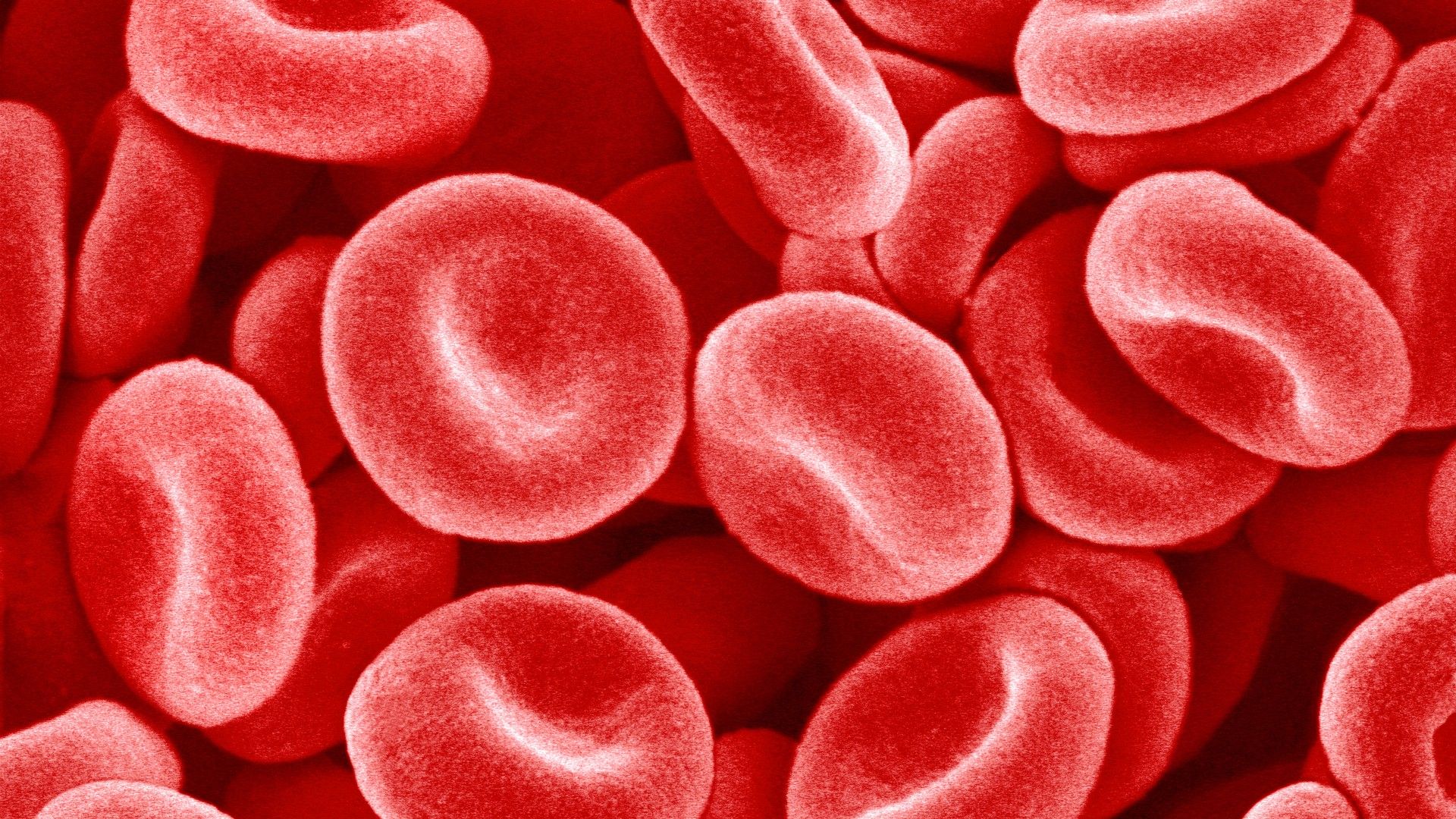
Rates of diabetes are lower in high-altitude locations, but researchers have been unsure why. Now, a new study in mice reveals a possible explanation: Red blood cells, which play a pivotal role in transporting oxygen throughout the body, may lower blood sugar by converting glucose into a compound that helps release oxygen into tissues.
If the results can be replicated in people, they also hint that drugs in early-stage development could potentially mimic this pathway.
Higher altitude, lower blood sugar
It’s well-known that people living at high altitudes with low oxygen levels, such as the Andes and the Himalayas, tend to have lower rates of diabetes, but the reason for the link has not been clear. In a 2023 study, scientists observed the same phenomenon in mice: When the mice were exposed to low-oxygen conditions, they developed a condition called “hypoxia,” which occurs when oxygen supply to tissues is insufficient, and their blood glucose also dropped.
But the disappearing glucose couldn’t be explained by the amount of glucose absorbed by the muscles and other organs in the scans, so it wasn’t clear where it was going.
From high altitudes to lab chambers
To test whether red blood cells were responsible for lowering glucose, the study authors exposed mice to low-oxygen chambers containing 8% oxygen. This mimicked high-altitude air, while another group of mice was kept in air with 21% oxygen, which mimicked normal atmospheric conditions, Jain said.
After several weeks, both groups of mice were given glucose injections, and their blood sugar levels were measured over time. Compared with the mice in normal oxygen environments, the mice in low-oxygen conditions showed a much smaller spike in their blood sugar levels, suggesting that they could clear glucose from their blood faster. This effect persisted for weeks, even after the animals were returned to normal oxygen levels, suggesting that a low-oxygen environment had a lasting impact on metabolism, experts said.
The researchers also took imaging scans to track how much glucose was being absorbed by major organs and tissues, such as the liver and muscles. However, a large fraction of the disappearing glucose could not be accounted for. This prompted them to investigate whether cells in the circulating blood itself might be consuming the glucose.
To test this idea further, they manipulated red-blood-cell numbers directly. The team periodically removed blood in oxygen-deprived mice to keep red-blood-cell levels near normal, and found that doing so eliminated the glucose-lowering effect of hypoxia. In contrast, transfusing red blood cells into mice breathing normal air caused blood glucose levels to fall, suggesting that the number of red blood cells alone drove down glucose levels.
Next, the team injected mice with labeled glucose and tracked it through the body. They found that red blood cells from the oxygen-deprived mice absorbed substantially more glucose than those from the comparison mice. The mice in low-oxygen conditions rapidly converted glucose into a molecule that binds to hemoglobin, the protein in red blood cells that carries oxygen. This binding forces hemoglobin to release oxygen more easily into tissues when oxygen levels are low.
Further analysis showed that red blood cells produced in the oxygen-deprived mice also contained higher levels of a protein called GLUT1, which sits on the cell membrane and helps glucose enter the cell. These red blood cells had about twice as much GLUT1 and took up roughly three times more glucose than normal red blood cells. By labeling existing red blood cells before exposing the mice to low-oxygen conditions, the researchers confirmed that only the new cells produced under low-oxygen conditions showed these adaptations.
Besides triggering an uptick in red blood cells, the study shows that the cells are structurally changed to consume more sugar in low-oxygen environments, said Daniel Tennant, a hypoxia and metabolism researcher at the University of Birmingham who was not involved in the work.
Lars Kaestner, a red blood cell biologist at Saarland University in Germany who was not involved with the study, noted that red blood cells are known to increase in number when the air is thin, to boost oxygen transport around the body. Red blood cells use glucose as fuel. Therefore, it’s not surprising that low-oxygen conditions lead to lower blood glucose levels, as more red blood cells are there to clear it, he told Live Science.
“From a systemic point of view, this makes a lot of sense,” he said.
It’s an “evolutionarily conserved corrective mechanism” to essentially better oxygenate the body at high altitudes, Tennant told Live Science.
It opens the door to thinking about diabetes treatment in a fundamentally different way.
Isha Jain, biochemist at the Gladstone Institutes and the University of California, San Francisco
The body increases its red-blood-cell count at high altitudes by changing the expression of genes that control metabolism and producing more of a hormone called erythropoietin, which triggers the bone marrow to churn out more red blood cells, said Sonia Rocha, a biochemist at the University of Liverpool who was not involved in the study.
This is why elite athletes train in high-altitude areas for their competitions: Their bodies make more red blood cells and thus achieve “more efficient circulation to distribute oxygen to their tissues,” she told Live Science.
A diabetes drug that mimics oxygen deprivation?
In another experiment, the researchers treated mice with HypoxyStat, an experimental compound that was developed in Jain’s lab and increases how strongly hemoglobin binds to oxygen, preventing its release and mimicking hypoxia. The idea is that mimicking oxygen deprivation with a drug could boost red-blood-cell counts and help regulate blood sugar levels.
However, much more testing is needed before a drug like HypoxyStat could be tested in humans, Rocha noted.
While transfusing red blood cells is not a practical therapy for diabetes, the findings suggest potential directions such as engineering RBCs that act as better glucose sinks, the authors suggest. “It opens the door to thinking about diabetes treatment in a fundamentally different way,” Jain said in a statement.
Martí-Mateos, Y., Safari, Z., Bevers, S., Midha, A. D., Flanigan, W. R., Joshi, T., Huynh, H., Desousa, B. R., Blume, S. Y., Baik, A. H., Rogers, S., Issaian, A. V., Doctor, A., D’Alessandro, A., & Jain, I. H. (2026). Red blood cells serve as a primary glucose sink to improve glucose tolerance at altitude. Cell Metabolism, 38(3), 529-545.e8. https://doi.org/10.1016/j.cmet.2026.01.019